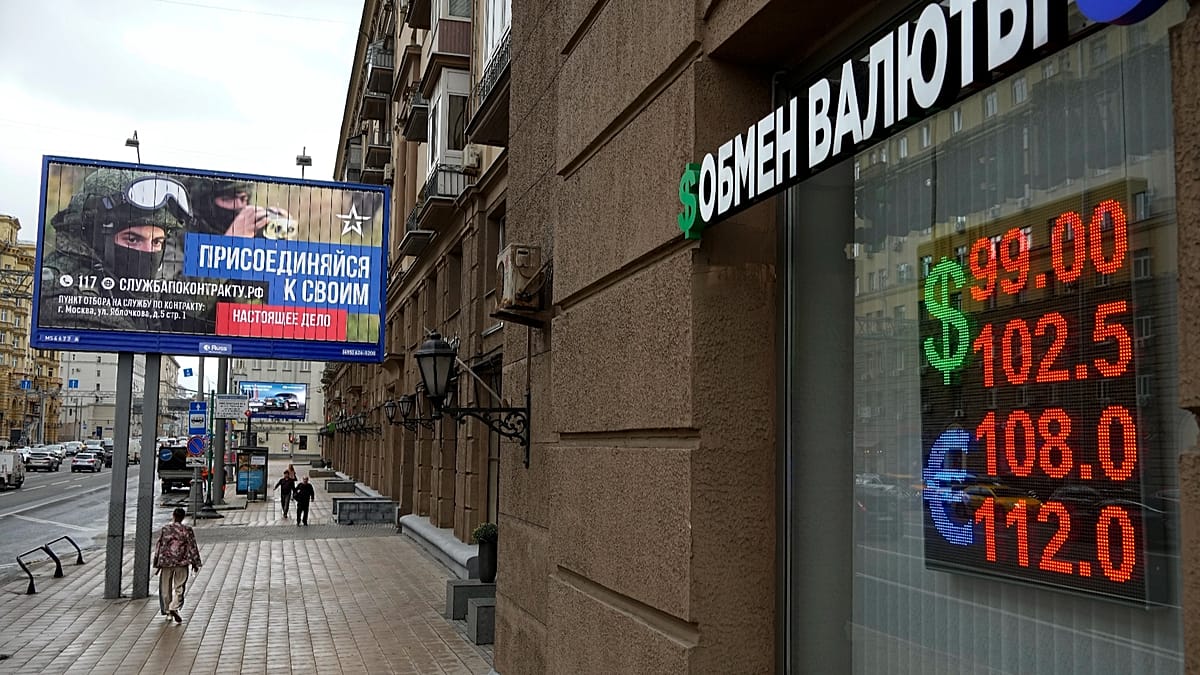
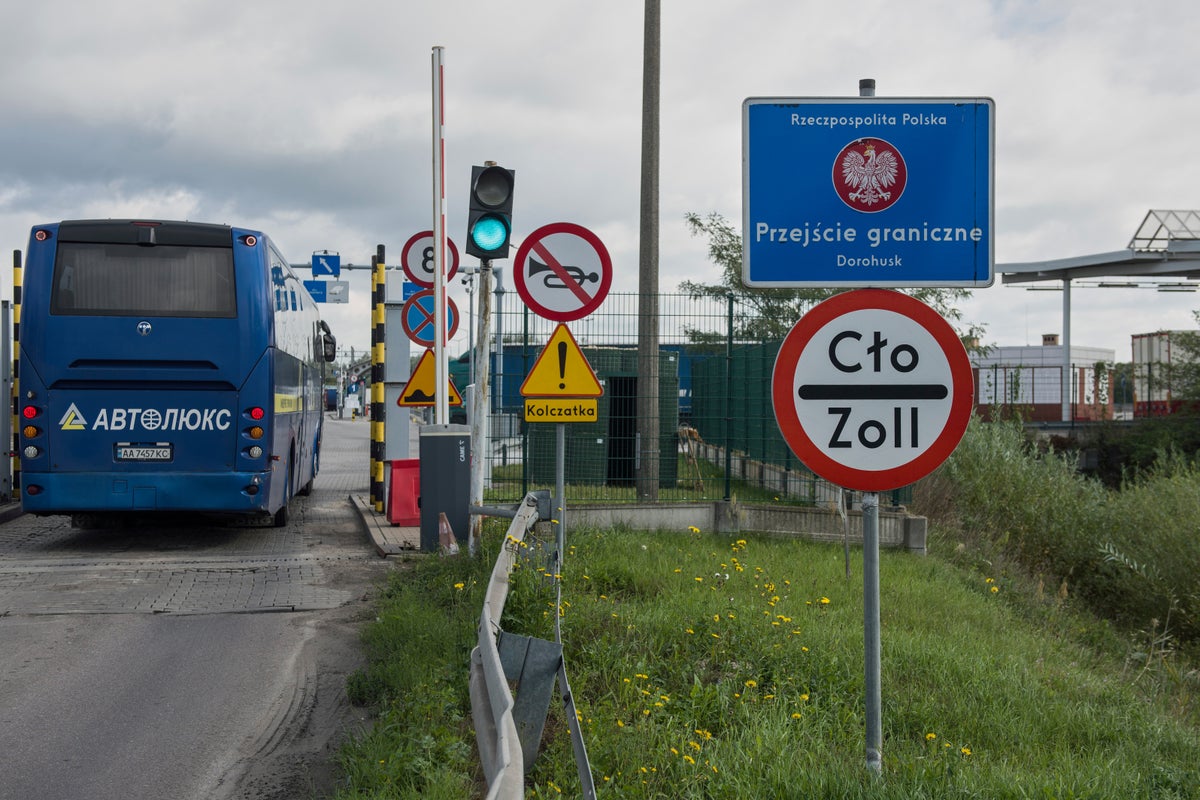
Russia's recruitment drive targeting Belarusians has become a key tool to boost manpower on the battlefield and exploits economic hardship and isolation.
asserted
drive → target → hardship
Russia has long regarded Belarus as a convenient reserve for topping up its manpower in the war against Ukraine, especially after suffering heavy losses at the front.
asserted
Russia → regard → front
Minsk’s economic dependence, the political vulnerability of Aliaksandr Lukashenka's regime and the legal uncertainty around the Union State create conditions in which the Kremlin can act with considerable freedom.
asserted
Kremlin → create → freedom
In the Belarusian corner of the internet, in recent months a large number of adverts offering Belarusians the chance to sign a contract with the Russian army, have appeared.
asserted
number → offer → army
They are circulated everywhere – in Telegram channels, in Viber chats and in local community pages where people discuss everyday issues.
asserted
people → circulate → issues
At times it looks almost surreal: nestled between posts about selling vegetables or finding a tutor, a sudden offer appears promising a "high salary, benefits and Russian citizenship" in return for going to war.
asserted
offer → look → war
Investigations by DW, TVNET, CityDog and Current Time have documented a sharp increase in such posts.
asserted
Investigations → document → posts
The human rights initiative Belpol regularly highlights examples of adverts in which recruiters use Belarusian phone numbers to inspire trust.
asserted
recruiters → highlight → trust
On Belpol’s Telegram channel you can see messages promising huge payouts, help with loans, "annulment of criminal convictions" and fast-track Russian citizenship.
asserted
you → see → citizenship
On X, the OSB Belpol account posts screenshots of ads in which Belarusians are offered a contract with a one-off payment of 4.35 million roubles and rapid issuance of a Russian passport.
asserted
Belarusians → post → passport
These examples are not isolated incidents but part of a systematic campaign targeting socially vulnerable people.
asserted
examples → isolate → people
What recruiters promise
Belarusians are promised the equivalent of tens of thousands of euros, high salaries, housing, food, a military pension and life insurance.
asserted
Belarusians → promise → euros
Some adverts even talk about "sorting out problems with the law," which is particularly dangerous given that participation in an armed conflict abroad falls under the article on mercenary activities in Belarus' criminal code which carries a prison term of up to seven years.
asserted
which → talk → years
Recruiters insist that the service is "legal," claiming it is not mercenary activity but "service in the army of the Union State."
Who signs up for a contract?
Research shows that among those recruited, the majority are men from small towns and villages, people on low incomes, with debts or with existing legal problems.
asserted
majority → insist → problems
Many do not realise the legal consequences and some are simply looking for quick money, without understanding that they will be sent to the most dangerous sectors of the front.
asserted
they → realise → front
Human rights activists point out that foreign contract soldiers are often placed in assault units, where casualty rates are particularly high.
asserted
rates → point → units
A person sees an advert on social media and writes to the recruiter, who is using a Belarusian phone number.
asserted
who → see → number
They are then told about payments, benefits and the supposed "legality" of the service.
asserted
They → tell → service
After that they are offered rapid paperwork and travel to Russia – most often via Smolensk or Pskov.
asserted
they → offer → Smolensk
There they sign a contract and become a member of the Russian armed forces.
asserted
they → sign → forces
For those who agree to sign a contract, the consequences can be tragic.
asserted
consequences → agree → contract
Beyond the risk of being killed, they face criminal liability in Belarus, possible loss of citizenship or restrictions on their rights.
asserted
they → kill → rights
Many end up as "cannon fodder" in someone else’s war, which they often barely understand.
asserted
they → end → which
Public and state response
Belarusian society has generally reacted to this with alarm.
asserted
society → react → alarm
People complain about mass spam-recruitment; some turn to the Interior Ministry, but there is virtually no response.
asserted
some → complain → Ministry
The Lukashenka regime does not officially acknowledge that recruitment is taking place, but it does nothing to stop it.
asserted
it → acknowledge → it
Belarus is far too dependent on Russian subsidies to openly confront the Kremlin.
asserted
Belarus → confront → Kremlin
Furthermore, mobilisation measures inside the country are being stepped up, adding extra pressure on men of conscription age.
asserted
measures → step → age
It is a coordinated campaign built into the Kremlin’s strategy for expanding its pool of manpower for the war against Ukraine.
asserted
It → build → Ukraine
The legal framework of the Union State gives Moscow extra room for manoeuvre: formally, citizens of Belarus and Russia have "equal rights" and Russian institutions are trying to spin this as "equal obligations," including compulsory military service.
asserted
institutions → give → service
The Institute for the Study of War (ISW) warns that such an interpretation could become a basis for exerting pressure on Belarusians and attempts to mobilise them.
uncertain
interpretation → warn → them
Russia is exploiting the vulnerability of Belarusian society, its information isolation and Minsk’s political dependence in order to turn Belarus into a source of manpower.
asserted
Russia → exploit → manpower
And the longer the war drags on, the more aggressive this campaign becomes.
asserted
campaign → drag → ?
 The Aporia