Derbyshire county council’s discount scheme for young people on trentbarton buses is available only through a smartphone app, forcing children without smartphones to pay significantly higher fares—up to £546 extra annually. Parents like Adele Kightley are protesting this policy, arguing it conflicts with guidance aimed at reducing screen time in schools and disproportionately affects lower-income families who cannot afford both smartphones and high bus fares for their children. The article highlights concerns raised by the campaign group Smartphone Free Childhood about how such policies penalize households that choose not to provide their children with smartphones due to health and educational considerations.
Written locally by qwen2.5:14b on 2026-09-26,
using this article's own text rather than the other coverage of the
same event (that is the story summary below).
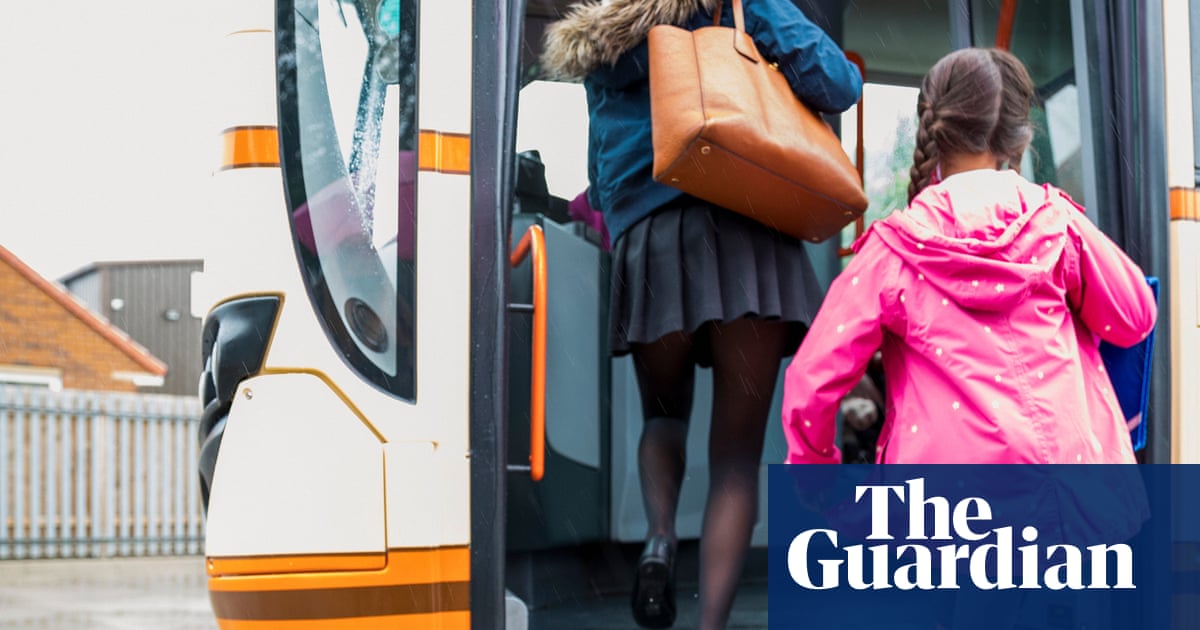
Schoolchildren who do not own smartphones face paying hundreds of pounds extra in annual bus fares as cheaper travel passes are digitised.
asserted
passes → own → fares
Critics argue that by only making discounts available through an app, operators are undermining government guidance to keep mobile phones out of schools.
asserted
operators → argue → schools
Adele Kightley’s 11-year-old daughter faces paying an extra £546 a year to get to school because a discount scheme launched by Derbyshire county council is only available via smartphones.
asserted
scheme → face → smartphones
The b_line card caps single fares on trentbarton buses at £1.50 for those aged 18 and under.
asserted
card → cap → 18
However, users have to register their card with an app to qualify.
asserted
users → have → app
“We made the choice not to give our daughter a smartphone, instead opting for a brick phone when she started secondary school this month,” Kightley said.
asserted
Kightley → give → school
“In order to get trentbarton’s young person discount, a child has to connect their student card with the app.
asserted
child → get → app
However, they can’t get the same discount by showing the same student card to the driver and paying by cash or card.”
asserted
they → get → cash
Trentbarton said its ticketing machines are not configured to read the council-issued cards.
asserted
machines → say → cards
“We are working at speed on developing a new physical card to provide the discounted b_line fare for under-19s,” a spokesperson for the bus company said.
asserted
spokesperson → work → company
“In the meantime, all young people, whether they have a smartphone or not, will continue to receive a range of discounts off our adult fares however they pay.”
asserted
they → have → fares
East Midlands combined county authority said it sympathised with parents who did not want their children to have smartphones and would consider how young people accessed discounted fares as it developed the region’s fares and ticketing strategy.
asserted
it → say → strategy
The increasing use of digital-only passes is penalising poorer households as well as undermining efforts to restrict screen time for children, according to Daisy Greenwell, a co-founder of the campaign group Smartphone Free Childhood.
“There is now a huge movement of parents and schools trying to delay smartphones for children but, in many parts of the country, bus companies are making that much harder by charging smartphone-free children up to twice as much for exactly the same journey,” she said.
uncertain
she → increase → journey
More than 200,000 parents have signed up to the campaign group’s “parent pact”, which promises to delay getting a child smartphones until at least 14, “yet essential services are still being designed around the assumption that every child has one”, Greenwell said.
asserted
Greenwell → sign → one
“For lower-income families in particular, owning a smartphone can effectively become the price of accessing cheaper bus fares.”
asserted
owning → own → fares
Other regional operators, including Stagecoach and Compass, also require children to have a smartphone to access the best discounts.
asserted
operators → include → discounts
“My husband and I decided not to give smartphones to our children because of the overwhelming evidence that shows how harmful they are to developing brains,” Kightley said.
asserted
Kightley → decide → brains
“When our younger child starts secondary school, it will cost us nearly £1,100 a year more than it would if they had access to the discount through the app.”
asserted
they → start → app
A law banning the use of mobile phones in English schools came into force in June.
asserted
law → ban → June
Some schools prohibit pupils from bringing smartphones on site.
asserted
schools → prohibit → site
However, the Department for Education said the legislation did not cover phone use during travel to school and that app-only fare discountswere a matter for individual bus operators.
asserted
legislation → say → operators
The government’s stance is sending mixed messages, Greenwell said.
asserted
Greenwell → send → messages
“Bus fares shouldn’t be a barrier to schools choosing policies where smartphones aren’t brought on to site.
asserted
smartphones → choose → site
Government and bus companies have a clear opportunity to fix this, so every child can access the same fare whether they carry a smartphone or not.”
asserted
they → have → smartphone
Stagecoach and Compass were contacted for a comment.
asserted
Stagecoach → contact → comment
 The Aporia