Dr. Jean Kaseya, director-general of the Africa Centres for Disease Control and Prevention, told Reuters that Congo's Ebola contact tracing efforts are inadequate as the disease continues to spread. With more than 7,000 confirmed cases, health authorities would typically identify about 420,000 contacts; however, only around 30,000 people have been identified through current surveillance methods. This shortfall indicates that transmission is occurring beyond the reach of contact tracing efforts, with over 80% of new cases coming from individuals not on contact lists.
Written locally by qwen2.5:14b on 2026-09-25,
using this article's own text rather than the other coverage of the
same event (that is the story summary below).
Story summary
In early September 2018, Dr. Jean Kaseya, director-general of the Africa Centres for Disease Control and Prevention (Africa CDC), warned that health authorities battling an Ebola outbreak in Democratic Republic of Congo had identified only about 30,000 people who may have been exposed to the virus, a small fraction compared to the expected 420,000 contacts. Kaseya expressed concern at the United Nations General Assembly that transmission was still happening outside monitored areas since over 80% of new confirmed cases were not listed as contacts. This shortfall indicates weak contact tracing efforts and highlights ongoing challenges in controlling the outbreak despite some progress signs.
Written for “Congo Ebola Outbreak” on 2026-10-05,
grounded in this article and the 0 other(s) covering the same event.
Congo Ebola contact tracing falls far short as outbreak spreads, Africa CDC chief says
UNITED NATIONS, Sept 25 - Health authorities battling the Ebola outbreak in Democratic Republic of Congo have identified only about 30,000 people who may have been exposed to the virus, a fraction of the more than 400,000 expected through contact tracing, a senior African health official told Reuters.
uncertain
official → fall → Reuters
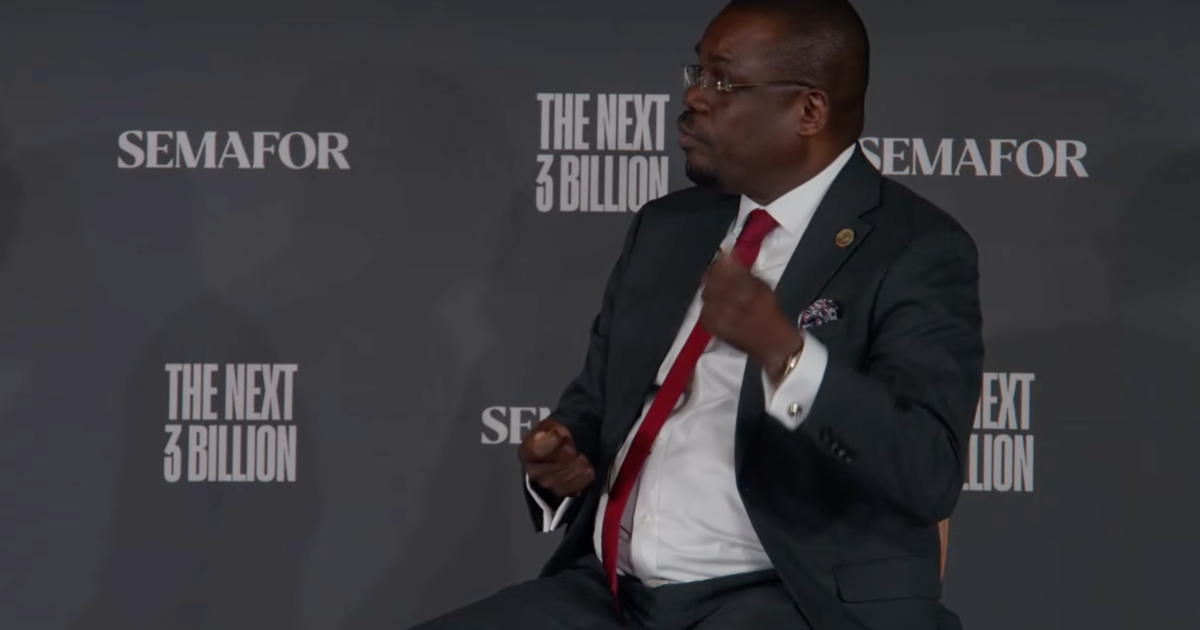
Dr. Jean Kaseya, director-general of the Africa Centres for Disease Control and Prevention, said the shortfall showed the outbreak remained entrenched in communities despite signs of progress.
asserted
outbreak → say → progress
More than 80% of new confirmed cases were being detected among people who were not already on contact lists, suggesting transmission is still occurring beyond the reach of surveillance efforts.
asserted
transmission → confirm → efforts
For every confirmed Ebola case, health authorities would expect to identify about 60 people who had direct or indirect contact with the infected person, Kaseya told Reuters on Friday on the sidelines of the UN General Assembly in New York.
asserted
Kaseya → confirm → York
With roughly 7,000 confirmed cases, that would translate into about 420,000 contacts.
asserted
that → confirm → contacts
"But currently, we have just 30,000 people in the contact list," Kaseya said.
asserted
Kaseya → have → list
"When the outbreak is at community level, we cannot talk about control," he added.
asserted
he → talk → control
The Ebola outbreak was detected in May and is already the second largest on record, behind one in West Africa from 2014 to 2016.
uncertain
outbreak → detect → 2016
The World Health Organization said on Friday the outbreak had spread to two additional health zones, Bulu in Sud Ubangi province and Dungu in Haut-Uele province near the South Sudan border, bringing the number of affected health zones to 63 across seven provinces.
asserted
outbreak → say → provinces
Last week, United Nations and Congolese government officials said there were signs transmission was slowing in some of the worst-affected parts of Ituri, the epicenter of the outbreak.
asserted
transmission → say → outbreak
Congolese Prime Minister Judith Suminwa Tuluka described the outbreak on Wednesday as a major test for the country and said the response had begun producing tangible results.
asserted
response → describe → results
"We see some improvement, but the outbreak is still serious," Kaseya said.
asserted
Kaseya → see → improvement
Even if Congo were still recording 50, 60 or 70 new cases a day, Kaseya said he would be less concerned if they were people already identified and monitored as contacts because it would mean health authorities knew where transmission was occurring.
asserted
transmission → record → contacts
Kaseya declined to predict when the outbreak would be brought under control, saying he wanted to see substantially better surveillance and other improvements before putting a timetable on the response.
"If there is a game I didn't want to play since we declared this outbreak, it was to predict when we can bring this outbreak under control," he said.
asserted
he → decline → control
Kaseya said if new confirmed cases were identified through contact lists, zero deaths were occurring in communities and there were no new infections among healthcare workers, he could be in a position to forecast whether the outbreak could be fully controlled within four weeks.
uncertain
outbreak → say → weeks
But for now, he said, the high proportion of cases being discovered outside contact lists remained evidence of uncontrolled community transmission.
asserted
proportion → say → transmission
Africa CDC said nearly $2.9 billion was pledged for the Ebola response at a US-convened meeting in New York on Thursday, including $886 million from the United States.
asserted
billion → say → States
 The Aporia