That is 0 articles you have read today.
The Aporia is free and carries no advertising, so readers are the only
thing paying for it. If you are getting this much out of it, a small
donation is what keeps it independent.
Daily limit reached
You have read 0 articles today.
That is more than the 15 a day The Aporia gives away,
and well past what it can carry on nothing. Your allowance resets at
midnight.
There is no advertising here and nothing about you is sold, so readers
are the only thing paying for it. If the site is worth this much of
your day, it is worth a few dollars.
Everything else stays open: the
maps, the
directory and
search do
not count against this, and neither does re-opening something you have
already read today.
Toronto Star
· collected 2026-09-25 · by Foster Niumata The Associated Press
England and New Zealand's women's rugby teams are set to face each other for the first time in nearly two years, with over 55,000 expected to attend the match at Twickenham on Saturday. The article highlights England's pivotal role in pushing New Zealand to improve by consistently challenging them despite New Zealand’s historical dominance and frequent breaks from international play due to lack of funding and support. England’s efforts began as early as 1997, helping New Zealand gain exposure and eventually leading to their loss at the 2014 World Cup, which marked a turning point in how seriously New Zealand took its women's rugby program.
Written locally by qwen2.5:14b on 2026-10-02,
using this article's own text rather than the other coverage of the
same event (that is the story summary below).
Story summary
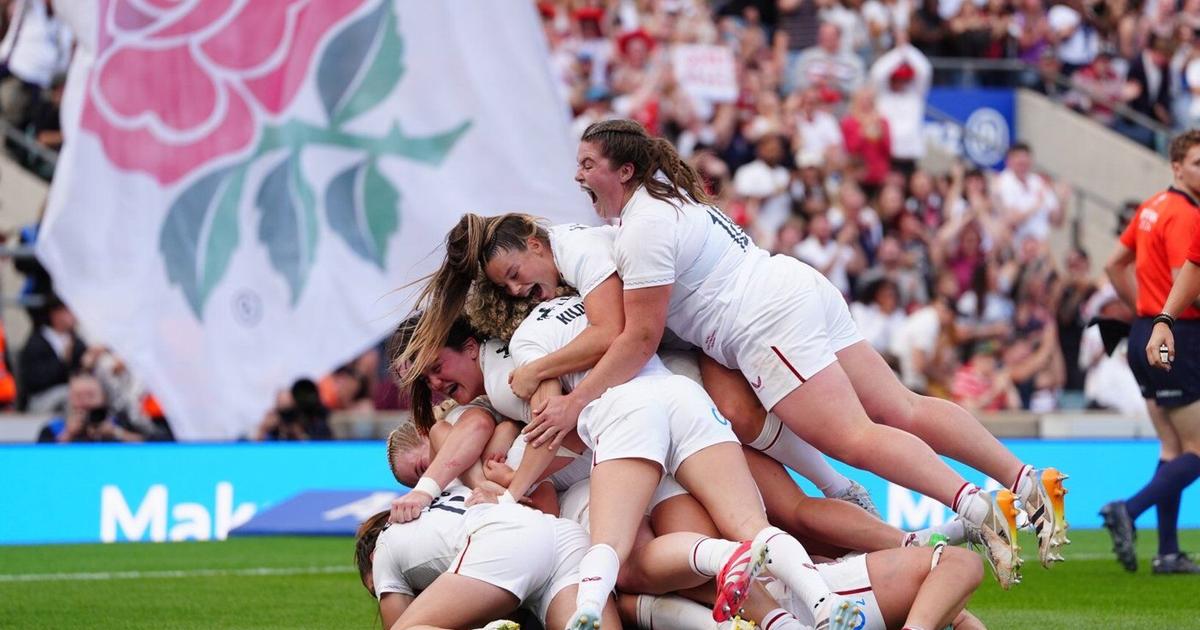
On Saturday, England hosted New Zealand in a WXV women's rugby match at Twickenham Stadium, with over 59,871 spectators watching the highly anticipated rivalry. Despite leading throughout most of the game and taking a deserved halftime lead after two tries from Amy du Plessis and Ayesha Leti-I'iga, the Black Ferns struggled in the second half as England's Jess Breach and Ellie Kildunne scored to regain the lead. The match was tied at 19-19 until the final minute when Zoe Harrison of England intercepted a pass from New Zealand deep inside their own 22-yard line, diving over for a crucial try that sealed the victory for England with a scoreline of 26-19. This win extended England's unbeaten streak to 41 tests and ended New Zealand’s undefeated record under new head coach Whitney Hansen. The game highlighted the historic rivalry between these two teams, with England playing a pivotal role in supporting women’s rugby in New Zealand when other opportunities were scarce for the country.
Written for “Women's Rugby World Champion Match En…” on 2026-10-05,
grounded in this article and the 3 other(s) covering the same event.
After an absence of nearly two years, the biggest rivalry in women’s rugby returns when England hosts New Zealand in front of more than 55,000 at Twickenham on Saturday.
asserted
England → return → Saturday
Such a break would have concerned both teams not so long ago, for different reasons.
The English, the serial queens of Europe, wanted to keep tabs on how they rated against the serial world champion.
asserted
they → concern → champion
New Zealand’s excuse was far more desperate: It needed games, exposure, vindication.
If not for England, New Zealand would not have played any rugby in 1997, 2001, 2005, 2009, 2011, 2012, 2013.
asserted
Zealand → need → 1997
In that period, the Black Ferns still won the Women’s World Cup in 1998, 2002, 2006 and 2010 but became a victim of their own success.
asserted
Ferns → win → success
New Zealand Rugby chronically underfunded the women’s game, and sexism and apathy were allowed to persist because there was no public pressure to change its attitude while the Black Ferns kept winning World Cups.
asserted
Ferns → underfunde → Cups
England, winner of the 1994 World Cup that New Zealand was banned from attending because the tournament wasn’t officially sanctioned, made first contact with New Zealand in 1997 with only players who could afford the 2,000 pounds to travel.
uncertain
who → ban → pounds
England returned in 2001, again a year out from the World Cup, and won the second test in Auckland 22-17 for its first win over the Black Ferns, who suffered their first loss in 10 years.
asserted
who → return → years
There was another visit in 2005, and New Zealand finally went to England in 2009 for two of the only six matches it played between the 2006 and 2010 World Cups.
asserted
it → be → Cups
Having lost three consecutive World Cup finals to New Zealand, England strategized more matches with the Black Ferns before hosting the 2014 World Cup.
asserted
England → lose → Cup
The English Rugby Football Union largely bankrolled tours by New Zealand in 2011 and 2012 and a reciprocal visit in 2013.
asserted
Union → bankroll → 2013
When New Zealand suffered consecutive defeats for the first time during the 2011 tour and failed to beat England in six straight matches, the alarm bells in New Zealand were not heard outside of women’s rugby circles.
asserted
bells → suffer → circles
They finally were at the 2014 World Cup, where the Black Ferns lost to Ireland for the first time, failed to reach the semifinals, and England won the title.
asserted
England → lose → title
From that point on, the Black Ferns began to be taken more seriously by NZR.
asserted
Ferns → begin → NZR
They regained the world crown in 2017 and 2022.
asserted
They → regain → 2017
Saturday’s game will be the first between them since the Red Roses won the World Cup they hosted a year ago and replaced New Zealand as world champions.
asserted
they → win → champions
They were on track to meet in that 2025 final but New Zealand was humbled by Canada in the semifinals.
asserted
Zealand → meet → semifinals
Canada went on to lose the final but rebounded last weekend by stopping England’s unprecedented 39-match winning streak in a gripping 26-26 draw in Exeter.
asserted
Canada → go → Exeter
 The Aporia