We’re delighted to feature this article as part of our ongoing series on “Liberal Virtues and Values.”
asserted
We → ’re → Virtues
The series, made possible with the generous support of the John Templeton Foundation, will make the case that liberalism has its own distinctive set of virtues and values that are capable not only of responding to the dissatisfaction that drives authoritarianism, but also of restoring faith in liberalism as an ideology worth believing in—and defending—on its own terms.
asserted
that → make → terms
If you haven’t already, please subscribe today to receive future instalments into your inbox!
asserted
you → subscribe → inbox
On December 13, 1790, just one week after Philadelphia became the U.S. capital, President Washington wrote to several Hebrew congregations across the fledgling nation to respond to the congratulations they sent him for his inauguration as president.
asserted
they → become → president
Washington opened the letter by invoking a word that today is almost lost to history.
asserted
Washington → open → history
He praised the congregations for their “liberality of sentiment” concerning religious tolerance, arguing that “the affection of such people is a treasure beyond the reach of calculation.”
asserted
affection → praise → calculation
To understand why Washington held this ideal in such high regard, we must return to the ancient Romans who inspired him, and follow the history of liberality from antiquity to the present.
asserted
who → understand → present
In this ancient virtue lies the seeds of modern political liberalism—and quite possibly an antidote to the crisis of meaning that plagues liberalism today.
uncertain
that → lie → liberalism
In her 2018 book The Lost History of Liberalism, historian Helena Rosenblatt expounds on the history of the concept of liberalitas (“liberality” in English).
asserted
Rosenblatt → expound → English
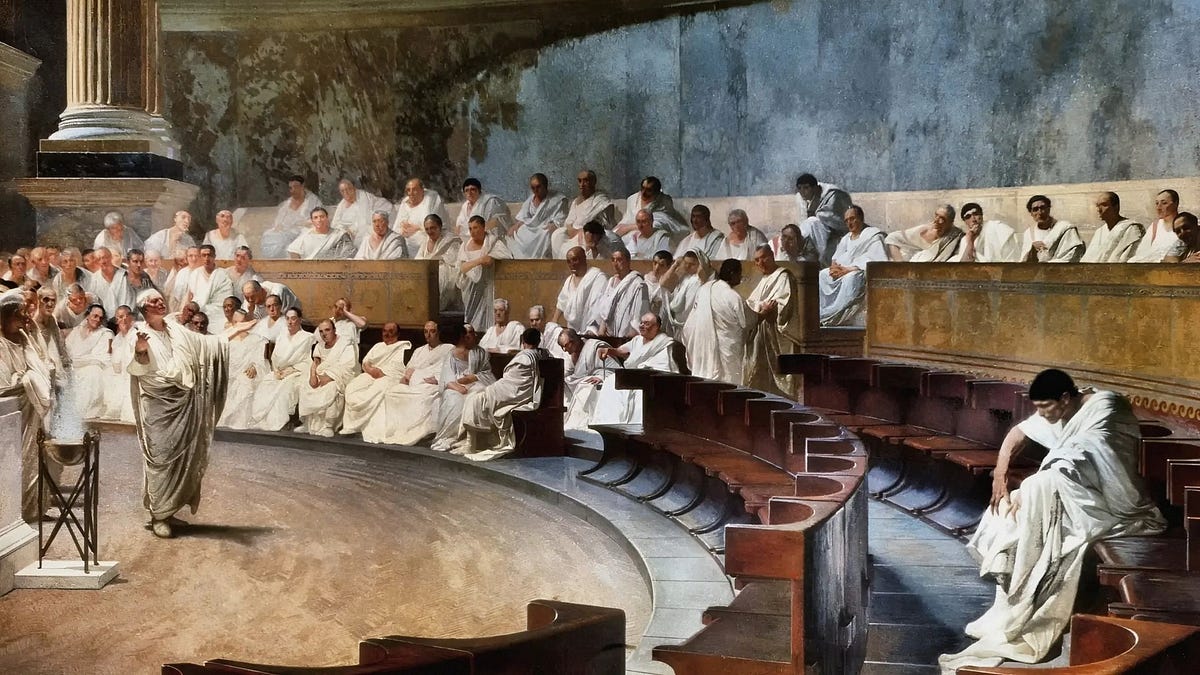
In ancient Rome, liberalitas was a political virtue characterized by financial and interpersonal generosity, fearless public speaking, and moral education.
asserted
liberalitas → characterize → generosity
The Romans saw the reciprocal connections of liberalitas as a kind of social glue that held social and political life together.
asserted
that → see → life
In De Officiis, Cicero—who had a profound influence on the American Founders—noted that if people “contribute to the general good by an interchange of acts of kindness,” those acts would “cement human society more closely together.”
asserted
acts → have → society
Cicero’s liberalitas played out largely in the Roman aristocracy, and its system of reciprocity was said to hold the bonds of the res publica together.
asserted
system → play → publica
Seneca in De Beneficiis, meanwhile, argued that the generosity that binds society cannot be truly liberal if the giver expects anything in return.
asserted
giver → argue → return
More radically egalitarian than Cicero, Seneca believed benefits could be given across class lines, and that from the perspective of virtue and social bonding, a giver’s good intentions matter more than the gift.
uncertain
intentions → believe → gift
The ancient Romans were wise in their view that acts of benevolence and giving foster social cohesion.
asserted
acts → foster → cohesion
In social scientist Robert Putnam’s books Bowling Alone and Making Democracy Work, he discusses the concept of “generalized reciprocity,” in which members of a community are confident their good deeds to others will be returned to them—not necessarily by the immediate recipient, but by someone else in the community down the line.
asserted
deeds → bowl → line
Norms around reciprocity emerge when people frequently associate with each other in organizations such as clubs, sports leagues, choirs, and churches.
asserted
people → emerge → clubs
According to Putnam’s research, societies with high rates of generalized reciprocity are less corrupt, have more functional governments, and are more civically engaged—something Cicero and Seneca both recognized.
uncertain
Cicero → accord → governments
The Roman view of liberalitas later evolved into a similar but Christianized concept in medieval Europe.
asserted
view → evolve → Europe
Priests encouraged their flocks to be as liberal with their mercy as God and as liberal with their love as Jesus.
asserted
Priests → encourage → Jesus
Through the tradition of the liberal arts, liberality became associated with a sense of open-mindedness and eventually tolerance of other religious beliefs.
asserted
liberality → associate → beliefs
At the tail end of Europe’s brutal wars of religion, John Locke championed “charity, bounty, and liberality” as necessary partners to religious tolerance, invoking the Biblical obligation of human fellowship.
asserted
Locke → champion → fellowship
Later on, the development of modern liberalism in revolutionary France transformed liberalitas from a private virtue into a political project.
asserted
development → transform → project
The values of generosity and fair treatment became fundamental to the design of the liberal state and its guarantees of equal rights, free expression, and religious toleration.
asserted
values → become → rights
Echoes of libertalitas continued to appear in the early political liberals’ obsession with the moral education of the people and their concern for “the social question,” targeting poverty and destitution with social and welfare programs.
asserted
Echoes → continue → programs
But by the 20th century—and especially following World War II—liberalism had changed.
asserted
liberalism → follow → II
It became less about “What do I owe others?” and more about “What am I owed?”
asserted
I → become → others
The relational quality that is a vital part of a meaningful life almost disappeared from the liberal project.
asserted
that → disappear → project
When Aristotle spoke of eleutheriotēs (liberality in Greek), he said that we should strive for a discerning form of generosity that favors giving and receiving in the right proportions.
asserted
that → speak → proportions
Modern liberalism, many would argue, has failed to find the right balance.
asserted
many → argue → balance
Fewer people today associate with each other in spaces that promote a sense of obligation among friends, such as sports clubs and churches.
asserted
that → associate → clubs
Friendship in many ways has evolved from something reciprocal to something that is chosen and revocable.
asserted
that → evolve → something
Contemporary men, in particular, have experienced a staggering decline in close friendships, and nearly 40% of Gen Z say they feel little to no purpose in their lives.
asserted
they → experience → lives
Although liberalism is not responsible for this crisis, it has failed to provide an adequate response.
asserted
it → fail → response
In fact, liberalism from the very beginning has been denounced for threatening the traditions and bonds that give life meaning.
asserted
that → denounce → meaning
A panoply of popes impugned it for its supposed satanism and desire to destroy the church and family.
asserted
panoply → impugn → church
In the 19th century, Nietzsche warned of the “last man” (letzter Mensch), a product of liberal democracy who seeks only pleasure and strives for nothing greater than comfort.
asserted
who → warn → comfort
The 21st century’s post-liberals on the political right echo the same fears: that liberalism is destroying family, church, and community.
asserted
liberalism → echo → family
The contemporary challenge for liberalism, then, is to answer its critics by reviving the spirit of liberalitas and bringing it back down to the level of individuals.
asserted
challenge → answer → individuals
…and 20 more, not listed.
 The Aporia