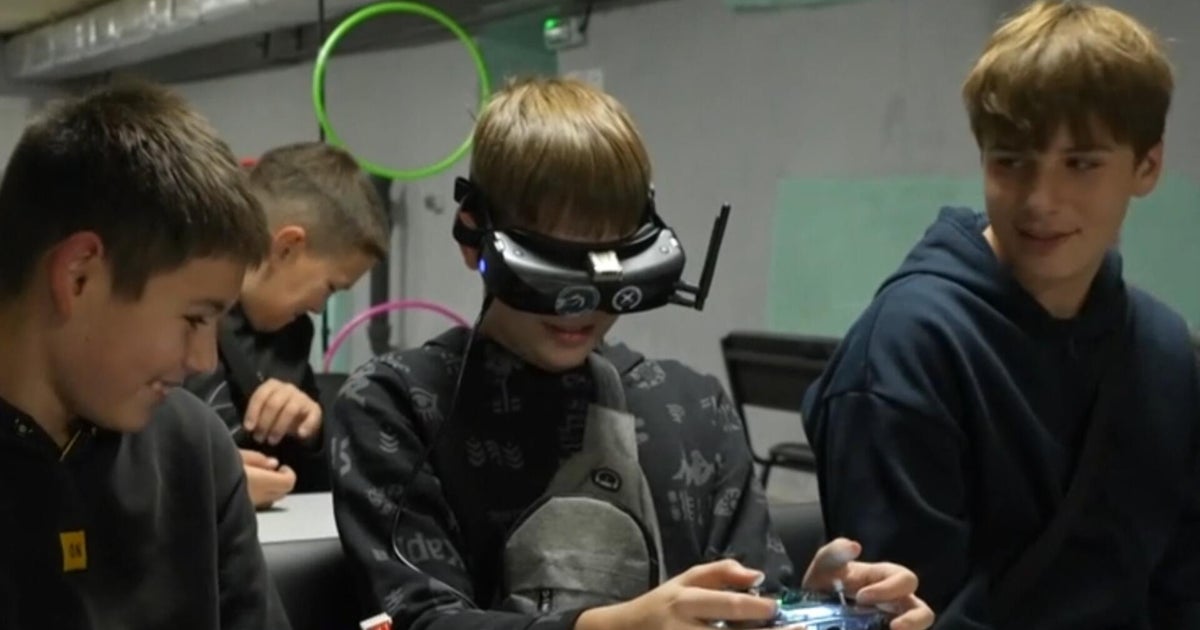
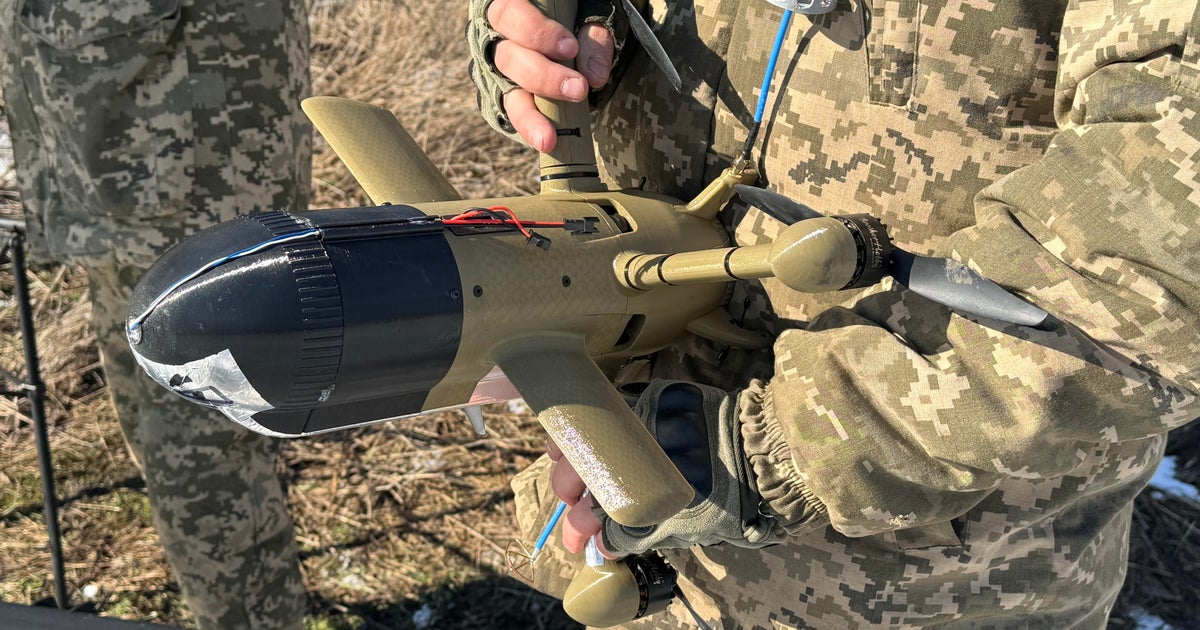
Children in a school near Kyiv are learning to fly drones as part of an educational program run by a Ukrainian nonprofit. The program teaches science, technology, engineering, and mathematics skills to children whose parents serve in the military. Inside the damaged school, kids tinker with FPV drones while acknowledging the war's impact; repairs for recent shrapnel damage could cost $500,000. Drones now make up 90% of casualties on both sides but are also used for civilian purposes like agriculture and medical evacuations.
Written locally by qwen2.5:14b on 2026-09-25,
using this article's own text rather than the other coverage of the
same event (that is the story summary below).
Story summary
In Kyiv, 20 miles south of Ukraine's capital, children of Ukrainian service members attend Tech Explorers, an educational program run by the nonprofit group Dignitas. The program offers free after-school sessions focused on STEM education. Despite recent damage from a Russian drone attack—wooden boards now cover shattered windows—the principal sees these repairs as potentially permanent due to their high cost, estimated at $500,000.
Inside classrooms adorned with old Soviet guns given by military parents, students learn to fly, build, and repair first-person-view (FPV) drones. The instructors emphasize the importance of embracing Ukraine's ongoing conflict rather than avoiding it. According to estimates from the Center for Strategic and International Studies, drones now account for 90% of casualties sustained by both sides in the war.
Written for “Drones For Defense Ukraine” on 2026-10-05,
grounded in this article and the 0 other(s) covering the same event.
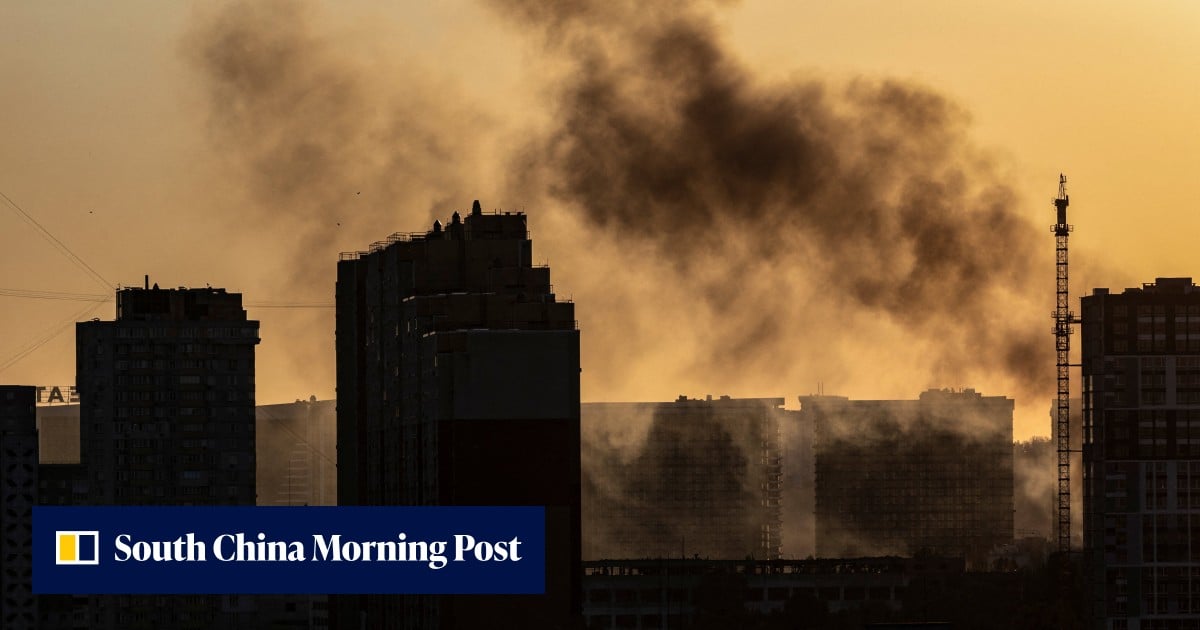
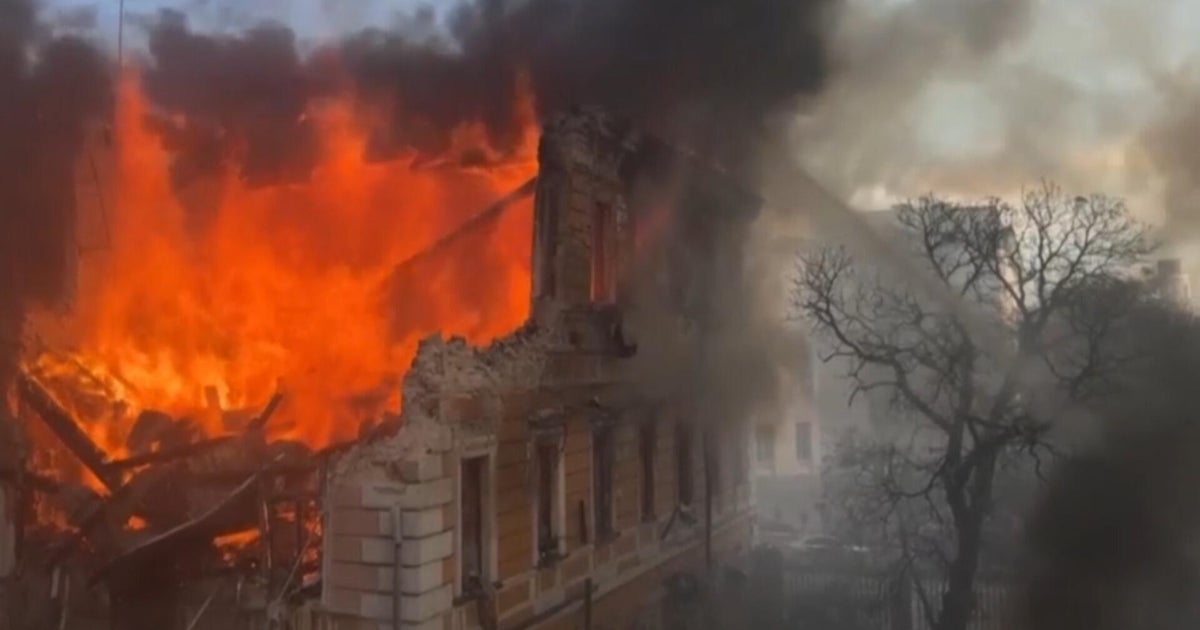
Wooden boards line the entry corridor, replacing windows shattered by a recent Russian drone attack near the school's campus, 20 miles south of Ukraine's capital.
asserted
boards → line → capital
The principal says they could become a permanent fixture, as repairs would cost $500,000.
uncertain
repairs → say → 500,000
Inside, children sit next to old Soviet guns — gifts from their parents' military units — leaning against the classroom walls as they tinker with sleek, first-person-view (FPV) drones spread out across tables.
asserted
they → sit → tables
Tech Explorers, an educational program run by the Ukrainian nonprofit group Dignitas, operates free after-school sessions for children of Ukrainian service members, focused on teaching them science, technology, engineering and mathematics.
asserted
Explorers → run → science
The underlying purpose of the lessons, the instructors told CBS News, is not to shy away from the realities of Ukraine's four-and-a-half year
, but to lean into them.
asserted
instructors → underlie → them
The students learn how to fly, build and repair FPV
in Ukraine.
asserted
students → learn → Ukraine
Drones now account for 90% of the casualties being sustained by both sides, according to estimates by the Center for Strategic and International Studies, but they are also increasingly used for logistics, medical evacuations and in civilian sectors such as agriculture and delivery services.
uncertain
they → account → agriculture
On one end of the classroom, three elementary school-aged boys use computer simulators to fly FPV drones in video game settings such as amusement parks and racetracks.
asserted
boys → use → parks
On the other side, another group is busy pressing buttons on a 3D printer, programming it to build new frames for drones.
asserted
group → press → drones
In the school's basement, another cohort flies completed miniature drones through hoops and ladders.
asserted
cohort → fly → hoops
Eduard, 14, whose father is a Ukrainian infantryman, has become such a talented pilot that he's started assistant-teaching the lessons.
asserted
he → become → lessons
"I got my first computer when the war started, because I needed to study online," he said, noting that his online class time soon extended into time spent on a drone simulator.
asserted
time → get → simulator
After practicing on the computer, Eduard began entering recreational drone racing competitions in Kyiv.
asserted
Eduard → practice → Kyiv
"Now I don't often play the simulator, because that's less interesting to me than flying real drones," he said.
asserted
he → play → drones
"I have my 5-inch drone and a couple days ago I built my own 10-inch drone."
asserted
I → have → drone
While Eduard and his students chase their drones around the basement, their instructor Sasha sees a more serious mission unfolding.
asserted
mission → chase → basement
"We don't know how long this war will last," he said.
asserted
he → know → ?
"It is an opportunity for children to improve their technical knowledge and be useful in the future in their country and in various ways."
asserted
children → improve → ways
With a son at home who just turned 1 year old, Sasha was originally conflicted about whether to teach young children how to fly drones, which are still primarily used in the country by its military.
asserted
which → turn → military
He decided that kids need to learn skills to prepare them for life in a country that has been transformed by the war, and he called the after-school lessons "a significant step for them to achieve good future professions."
asserted
them → decide → professions
Ukraine's burgeoning defense and technology industries have become increasingly important national economic assets.
asserted
industries → burgeon → ?
The country's IT sector now makes up over 3% of Ukraine's GDP, and this year, Ukraine's projected defense production capacity is $55 billion, roughly a quarter of its total economic output.
asserted
capacity → make → output
As Ukraine adjusts to the ways the war has transformed its people and institutions, schools across the country have woven basic medicine and pre-military training into their curriculums.
asserted
schools → adjust → curriculums
But, Sasha notes, Tech Explorers takes a different approach, training children not out of necessity — but instead searching for individual passions in the new spaces the war has created.
asserted
war → note → spaces
For some of his students, the approach seems to be working.
asserted
approach → seem → students
"I didn't really like engineering before," Eduard told CBS News, admiring the drones on the table beside him.
asserted
Eduard → like → him
"But when I started flying and learning about drones, I liked it more, and now I really like it.
asserted
I → start → it
Now I want to go to engineering college."
asserted
I → want → college
 The Aporia