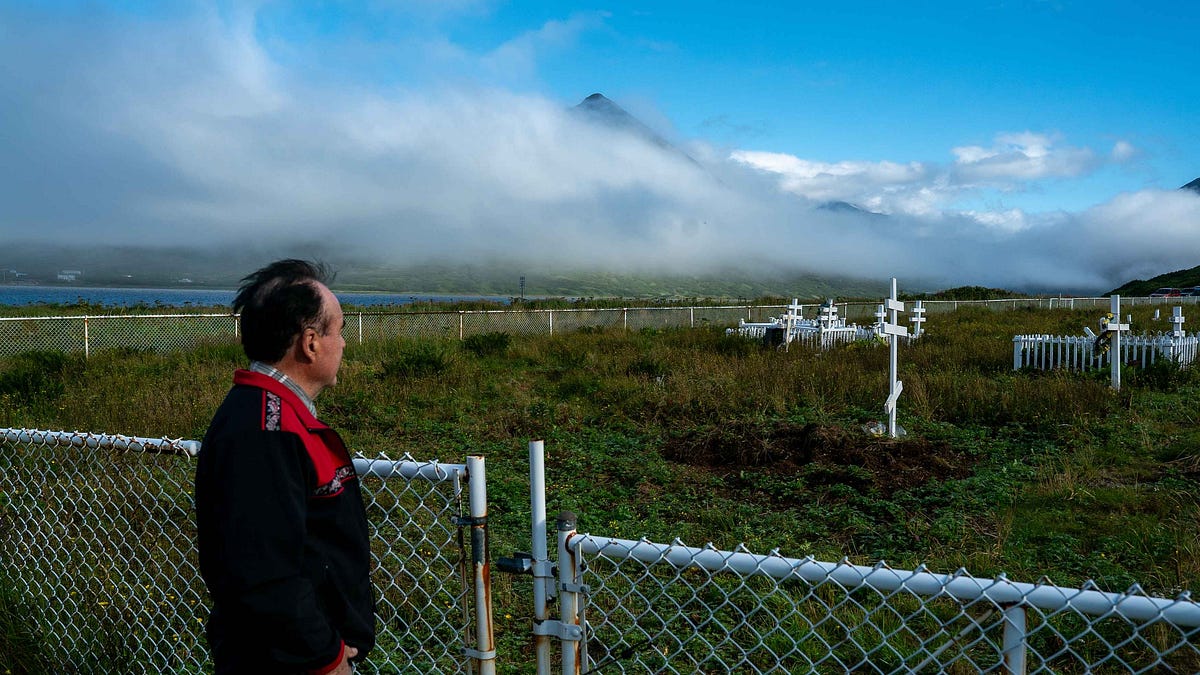
An Alaskan Town Is Literally Dying for a Road. Environmentalists Won’t Let Them Have One.

The Free Press · collected 2026-09-03 · by River Page
Read the original at The Free Press ↗

Summary

Garry Hennigh, city manager of King Cove, Alaska, recounts a story that sparked efforts to build a gravel road between his town and nearby Cold Bay in 1980. A fisherman named Tom Phillips was unable to be taken to a hospital in Anchorage due to the lack of a road, and he died in a plane crash attempting to reach Cold Bay's all-weather airport. Since then, at least 19 people have died from medical emergencies or crashes while trying to travel between the two towns, which are separated by 18 miles. The town still lacks access to a safe and reliable way to receive emergency medical care.
Written by the local model on 2026-09-03, using this article's own text rather than the other coverage of the same event (that is the story summary below).

Signals How these are calculated →

Claims extracted
13
claim-shaped sentences
Uncertain
0%
0 of 13 hedged
Leaning
withheld
no quote in the article backed the model's score
Publisher trust
96.2
red-flag proxy, not a credibility rating
Outlets on this story
1
Environment
Narrative spread
1
articles carrying this framing
Analyzed 2026-09-03 · how these are computed

AI analysis (generated at analysis time, not now)

Story summary

In 1980, a plane carrying a wounded fisherman from King Cove, Alaska crashed on takeoff due to poor weather conditions, highlighting the need for a road to connect the remote village to an all-weather airport in Cold Bay. King Cove is located approximately 900 miles from Anchorage, and its single gravel airstrip is unusable about 100 days out of the year because of bad weather. The lack of a reliable transportation option makes it difficult for residents like Tom Phillips, who needed emergency medical care after a boating accident that left him without a leg. Despite this need, environmentalists have opposed the construction of a road to King Cove, citing concerns about its potential impact on wildlife and ecosystems in the area. The issue has been ongoing since 1980, with no resolution in sight for the residents of King Cove.

Written for “Environmental Blockade in Alaska” on 2026-09-03, grounded in this article and the 0 other(s) covering the same event.
Why this leaning score
The model judged this article politically coded and scored it +0.85, but none of the 1 quote(s) it offered could be found in the article text, so the score is not published.
Written under an earlier scoring contract, which gave a paragraph rather than checkable quotes. Re-analysing this article replaces it.
Leaning score withheld for article 3531: no verified evidence · logged 2026-09-03

Story

📰 Environmental Blockade in Alaska
Environment · 1 article(s) covering the same event. This is the one the site leads with.

How this is being covered How these are calculated →

Article leaning vs. publisher reliability
Source leaning vs. consistency

Compared with similar articles

Nothing to compare against. No article is close enough to this one for the pipeline to have linked or judged the pair.

Publisher

The Free Press · 40 article(s) · 0 correction(s) detected
SignalValueWeight
Correction rate 0.000 0.4
Uncertainty density 0.077 0.25
Assertive mismatch rate 0.000 0.35
No corrections detected for this publisher. That may mean careful reporting, or simply that nothing has been checked.

Who wrote this

River Page
1 article(s) here · 0 carrying a prediction
The only article under this byline in the corpus.

Topics

Alaska America Anchorage King Cove Russia

Subjects

King Cove GPE · 4× Hennigh PERSON · 3× Anchorage GPE · 2× Phillips PERSON · 2× Alaska GPE · 1× America GPE · 1× Cathy Hoff PERSON · 1× Garry Hennigh PERSON · 1× Russia GPE · 1× Tom Phillips PERSON · 1×

Narrative

The fishing village of just several hundred people, most of them native, is extremely remote, and surrounded by volcanoes in the Aleutians—an island chain that juts into the Bering Sea between America and Russia.
framing: assertive · carried by 1 article(s) · first seen 2026-09-03

Claims (13 extracted, 0 hedged)

“Nineteen eighty was the first crash,” said Garry Hennigh, the longtime city manager of King Cove, Alaska. asserted
Hennigh → say → Cove
The fishing village of just several hundred people, most of them native, is extremely remote, and surrounded by volcanoes in the Aleutians—an island chain that juts into the Bering Sea between America and Russia. asserted
that → surround → America
And Anchorage is where Tom Phillips needed to be. asserted
Phillips → need → ?
Hennigh recounts the story. asserted
Hennigh → recount → story
Phillips was a fisherman who’d just had his leg ripped off in a freak boating accident. asserted
leg → have → accident
Cathy Hoff, King Cove’s only medical care provider, was insistent that Phillips be taken to a hospital in the state’s largest city to save his life. asserted
Phillips → take → life
The issue was, King Cove only has a single gravel airstrip that is unusable, on average, 100 days out of the year owing to inclement weather. asserted
that → have → weather
In the end, PenAir, the local carrier, decided to take the risk and fly out of King Cove. asserted
PenAir → decide → Cove
Hoff jumped onto the plane to help, as did another fisherman, Darien Gorsinger. asserted
fisherman → jump → plane
“They crashed right before they got to Cold Bay,” Hennigh told me. asserted
Hennigh → crash → me
“The Coast Guard came and found everybody dead about six hours later.” asserted
everybody → come → ?
Hennigh says this tragedy kick-started serious efforts to get a gravel road built between King Cove and Cold Bay. asserted
road → say → Cove
However, more than 40 years later, people are still dying—19 in total have passed, he says, either from lack of urgently needed medical care or via plane crash—and the road still hasn’t been built. asserted
road → pass → crash
💬 Give feedback
🕘 History 🎫 Support