WASHINGTON (AP) — For decades, a key principle underpinned civil rights enforcement in American schools: Not all discrimination was intentional.
asserted
discrimination → underpin → schools
Even if a school policy was written without overt racial bias, it might unfairly hurt one group of students over another, the understanding went.
uncertain
understanding → write → another
The concept is known as systemic racism, and Republican and Democratic administrations agreed: Schools and universities that received federal funding had an obligation to address it.
asserted
that → know → it
Under President Donald Trump’s administration, that’s no longer the case.
asserted
that → ’ → administration
One by one, the administration has limited the remedies schools can use to address systemic racial injustice.
asserted
schools → limit → injustice
This summer, the Education Department rescinded a regulation that allowed schools to gauge potential discrimination by comparing outcomes across races, such as the racial breakdown of students in advanced classes.
asserted
schools → rescind → classes
Then, it issued a letter to American schools, emphasizing it’s illegal to consider race when crafting discipline policies — even if one particular racial group ends up suspended or expelled more often.
asserted
group → issue → policies
At the same time, Trump’s Justice Department has stepped away from many school desegregation cases.
asserted
Department → step → cases
In a news release Thursday, the department boasted of successfully working through the courts to close more than 50 desegregation cases since Trump took office, with motions to dismiss in the works in many other cases.
asserted
Trump → boast → cases
Previous administrations had used these federal court cases to hold schools accountable when students of color had worse outcomes than white students — high rates of discipline, worse school facilities or reduced access to extracurriculars and advanced coursework.
asserted
students → use → extracurriculars
While Trump’s first administration deprioritized enforcing racial justice, his current administration has gone further — threatening to punish schools for any consideration of race in their policies and practices.
asserted
administration → deprioritize → policies
To the administration, the practice of examining different outcomes for particular groups of students, sometimes known as “disparate impact,” was itself a form of racial discrimination.
asserted
practice → examine → discrimination
“The Obama and Biden Administrations weaponized disparate impact by effectively coercing schools to discipline students differently based on race in order to engineer equitable disciplinary outcomes across racial groups,” Education Department spokesperson Sabin Sidney said.
asserted
Sidney → weaponize → groups
“These practices unfortunately led to unsafe classrooms and undermined student learning.”
asserted
practices → lead → learning
Critics worry the administration’s actions will make it easier to get away with racial discrimination.
asserted
it → worry → discrimination
“When they talk about returning it to the states and making America great again, they’re talking about returning to how it was before 1954,” when school segregation was legal, said U.S. Rep. Bobby Scott, D-Va.
School discipline data had offered insights on discrimination
Since Trump’s return to office, the administration has set its sights on school discipline.
asserted
administration → talk → discipline
In May 2025, the president signed an executive order directing federal agencies to stop looking for “ disparate impact,” or policies that appear neutral but result in outsized impact to one group over another.
uncertain
that → sign → another
Those policies had been examined for possible discrimination, regardless of their intent.
asserted
policies → examine → intent
In education, that analysis had most often been applied to school discipline — especially to removing students from the classroom, such as through suspensions, expulsions and referrals to law enforcement.
asserted
analysis → apply → enforcement
Federal and state data have long shown students of color, particularly Black students, are more likely than their peers to be pulled from the classroom for similar infractions.
asserted
students → show → infractions
Research shows that students who are suspended are more likely to become disengaged from school and to have worse academic outcomes.
asserted
who → show → outcomes
In 2021, the Education Department began investigating a complaint alleging Black male students with disabilities in Denver Public Schools were being disproportionately pushed out of the classroom.
asserted
students → begin → classroom
Progress on the case halted after Trump took office in 2025.
asserted
Trump → halt → 2025
Advocates had also filed the complaint with state authorities, who found violations of civil rights laws and ordered the district to mandate new training.
asserted
who → file → training
Meanwhile, families have heard nothing from the federal Education Department.
asserted
families → hear → Department
The silence gives school districts permission to continue with business as usual, said Pam Bisceglia, executive director of Advocacy Denver, which filed the complaints.
asserted
which → give → complaints
“I’d like to say that we have overcome and that marginalized communities are enjoying equal protections.
asserted
communities → like → protections
We see that, in fact, that isn’t true,” she said.
asserted
she → see → fact
Trump’s administration has changed which cases are investigated
Under Trump’s first administration, the Education Department continued to investigate and resolve cases of racial discrimination against minority students.
asserted
Department → change → students
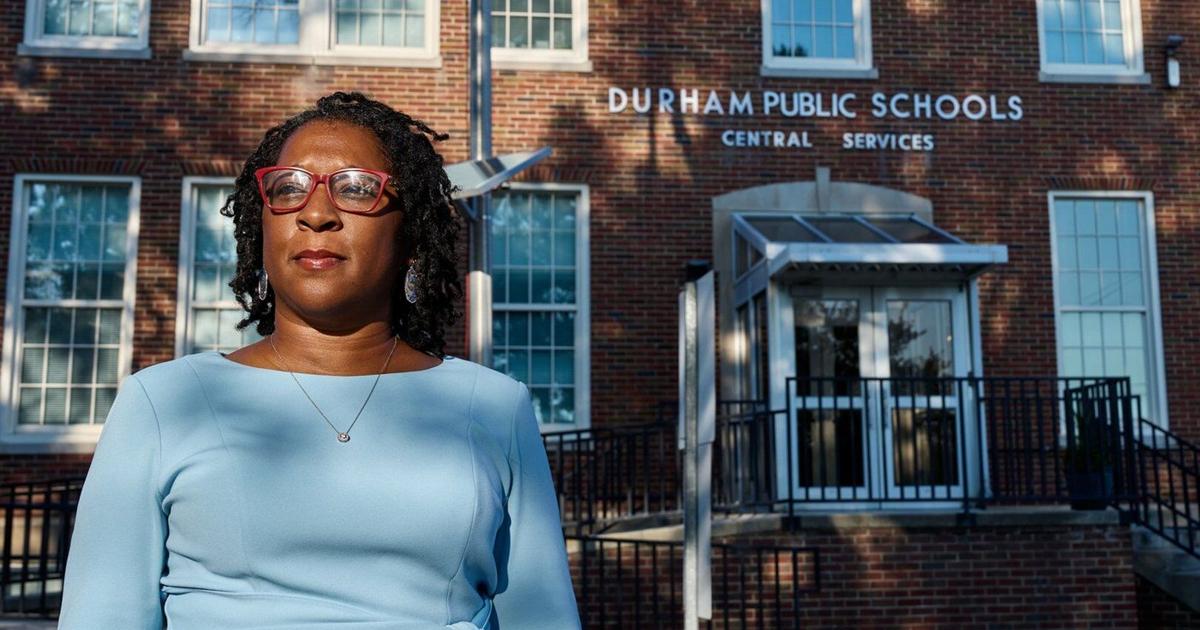
In 2018, the Education Department reached a settlement agreement with Durham Public Schools in North Carolina, after examining whether the district’s discipline policies, or their effects, were racially discriminatory.
asserted
policies → reach → Carolina
The investigation found Black students were disproportionately given out-of-school suspension — especially in instances involving subjective decisions on matters like disobedience.
asserted
students → find → disobedience
For a time, Jovonia Lewis, a parent and former Durham school board member, constantly received calls about her son being kicked out of the classroom.
asserted
son → receive → classroom
She was told he couldn’t sit still.
asserted
he → tell → ?
But the federal settlement agreement helped Black parents see their children’s experiences were not occurring in isolation, Lewis said.
asserted
Lewis → help → isolation
“We knew our kids were being treated differently, but this data gave us leverage,” she said.
asserted
she → know → leverage
The investigation had a significant impact in Durham, Lewis recalled.
asserted
Lewis → have → Durham
The district adopted a new student code of conduct and created an equity affairs office.
asserted
district → adopt → office
Under the Trump administration’s new guidance, federal authorities are unlikely to take up similar cases.
asserted
authorities → take → cases
“The federal government has chosen to close its eyes to that way of understanding discrimination,” said Catherine Lhamon, who oversaw education civil rights under Presidents Barack Obama and Joe Biden, both Democrats.
asserted
who → choose → Obama
The impact of the administration’s changes will outlast Trump’s presidency, said Johnathan Smith, a former attorney in the civil rights division at the Justice Department and a managing director at the National Center for Youth Law.
asserted
Smith → outlast → Law
…and 16 more, not listed.
 The Aporia