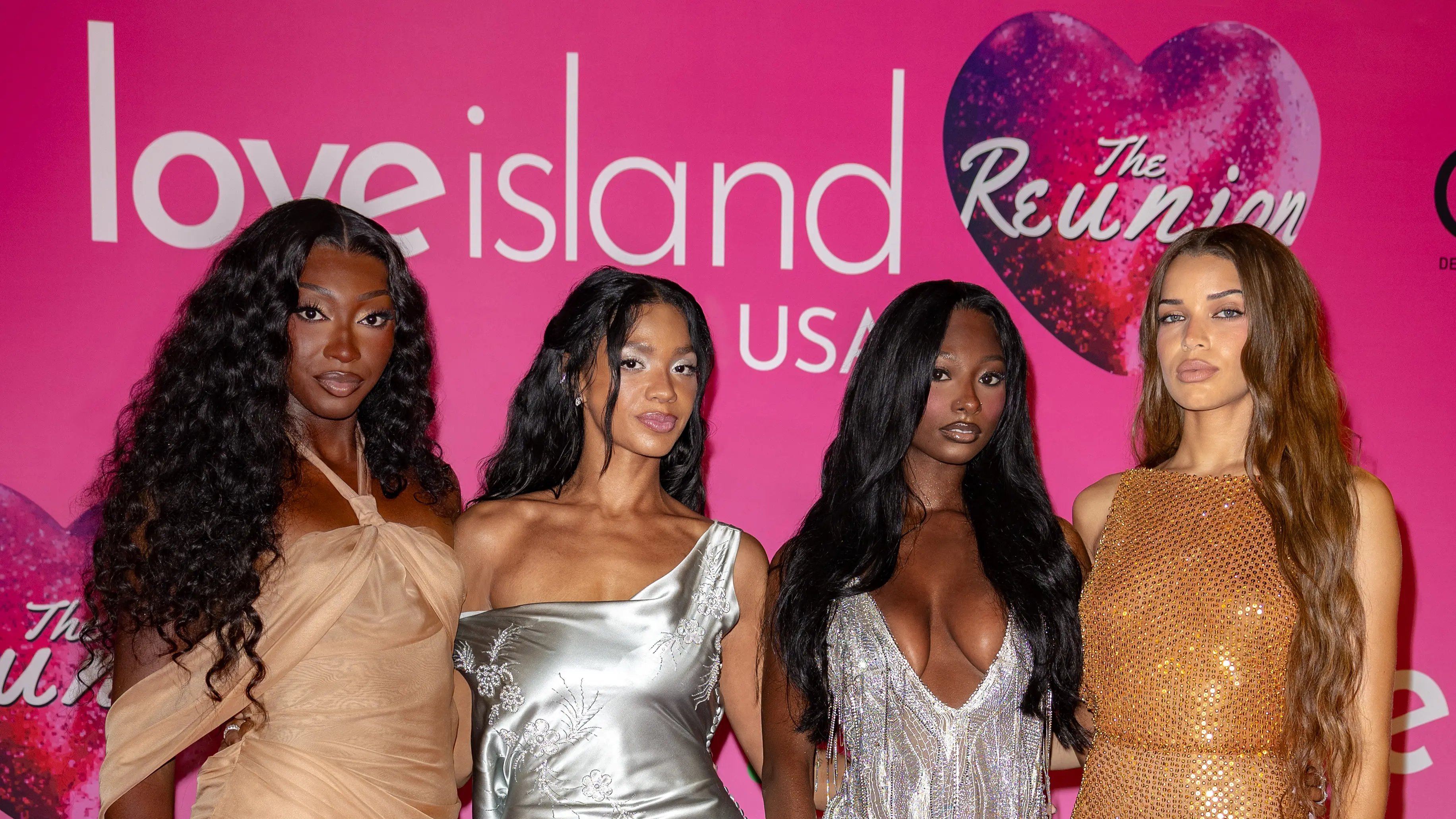
Love Island USA would not exist without Black women.
asserted
USA → exist → women
Their viral moments, reads at the fire-pit, and ability to shape pop culture in their image are the stuff of marketing executives' dreams.
asserted
moments → shape → dreams
Within the timespan of a summer, Season 8’s core four—Trinity Tatum, Kayda Bosse, Aniya Harvey, and Melanie Moreno—gained millions of followers across social media platforms, signed deals with major talent agencies, and received widespread coverage across mainstream media publications.
asserted
core → gain → publications
The Love Island USA effect is not limited to these four women.
asserted
effect → limit → women
The show has also brought notoriety and fame to their male partners and other Islanders, as well.
asserted
show → bring → partners
But the breakout stars of the Peacock dating series are experiencing these phenomena on another level, with built-in fanbases that follow and support every campaign they take part in, both on and off social media.
asserted
they → experience → media
In a landscape where fame equates to followers and followers equate to money, these four Black women are raking in the profits and new opportunities their newfound fame has brought, and Black women are to thank for it.
asserted
women → equate → it
But even as their fans prop them up, it often seems as though they are taken for granted by other Islanders, those cast members’ fanbases, and ITV America and Peacock, which have seen their bottom lines grow significantly as a direct result of the dating franchise.
asserted
lines → prop → franchise
Despite their success, Tatum, Bosse, Harvey, and Moreno have been subjected to constant anti-Black racism and sexism, and the support network that should be there to protect them has been conspicuously absent: There’s been no statement of support or condemnation from the networks, while cast members defend their mistreatment of the core four rather than have their backs.
asserted
members → subject → backs
What’s more, the harm to these women is experienced by Black women watching the show as vicarious racism—an indirect exposure to racial and gender discrimination—that elicits feelings of fear, sadness, and anger.
asserted
that → ’ → fear
(As of publication, representatives from Peacock and ITV America had not responded to a request for comment.)
asserted
representatives → respond → comment
On the Love Island USA Season 8 reunion, which aired Aug. 31 on Peacock, mistreatment on social media was a recurring theme among the Islanders, specifically the Black Islanders, who spoke about receiving death threats, racial slurs, and discriminatory harassment from fans of the Fiji-set dating franchise.
asserted
who → air → franchise
“I don’t stand for racism towards me, towards Titi [Tierra Davis], and any of the other cast members, which is a big reason why I haven’t really been on social media,” said KC Chandler on the reunion stage.
asserted
Chandler → stand → stage
“I wanted to get my mind right and really focus on what matters to me, which is my family and my mental health.
asserted
which → want → me
This was not the first time a Black Islander had expressed discontent on the Love Island USA reunion stage.
asserted
Islander → express → stage
Last year, breakout star Olandria Carthen tearfully spoke about the racism and bullying she experienced from fans of Huda Mustafa, including one who photoshopped her face onto the body of George Floyd.
asserted
who → speak → Floyd
Serena Page, winner of Love Island USA Season 6, told podcast host Kamie Crawford that she talked to production staff about their decision to cast male Islanders who were not attracted to Black women, thus reinforcing the stereotype that Black women are undesirable.
asserted
women → tell → stereotype
And these messages are sent to a massive audience: the most recent season accumulated nearly 19 billion hours of viewing—a streaming record for Peacock.
asserted
season → send → Peacock
Nor is Love Island USA the first unscripted television show to have a toxic fandom.
asserted
USA → have → fandom
But the lack of protections for these stars, in addition to being an ethical lapse with serious ramifications for their mental health, could pose a threat to the future of the franchise.
uncertain
lack → pose → franchise
Fans are loyal to Islanders more than to the show itself, and if the show’s biggest stars are no longer in its orbit, it becomes harder to keep their devotees in that orbit too.
asserted
it → become → orbit
The trio of friends nicknamed PPG—Leah Kateb, Serena Page, and JaNa Craig—who catapulted the unscripted series into fame in Season 6, have publicly distanced themselves from the dating show.
asserted
who → nickname → show
Carthen took a similar tack after last year’s reunion.
asserted
Carthen → take → reunion
And Moreno claimed not to have tuned in to the Season 8 reunion via an post on the official Shondaland Instagram page.
asserted
Moreno → claim → page
To be clear, Black women aren’t the only ones who seem to be moving on once their time on the show is done.
asserted
time → seem → show
“ I don't think these people want to be professional reality stars,” says Anna Peele, contributing editor at Vanity Fair and author of Enter the Villa: The Unauthorized Reality Behind Love Island.
asserted
Peele → think → Island
“ Huda [Mustafa] wanted to keep being on reality TV.
asserted
Mustafa → want → TV
I think some of the cast members who left earlier are going to be very happy to be [on its spinoff series] Beyond The Villa.”
asserted
who → think → Villa
But for the most part, she explains, they want to pivot or branch out.
asserted
they → explain → part
“These people want to be models, hosts, presenters, DJs.
asserted
people → want → ?
I don't know if those are higher aspirations than being a reality star, but they are different aspirations.
asserted
they → know → ?
The way that you comport yourself is going to be different than continuing to feed the public interest in your private life.”
asserted
you → comport → life
The franchise has perhaps inadvertently shown fans the downsides of being a part of it.
asserted
franchise → show → it
Beyond The Villa became its first spinoff series following the breakout success of Season 6, which saw significant growth in the show’s stateside audience.
asserted
which → become → audience
The spinoff followed the fan favorites of that season as they adjusted to their newfound fame in Los Angeles.
asserted
they → follow → Angeles
The show was meant to be an inside look into the lives of America’s favorite Islanders, but it wasn’t all glamorous.
asserted
it → mean → Islanders
Viewers were privy to these young adults’ experiences of heightened anxiety, depression, struggles with their shifting personal and professional identities, and other issues related to their participation.
asserted
Viewers → heighten → participation
Season 2 of the spinoff did not feature runner-up Nic Vansteenberghe, Carthen, Mustafa, nor Allen “Ace” Steve Greene and Michelle “Chelley” Evelyn Bissainthe, after many of them expressed frustration over the way they were depicted.
asserted
they → feature → way
The spinoff was renewed for a third season, but the likelihood of Season 8's core four joining is slim to none—though contractual obligations mean other new opportunities may be temporarily limited.
uncertain
opportunities → renew → none
“It gives the network or streamer veto power over any brand or commercial deals the talent may pursue,” McKinley Franklin explains in the Hollywood Reporter.
uncertain
Franklin → give → Reporter
…and 34 more, not listed.
 The Aporia