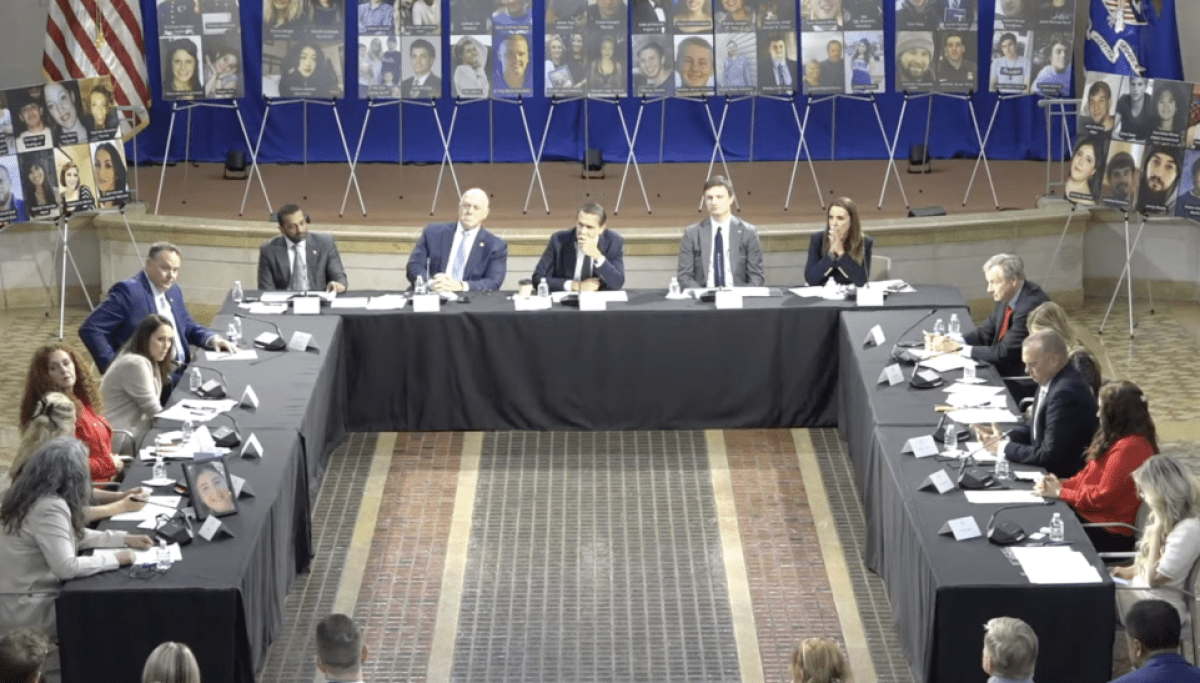
The Justice Department unveiled a $25 million grant opportunity Thursday as Attorney General Todd Blanche hosted violent crime survivors and grieving families for a summit focused on public safety and support for victims.
asserted
Blanche → unveil → victims
The Assisting Neighborhoods and Governments with Enforcement of Laws program will serve to help and reward law enforcement offices across the nation that are fighting back against crime perpetrated by illegal immigrants, along with efforts against gangs and drug and human trafficking.
asserted
that → serve → gangs
Local law enforcement offices are encouraged to apply through a link provided in a DOJ press release.
asserted
offices → encourage → release
“This funding opportunity is a way for local law enforcement to honor victims and counter the dangerous sanctuary policies that have decimated public safety in so many states,” Associate Attorney General Stanley Woodward said.
asserted
Woodward → honor → states
“The Trump administration and this Department of Justice want to ensure local law enforcement have the resources they need to ensure the deaths of innocent Americans never happen again.”
asserted
deaths → want → Americans
Blanche announced the initiative at the first Attorney General’s Summit on Victims of Violent Crime.
asserted
Blanche → announce → Crime
Participants in the roundtable discussion included FBI Director Kash Patel, White House border czar Tom Homan, acting Deputy Attorney General Trent McCotter, and Office of National Drug Control Policy Director Sara Carter.
Homan, who spoke at the start of the roundtable discussion,
asserted
who → include → discussion
argued that much of the violence and pain against the victims in attendance had been spurred by progressive state and city “sanctuary” policies, many of which hamper the federal government’s effort to crack down on illegal immigrant criminal activity.
asserted
many → argue → activity
“Sanctuary cities are sanctuaries for criminals,” Homan said.
asserted
Homan → say → criminals
“They need to be outlawed.
asserted
They → need → ?
Congress needs to get off their a** and pass laws to make sanctuary cities illegal.”
asserted
cities → need → laws
Families in attendance described the lasting consequences of violence and urged officials to improve how the criminal justice system responds to victims and handles repeat offenders.
Stephen Federico, whose daughter, Logan, was killed while visiting friends at the University of South Carolina in May 2025, called for closer scrutiny of decisions that allow defendants with extensive criminal histories to remain free.
uncertain
defendants → describe → histories
Federico emphasized that his daughter’s killer was a U.S. resident, underscoring that sanctuary or soft-on-crime policies don’t only implicate crime perpetrated by illegal immigrants.
asserted
policies → emphasize → immigrants
“Can anyone tell me, please, how a felon like that is left on the street?” Federico asked.
asserted
Federico → tell → street
Patricia Fox described how her daughter suffered a catastrophic brain injury during a motorcycle crash in March 2025 in Aurora, Colorado.
asserted
daughter → describe → Aurora
Fox said the driver was in the country illegally and fled the scene.
asserted
driver → say → scene
Her daughter now requires constant care, Fox said.
asserted
Fox → require → care
She described working to obtain a power wheelchair after a Medicaid denial while continuing to seek opportunities for her daughter’s recovery.
asserted
She → describe → recovery
“I’m not here for sympathy,” Fox said.
asserted
Fox → ’m → sympathy
“I’m here for accountability, for justice, and for change.”
asserted
I → ’m → change
Anna Giaritelli, a homeland security reporter for the Washington Examiner, also testified.
asserted
Giaritelli → testify → Examiner
In April, she published a book titled Under Assault, about her experience being sexually assaulted by a homeless person outside Union Station in April 2020.
asserted
she → publish → April
Giaritelli said her attacker was repeatedly arrested and released before her case moved forward.
asserted
case → say → ?
She also said her assault was excluded from Washington’s crime statistics and that she was never told the name of the judge who released the perpetrator of her attack.
asserted
who → say → attack
“I felt gaslighted by the criminal justice system,” she said.
asserted
she → gaslighte → system
“If an assault in broad daylight doesn’t count blocks from the United States Capitol, then where in America does it count?”
asserted
it → count → America
At one point, an attendee asked Patel how it was helpful that violent crime records like the one involving Giaritelli’s case were removed or deleted.
asserted
records → ask → case
“It doesn’t help at all,” Patel said.
asserted
Patel → help → ?
He emphasized that more complete reporting from state and local authorities gives investigators and prosecutors additional tools to connect offenders to crimes, adding that hearing the victims and their families on Thursday gave him “10 more ideas” he wants to implement across the FBI.
asserted
he → emphasize → FBI
According to the DOJ, the ANGEL grants can fund investigations, prosecutions, related court operations, temporary criminal detention, transportation, and logistical support.
uncertain
grants → accord → investigations
Awards will support participation in Homeland Security Task Force activities and other DOJ efforts against gangs, cartels, and violent crime.
asserted
Awards → support → gangs
The competitive award program honors those who have been killed by illegal immigrants and illicit drugs and is authorized under the One Big Beautiful Bill Act.
asserted
who → honor → Act
For families attending, the discussion repeatedly went back to the daily work of caring for survivors and preserving opportunities for their futures despite some of their life-altering injuries.
asserted
discussion → attend → injuries
“I’ll continue to help her experience things in life that she loved,” Fox said of her daughter.
asserted
Fox → continue → daughter
“That’s where we are now.”
asserted
we → ’ → ?
 The Aporia