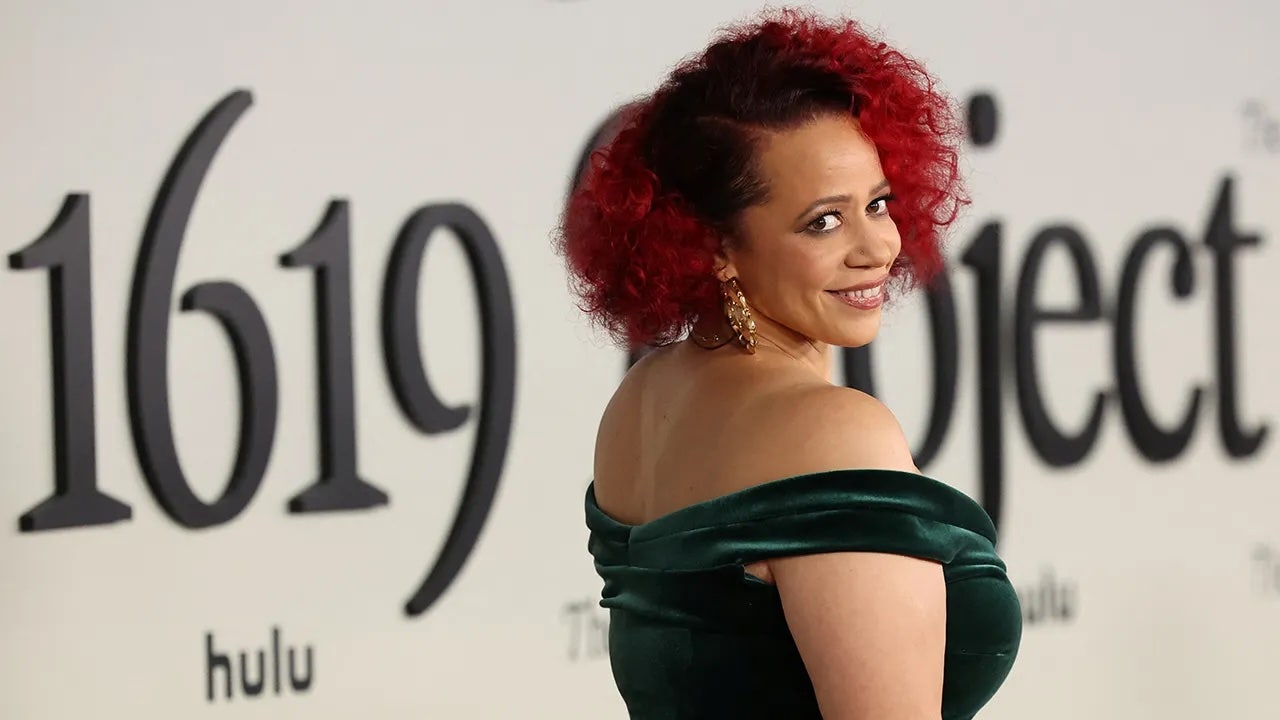
KAROL MARKOWICZ: 1619 Project founder Nikole Hannah-Jones learned the hard truth about schools

Read the original at Fox News ↗
Fox News · collected 2026-09-24 · by Karol Markowicz analysis

Quick Summary

Nikole Hannah-Jones, a prominent advocate for racial justice through her work on The New York Times Magazine's 1619 Project, has written about the challenges of sending her daughter to underperforming public schools in Brooklyn. In her recent piece titled "In Fighting for Every Black Child, Did I Betray My Own?", Hannah-Jones reflects on a decade-long struggle with her belief that children should attend their local schools despite evidence showing poor educational outcomes and low standards. The article highlights the harsh reality of failing urban schools, where teachers were disengaged and student behavior was unaddressed, leading to significant educational setbacks for her daughter. Hannah-Jones's piece also critiques the contradictions in progressive education policies and their impact on black children's academic success.
Written locally by qwen2.5:14b on 2026-09-24, using this article's own text rather than the other coverage of the same event (that is the story summary below).

AI analysis runs on qwen2.5:14b, locally

Story summary

Nikole Hannah-Jones, creator of the New York Times' 1619 Project, recently admitted regret over sending her daughter to underperforming public schools in Brooklyn instead of better-performing ones. In a piece for The New York Times Magazine, she explained that a decade ago she believed sending her daughter Najya to these schools would improve conditions there using her resources and influence. However, the quality of education failed to meet expectations, leading Hannah-Jones to eventually acknowledge error after Najya confronted her about the poor educational environment. Critics argue this decision prioritized ideological goals over her child's academic needs, while supporters see it as an attempt to address systemic inequalities in education through personal sacrifice. Despite the admitted failure, some suggest expanding school choice options could better help disadvantaged students. Hannah-Jones' story highlights ongoing debates around educational equity and parental responsibility.

Written for “Nikole Hannah-Jones School Choice Con…” on 2026-10-05, grounded in this article and the 10 other(s) covering the same event.

Signals How these are calculated →

Claims extracted
48
claim-shaped sentences
Uncertain
6%
3 of 48 hedged
Leaning
withheld
no quote in the article backed the model's score
Correction & hedging signals
68.6
corrections and hedging in what we collected; not a measure of accuracy
Outlets on this story
11
Education
Narrative spread
1
articles carrying this framing
Analyzed 2026-09-24 · how these are computed

Story

📰 Nikole Hannah-Jones School Choice Con…
Education · 11 article(s) covering the same event. See how they differ ↓

How this is being covered How these are calculated →

Article leaning vs. publisher reliability
Source leaning vs. consistency

Compared with similar articles

This article reads unscored and hedges 6% of its claims. Each row says how that neighbour differs.
Fox News · 0.90 cosine similarity
⚖️ leaning not scored 🔴 7% hedged 3 of 45 📰 publisher trust 69
“Both articles discuss Nikole Hannah-Jones reflecting on her decision to send her daughter to predominantly Black, high-poverty public schools in Brooklyn and regretting it.”
New York Post
⚖️ leaning not scored 🔴 9% hedged 4 of 46 📰 publisher trust 64
“The articles discuss Hannah-Jones's decision to send her daughter to struggling schools as a form of activism, but they do not describe the same specific incident or occurrence.”
New York Post
⚖️ Leans strongly right 🔴 20% hedged 3 of 15 📰 publisher trust 64
“The articles discuss related topics and criticisms but describe different time periods and outcomes regarding Nikole Hannah-Jones' decision to send her daughter to a struggling NYC school.”
Fox News
⚖️ leaning not scored 🔴 10% hedged 2 of 21 📰 publisher trust 69
“The articles discuss different aspects of Nikole Hannah-Jones' decision to send her daughter to underperforming public schools and Sunny Hostin's perspective on predominantly White private schools, rather than the same specific incident.”
Reason
⚖️ Leans right 🔴 12% hedged 10 of 80 📰 publisher trust 66
“Both articles discuss Nikole Hannah-Jones writing a New York Times article about regretting her decision to send her daughter to underperforming schools.”
New York Post
⚖️ Leans strongly right 🔴 3% hedged 1 of 34 📰 publisher trust 64
“Both articles discuss Nikole Hannah-Jones writing about sending her daughter to underperforming schools, referring to the same piece in The New York Times Magazine.”
New York Post
⚖️ leaning not scored 🔴 11% hedged 2 of 19 📰 publisher trust 64
“The articles discuss different aspects of Nikole Hannah-Jones' decision regarding her daughter's schooling and Sunny Hostin's comments on predominantly white private schools, but do not describe the same specific event.”
Washington Examiner
⚖️ Leans strongly right 🔴 10% hedged 4 of 42 📰 publisher trust 72
“While both articles discuss Nikole Hannah-Jones reflecting on sending her daughter to a Brooklyn school, they describe different instances or reflections at distinct times rather than the same specific incident.”
New York Post
⚖️ Leans strongly right 🔴 12% hedged 3 of 24 📰 publisher trust 64
“Both articles describe Nikole Hannah-Jones writing an essay about sending her daughter to failing public schools for ideological reasons, which is a single specific incident.”
New York Post
⚖️ Leans strongly right 🔴 3% hedged 1 of 32 📰 publisher trust 64
“Both articles discuss Nikole Hannah-Jones reflecting on her decision to send her daughter to a failing public school in New York City, which is the same incident.”

Publisher

Fox News · 2800 article(s) · 4 correction(s) detected
Running correction rate · 4 correction(s)
2026-10-03
Tennessee's state corrections chief resigns following failed execution of Christa Pike
2026-09-30
Repeat offender with lengthy rap sheet accused of gunning down Kentucky trooper during traffic stop
2026-09-23
Missouri mom who put newborn in oven instead of crib learns fate as murder charge dropped
2026-08-04
Pennsylvania school bus aide accused of sexually assaulting special needs teen

Who wrote this

Karol Markowicz
2 article(s) here · 1 carrying a prediction
🔮 She foments racial strife, as when she said of the investigation into the death of a Black teenager, Nolan Wells, who died after a boat trip near Mississippi's Horn Island, that "We know the investigation and everything that followed would have been different if Nolan Wells were White and his friends were Black.
🔮 Hannah-Jones believed that through her force of will, and her prominent position, which she mentions several times in the piece, she and her husband could improve these schools.
Also by Karol Markowicz
Nothing else under this byline is closely related to this article, so these are simply their most recent.

Topics

Bedford-Stuyvesant New York City North Carolina The New York Times Magazine the 1619 Project

Subjects

Hannah-Jones PERSON · 14× New York City GPE · 4× North Carolina GPE · 2× Bedford-Stuyvesant GPE · 1× Hannah-Jones’s PERSON · 1× Najya PERSON · 1× Nikole Hannah-Jones PERSON · 1× The New York Times Magazine ORG · 1× White PERSON · 1× the 1619 Project ORG · 1×

Narrative

But when a Black student in the audience asked Hannah-Jones for guidance on "navigating the predominantly white colleges and universities to which she has applied," Hannah-Jones was quick to respond that she should go to Howard University, a historically Black college or university (HBCU) because, well, integration is bad.
framing: assertive · carried by 1 article(s) · first seen 2026-09-24
🔮 Hannah-Jones believed that through her force of will, and her prominent position, which she mentions several times in the piece, she and her husband could improve these schools.

Claims (48 extracted, 3 hedged)

Nikole Hannah-Jones, founder of the 1619 Project and winner of the 2020 Pulitzer Prize for commentary, has written a blockbuster piece, "In Fighting for Every Black Child, Did I Betray My Own?" on the reality of sending her daughter Najya to failing schools in New York City. asserted
I → write → City
Hannah-Jones, a domestic correspondent for The New York Times Magazine covering racial injustice and civil rights, had tried to live out her progressive values and sent her child to the local, deficient public school. asserted
Jones → cover → school
Writing in 2016 for the magazine, she noted that her neighbors in the quickly gentrifying neighborhood of Bedford-Stuyvesant were opting out of the local school. asserted
neighbors → write → school
"I didn’t know any of our middle-class neighbors, black or white, who sent their children to one of these schools," Hannah-Jones shared. asserted
Jones → know → schools
Hannah-Jones did. asserted
Jones → do → ?
Now, ten years later, Hannah-Jones’s latest piece shows that her project had been a failure, at the cost of her child’s education. asserted
project → show → education
It’s a difficult read. asserted
It → ’ → ?
Hannah-Jones wanted to live out her values, especially the belief that children should go to their local school and that school choice is unacceptable. asserted
choice → want → school
But those ideas failed when they hit reality, and Hannah-Jones spent nearly a decade coming to accept that. asserted
Jones → fail → that
The column illustrates the struggles her daughter had at her elementary school, where teachers were disinterested and bad behavior went unpunished, and then in middle school, where homework went unchecked and standards were low. asserted
standards → illustrate → school
Hannah-Jones believed that through her force of will, and her prominent position, which she mentions several times in the piece, she and her husband could improve these schools. uncertain
she → believe → schools
What she’s missing is that it was her own misconceptions and bad ideas that got these schools into a bad position in the first place. asserted
that → miss → place
In 2018, Hannah-Jones gave a keynote address at the Color of Education event, an annual summit in North Carolina "dedicated to achieving racial equity and eliminating racial disparities in the education system." asserted
Jones → give → system
She spoke about how terrible it was that White kids in North Carolina were choosing charter schools instead of public schools in places "like Wake County that for years was a model of integration. asserted
that → speak → integration
But when a Black student in the audience asked Hannah-Jones for guidance on "navigating the predominantly white colleges and universities to which she has applied," Hannah-Jones was quick to respond that she should go to Howard University, a historically Black college or university (HBCU) because, well, integration is bad. asserted
integration → ask → University
Hannah-Jones ended that talk with this line: "The future of our children and the nation depends on progressives winning the fight to reclaim public schools." asserted
progressives → end → schools
Well, progressives reclaimed public schools in New York City. asserted
progressives → reclaim → City
There’s no way to look at New York City schools as anything but the testing ground for the exact policies Hannah-Jones would want. asserted
Jones → ’ → policies
Progressive Mayor Bill de Blasio removed "screens" — competitive benchmarks such as attendance, grades and test scores for middle school admissions — during COVID-19, and the practice was maintained by the next mayor, Eric Adams. asserted
practice → remove → mayor
The schools are heavily influenced by teachers’ unions. asserted
schools → influence → unions
Hannah-Jones opposes gifted and talented programs, and they have been severely reduced, no longer using entrance tests. asserted
they → oppose → tests
New York City public schools also follow the practices that Hannah-Jones would want regarding kids with behavioral issues. asserted
Jones → follow → issues
And, with New York’s longtime cap on charter schools, most kids are trapped there with no other options. asserted
kids → trap → options
But Hannah-Jones never accounts for her own bad ideas and how they fail in real life. asserted
they → account → life
When her daughter fails the state algebra test, it’s because standardized tests are unfair. asserted
tests → fail → test
She never once mentions teachers’ unions as the culprits behind why atrocious teachers and administrators remain at these schools, unable to be fired. asserted
teachers → mention → schools
When school choice is mentioned at all, it’s presented as the reason the middle school that was unsuccessful in teaching her very capable daughter was failing. asserted
that → mention → daughter
When Hannah-Jones confronts her daughter’s middle school principal with the reality that her daughter didn’t get enough from her education, the principal, in tears, responded, "None of this surprises me. asserted
None → confront → me
This is the reality of a segregated system, and it’s not just segregation by race and class, it’s by ability. asserted
it → ’ → ability
Yes, that’s the reality of school-choice systems, or it should be: Children who are capable and want to learn, and whose families make education a top priority, should be able to escape the kids who don’t want to be there and want to slow education down for everyone. asserted
who → ’ → everyone
In her article for the New York Times, Hannah-Jones spends a lot of time on demographics and household income, but there is an entire network of charter schools in New York, called Success Academy, that produces far better results than public schools while serving student bodies of similar means. asserted
that → spend → means
At one point, Hannah-Jones visted her child’s elementary school lunchroom and found it to be pandemonium. asserted
it → viste → lunchroom
She writes, "It was not the children that horrified me — kids of all incomes are rambunctious at lunchtime. asserted
kids → write → lunchtime
Students respond to the high or low expectations of institutions and the grown-ups who operate them, and it was clear that these children were getting the message." But somehow these expectations are not acceptable to have in the classroom. asserted
expectations → respond → classroom
Hannah-Jones described unruly kids being constantly "redirected" as "good educational practice. … asserted
kids → describe → practice
Schools like hers tend to rely on a zero-tolerance disciplinary playbook and often simply remove misbehaving students from classrooms, depriving them of precious educational time they cannot afford to miss. asserted
they → tend → time
But at Unison, teachers constantly worked to refocus students and mitigate conflict. asserted
teachers → work → conflict
This is good educational practice, but kids like Najya, who were just trying to do their work, saw this treatment as deeply unfair." It’s not just unfair; it is actually bad educational practice to let a misbehaving child distract the teacher again and again. asserted
child → try → teacher
It’s bad educational practice to allow one child to set an example that bad behavior will be met with no discipline. asserted
behavior → ’ → discipline
It’s bad educational practice to allow the good students to compete for the teacher’s attention with a student who shouldn’t be in the classroom. asserted
who → ’ → classroom
…and 8 more, not listed.

💬Give feedback
🕘History 🎫Support