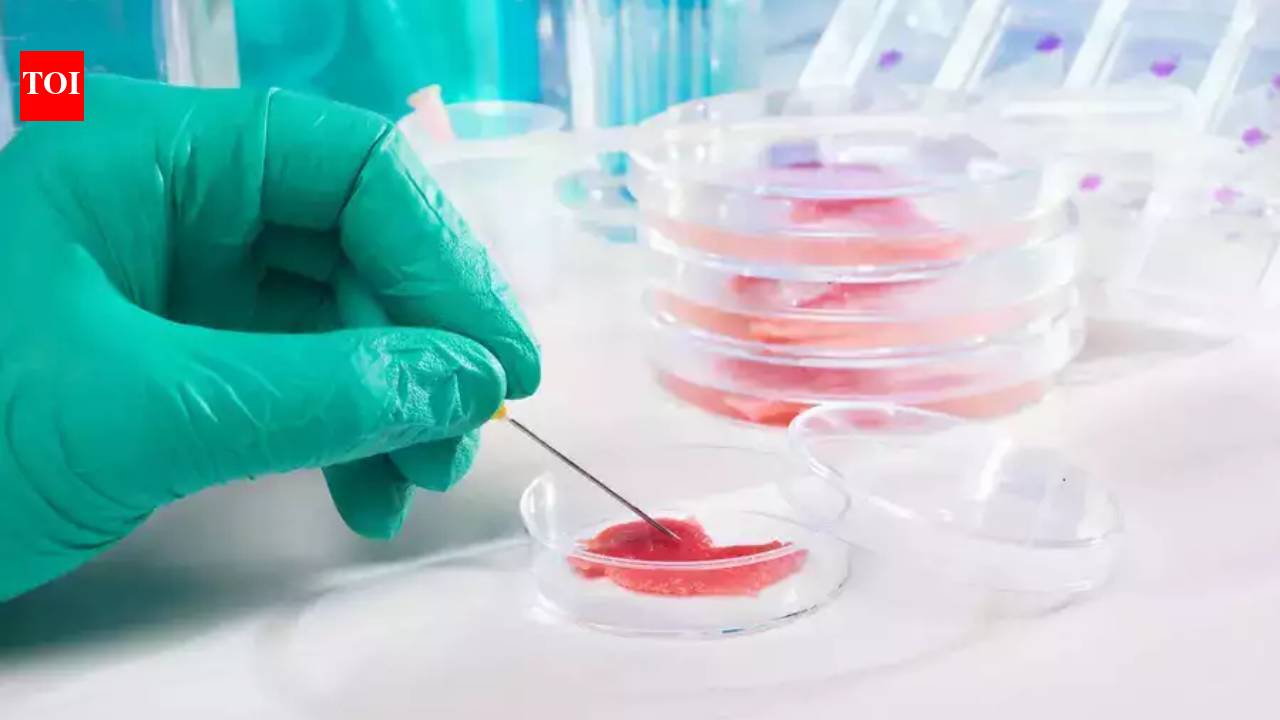
On a hot roof in Cambridge, Massachusetts, a small experimental device sat in the sun without a fan, compressor or electrical connection.
asserted
device → sit → fan
Its job was simply to get colder than the air around it.
asserted
job → get → it
Water moved through one part of the device, heat escaped through another, and layers of insulating material helped keep the cooling from being undone by sunlight.
asserted
layers → move → sunlight
That rather quiet experiment points to a problem that is becoming harder to ignore.
asserted
that → point → problem
Cooling is increasingly important as temperatures rise, yet conventional air conditioning depends on electricity and reliable infrastructure.
asserted
conditioning → rise → electricity
In places where either is scarce, keeping food, water or indoor spaces cool can be difficult.
asserted
keeping → keep → food
An MIT team has been testing a different approach, combining several passive cooling methods in a single compact structure.
asserted
team → test → structure
MIT researchers combined three cooling effects without electricity
The idea is not to replace air conditioning with a single miracle material.
asserted
idea → combine → material
Instead, the system brings together three familiar physical effects that have usually been used separately: evaporation, heat loss by infrared radiation and thermal insulation.
asserted
that → bring → radiation
Individually, each has limitations.
asserted
each → have → limitations
Evaporative cooling becomes less effective when the surrounding air is already humid.
asserted
air → become → ?
Radiative cooling can struggle when sunlight warms the surface it is supposed to cool.
asserted
it → struggle → surface
Insulation does not create cooling by itself; it simply slows the movement of heat.
asserted
it → create → heat
The MIT design places these functions together so that the weaknesses of one component are partly offset by the others.
asserted
weaknesses → place → others
As reported by MIT News, in tests, the small device produced a temperature reduction of about 9.3 degrees Celsius, or 18.7 degrees Fahrenheit, relative to the surrounding air.
asserted
device → report → air
That is a substantial difference for something that does not consume electricity.
asserted
that → consume → electricity
The researchers described the system in a 2022 paper published in Cell Reports Physical Science.
asserted
researchers → describe → Science
The work involved Zhengmao Lu, Arny Leroy, Jeffrey Grossman, Evelyn Wang, Lenan Zhang and Jatin Patil.
asserted
work → involve → Lu
The three-layer device reflects sunlight, evaporates water and sheds heat
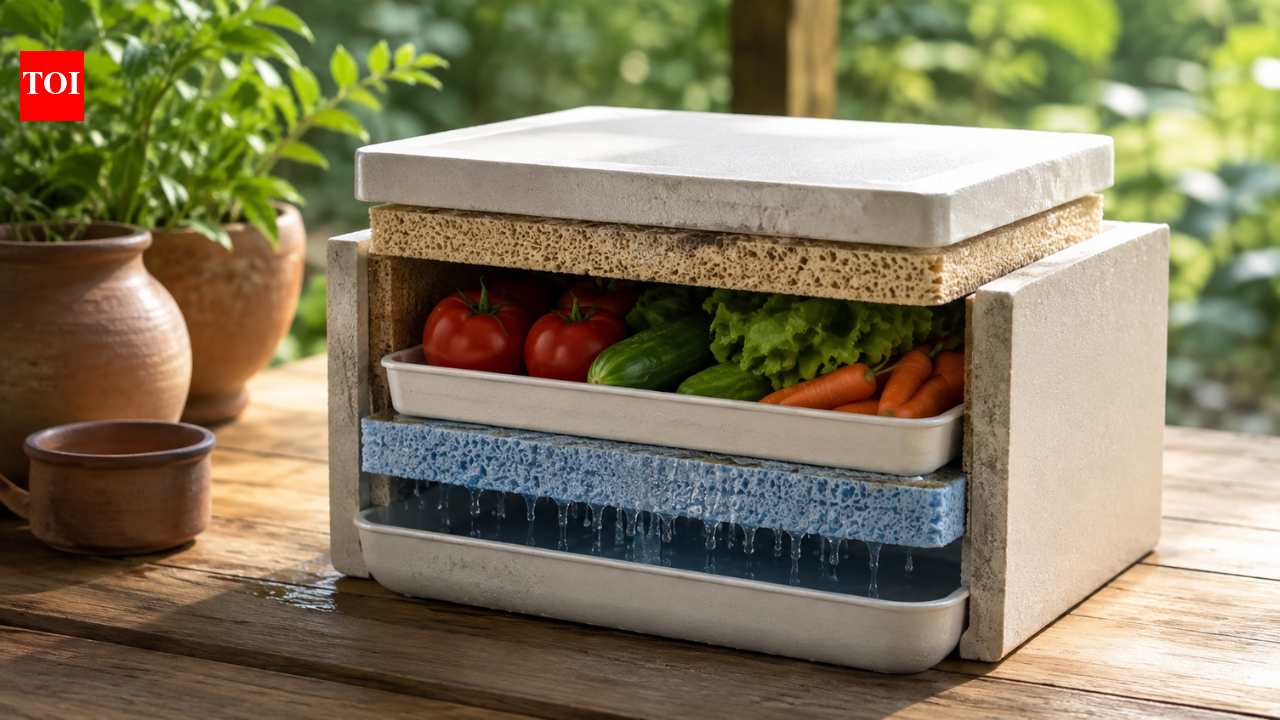
The device is designed around three main layers.
asserted
device → reflect → layers
The arrangement matters because sunlight, water and heat all have to move in particular directions.
asserted
sunlight → matter → directions
At the top is an aerogel made from polyethylene.
asserted
aerogel → make → polyethylene
Although it looks solid, much of the material is actually empty space.
asserted
much → look → material
Its porous structure traps air, giving it strong insulating properties, while still allowing water vapour and infrared radiation to pass through.
asserted
vapour → trap → properties
Water from the layer underneath can evaporate upwards, taking heat with it.
asserted
Water → evaporate → it
At the same time, thermal radiation can pass through the upper material and escape towards the sky.
asserted
radiation → pass → sky
An air conditioner moves unwanted heat from inside a building to the outside air.
asserted
conditioner → move → air
This passive system can send some of its heat upward through infrared radiation, taking advantage of wavelengths at which the atmosphere is relatively transparent.
asserted
atmosphere → send → which
Its pores hold water, providing the supply needed for evaporation.
asserted
pores → hold → evaporation
As water reaches the surface and changes into vapour, it carries heat away from the structure.
asserted
it → reach → structure
The bottom layer has a different task.
asserted
layer → have → task
It behaves like a mirror, reflecting sunlight back upwards instead of allowing that energy to be absorbed and turned into heat.
asserted
energy → behave → heat
The aerogel itself also helps with solar protection.
asserted
aerogel → help → protection
Its insulating and light-reflecting properties reduce the amount of heating caused by strong sunlight.
asserted
properties → insulate → sunlight
It is a fairly simple sequence: reflect as much sunlight as possible, prevent heat from moving in, evaporate a small amount of water and allow infrared energy to escape.
Why humidity has been a problem
Evaporative cooling works best when the surrounding air can accept more water vapour. In dry conditions, that is relatively easy.
asserted
that → reflect → conditions
In humid weather, the air is already carrying a large amount of moisture, so evaporation slows down.
asserted
evaporation → carry → moisture
That has made many evaporative cooling systems less useful in humid regions, even though those areas can have significant cooling needs.
asserted
areas → make → needs
Radiative cooling has its own complications.
asserted
cooling → have → complications
A surface may be able to radiate heat towards the sky, but if it absorbs too much sunlight during the day, the solar heating can cancel much of that benefit.
uncertain
heating → radiate → benefit
The MIT design attempts to deal with both problems at once.
asserted
design → attempt → problems
Evaporation provides one route for removing heat, while radiative cooling provides another.
asserted
cooling → provide → another
…and 45 more, not listed.
 The Aporia