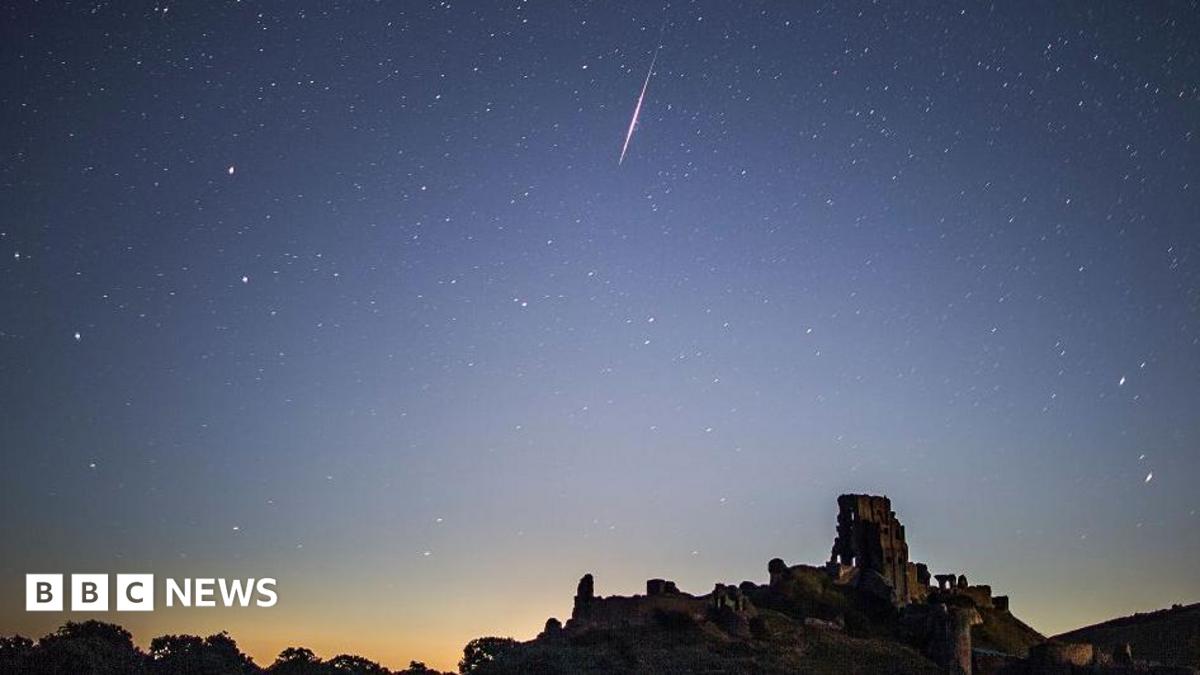
The August full Moon, also known as the Sturgeon Moon, was visible over the UK on Thursday night. The Sun, Earth, and Moon aligned to create a partial lunar eclipse in parts of the world, causing the Moon's reddish appearance due to sunlight being scattered through the Earth's atmosphere. The eclipse reached its peak pre-dawn across the UK, where some areas saw the Moon take on a red color as it partially entered the Earth's shadow. The Sturgeon Moon gets its name from the abundance of sturgeon fish in North American rivers during this time of year.
Written by the local model on 2026-08-28,
using this article's own text rather than the other coverage of the
same event (that is the story summary below).
Story summary
The August full moon, also known as the Sturgeon Moon, was visible over the UK on Thursday night. The moon appeared red in color due to a partial lunar eclipse, where the Earth passed between the Sun and the Moon, casting a shadow on the Moon's surface. This allowed only part of the Moon to receive direct sunlight, scattering shorter blue wavelengths while letting more red light through, which was then reflected back towards Earth. The result was the reddish appearance of the moon in many areas. The Sturgeon Moon gets its name from historical events happening around the same time as the full moon.
Written for “Sturgeon Moon Photography” on 2026-08-31,
grounded in this article and the 0 other(s) covering the same event.
Why this leaning score
This article does not take a side on a contested political
question, so it has no leaning score. That is an
answer rather than a gap: a match report or a rescue can be warmly
or critically written without being left or right, and scoring it
anyway is how approval of a subject gets recorded as a political
position.
No political leaning scored for article 3131 · logged 2026-08-28
- Published
The August full Moon, also known as the Sturgeon Moon, illuminated the sky over the UK on Thursday night.
asserted
Moon → publish → night
As an added bonus the Sun, Earth, and Moon lined up to create a lunar eclipse in parts of the world.
asserted
Sun → add → world
BBC Weather Watchers captured stunning photos of the celestial display - which reached its peak pre-dawn across the UK.
asserted
which → capture → UK
In many areas the Moon took on a reddish appearance.
asserted
Moon → take → appearance
Why did the moon appear red in colour?
asserted
moon → appear → colour
During a partial lunar eclipse, as experienced in the UK, the Earth passes between the Sun and the Moon, causing the Moon to temporarily move into the Earth's shadow.
asserted
Moon → experience → shadow
Only part of the Moon entered the darkest section of that shadow, known as the umbra so it was not completely cut off from sunlight.
asserted
it → enter → sunlight
Sunlight passing through the Earth's atmosphere is scattered, with shorter blue wavelengths scattering more easily, while more of the longer wavelength red light reached the Moon.
asserted
more → pass → Moon
These wavelengths are then reflected back towards Earth, giving the eclipsed Moon its reddish colour.
asserted
wavelengths → reflect → colour
Why is it called the Sturgeon Moon?
asserted
it → call → ?
As with the other full Moons across the year, it gets its name from events happening in nature around the same time.
asserted
it → get → time
Historically, full Moons have been given nicknames to help people keep track of time and monitor the changing seasons.
asserted
people → give → seasons
The August full Moon gets its name from the time of year when when sturgeon fish are abundant in the rivers of North America.
asserted
fish → get → America
Our next full moon, on 26 September, is called the Harvest or Corn Moon as it's the time of year when crops are traditionally gathered.
asserted
crops → call → year
However, here in the UK the extreme heat of the summer has meant the harvest has been earlier this year for many.
asserted
harvest → mean → many