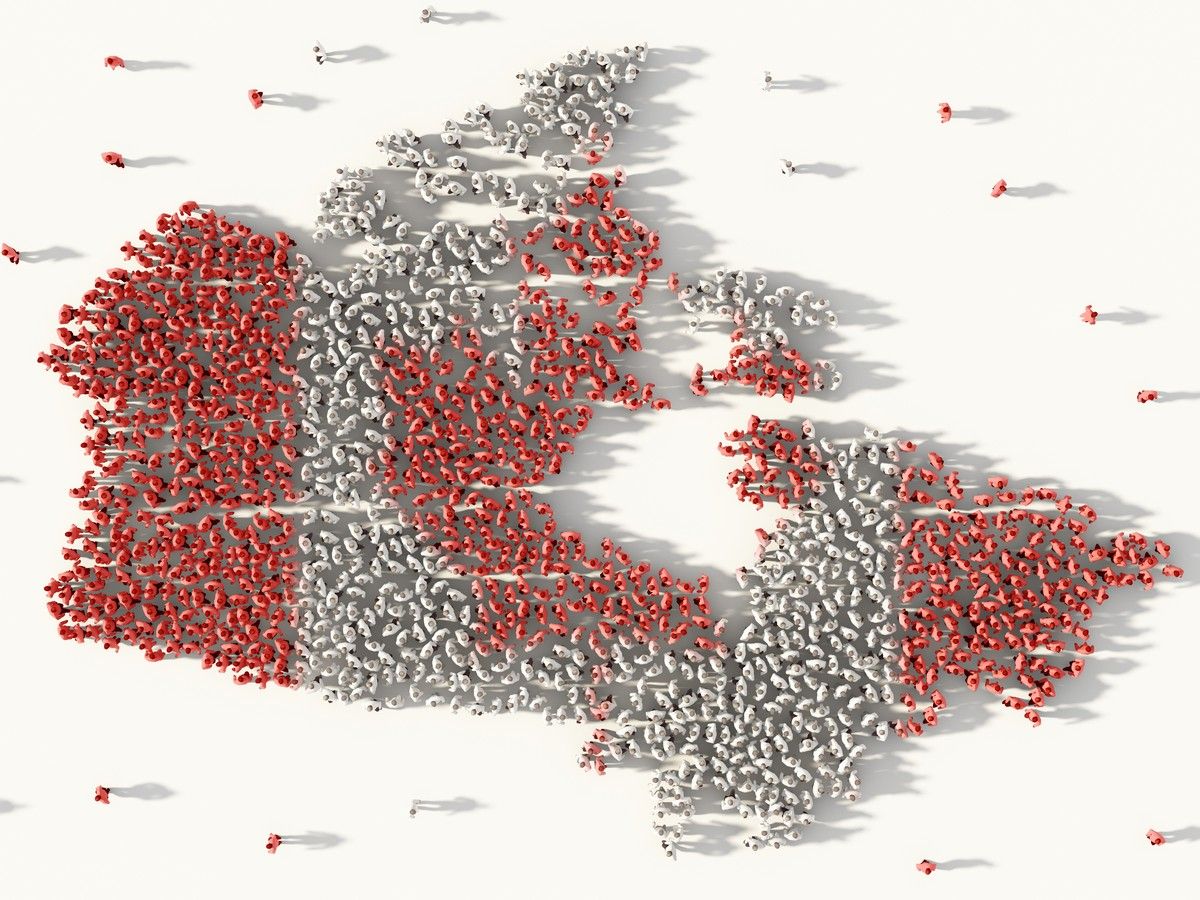
Donald Trump criticized Canada for admitting too many immigrants, claiming it is causing problems and arguing that immigrants enter "unchecked and unvetted." However, official data shows Canada admitted about 483,640 permanent residents in 2024, while the U.S. granted around 1.4 million green cards, three times as many. The article highlights discrepancies between Trump's claims and actual statistics, noting that despite admitting fewer immigrants per capita, Canada’s system is designed to meet economic needs rather than family reunification, which is more common in the U.S.
Written locally by qwen2.5:14b on 2026-09-23,
using this article's own text rather than the other coverage of the
same event (that is the story summary below).
Story summary
Donald Trump criticized Canada in a social media post, claiming the country is "destroying itself" by allowing too many immigrants, particularly those he described as "unchecked and unvetted." However, according to Statistics Canada, recent immigrants were twice as likely as Canadian-born workers to be employed full-time as engineers. Additionally, while both Canada and the US take in significant numbers of legal immigrants, with Indians being the top group in both countries, Canada does not admit "millions" as Trump suggested. In fact, data from the Immigration Department shows that the number of temporary residents coming to Canada between January and July this year is 66% lower than the same period in 2024 when reduction measures were implemented. The unemployment rate in Canada was 6.4% in August compared to 4.1% in the US, contradicting Trump's claim that high unemployment results from immigration policies.
Written for “Trump Criticizes Canadian Immigration…” on 2026-10-05,
grounded in this article and the 1 other(s) covering the same event.
MAGA supremo Donald Trump looked north on Wednesday morning and discovered that Canada has too many immigrants.
asserted
Canada → look → immigrants
Canadians might look south and discover something to contest: Although Canada takes in more immigrants per capita, the US takes in three times as many legal immigrants – and both countries seem particularly fond of Indians, the Asian type, who rank #1 in Canada and #2 in the US in legal immigration inflow.
“Canada is destroying itself by allowing millions and millions of people into the Country, essentially unchecked and unvetted,” Trump declared in one of his customary social media outbursts, hours after railing that the United Nations was ceaselessly promoting mass migration that was destroying Western cultural heritage.
uncertain
that → look → heritage
He warned that immigrants to Canada were “causing problems that will soon be too big to handle,” attributing it to a “Liberal takeover” that would “end very badly.”
asserted
that → warn → takeover
There is, however, a small problem with the arithmetic, which is not exactly an American strength (Canada ranks substantially above the US in maths scores determined by the OECD’s PISA tests).
asserted
Canada → be → tests
Ottawa does not admit “millions and millions” and the allegation that they are entering “essentially unchecked and unvetted” is typical Trump bunkum.
asserted
they → admit → millions
According to official data, Canada admitted about 483,640 permanent residents in 2024, a record.
uncertain
Canada → accord → record
But Ottawa has since been reducing the numbers, and its 2026-28 plan is explicitly designed to bring immigration back toward what the government calls sustainable levels.
asserted
government → reduce → what
Meanwhile, the US, granted 1.4 million green cards in fiscal 2024, three times Canada's permanent-resident intake.
asserted
US → grant → intake
Of course, Canada simply has far fewer people over a much larger area.
asserted
Canada → have → area
So with roughly 42 million residents versus America's 340 million-plus, Canada's 483,000 permanent residents represented about 1.16% of its population in 2024 compared to 0.4 per cent for the US.
asserted
residents → represent → US
The two countries also differ in why they admit them.
asserted
they → differ → them
The US immigration system remains heavily family-based.
asserted
system → remain → ?
Of the roughly 1.4 million people receiving green cards in FY2024, 49% were immediate relatives of US citizens and another 14% entered through family-preference categories.
asserted
% → receive → categories
Only about 13% were employer-sponsored or self-petitioned employment-based immigrants.
asserted
% → sponsor → ?
Canada offers a mirror image.
asserted
Canada → offer → image
In 2024, 58% of its permanent residents entered through economic programs, compared with 22% through family reunification and 20% through refugee, humanitarian and other categories.
asserted
% → enter → categories
In other words, Canada is not exactly throwing open the door; its system is explicitly designed to select workers for economic and labour-market needs.
asserted
system → throw → needs
India was Canada's largest source of new permanent residents, with about 127,000 Indians obtaining permanent residence in 2024.
asserted
Indians → obtain → 2024
India has also been the leading source country in recent Canadian immigration, accounting for 18.6% of immigrants who arrived during the five years preceding the 2021 census.
asserted
who → lead → census
And Canada's immigration statistics offer an awkward rebuttal to the idea that immigrants are simply arriving to cause trouble.
asserted
immigrants → offer → trouble
Statistics Canada found that immigrants played a major role in filling engineering jobs: recent immigrants who landed in 2018-19 were twice as likely as Canadian-born workers to be employed full-time as engineers, while roughly three-quarters of recent immigrant engineers entered through economic programs.
asserted
quarters → find → programs
Some 3.2 million Indian immigrants live in the US, making Indians the country's second-largest immigrant group after Mexicans.
asserted
Indians → live → Mexicans
In FY2024, Indians received 71% of all H-1B visas for highly skilled workers; India was also America's leading source of international students in 2024-25, most in STEM fields.
asserted
India → receive → fields
All this makes the current immigration argument rather more complicated than Trump’s red-blooded rhetoric.
asserted
argument → make → rhetoric
Trump's rhetoric, that uncontrolled migration is destroying Western countries, their heritage and ultimately Western civilization, has become a recurring theme lately.
asserted
migration → destroy → countries
Immigration scholars have characterized the language as racialized and xenophobic, pointing to his repeated association of migration, which is as old as human civilization, with invasion, criminality and national decline, none of which is borne out by hard facts or data.
asserted
none → characterize → facts
 The Aporia