That is 0 articles you have read today.
The Aporia is free and carries no advertising, so readers are the only
thing paying for it. If you are getting this much out of it, a small
donation is what keeps it independent.
Daily limit reached
You have read 0 articles today.
That is more than the 15 a day The Aporia gives away,
and well past what it can carry on nothing. Your allowance resets at
midnight.
There is no advertising here and nothing about you is sold, so readers
are the only thing paying for it. If the site is worth this much of
your day, it is worth a few dollars.
Everything else stays open: the
maps, the
directory and
search do
not count against this, and neither does re-opening something you have
already read today.
At Semafor’s The Next 3 Billion summit in New York, discussions focused on how African economies can build economic ecosystems around their natural resources before exporting them. This includes developing industries such as processing and manufacturing to create local jobs and foster sustainable growth. Nigeria’s trade minister emphasized the need for partnerships that ensure value chain development occurs within the country. However, there are challenges like requiring substantial infrastructure and expertise, and concerns about whether building factories will lead to genuinely competitive industries.
Written locally by qwen2.5:14b on 2026-09-23,
using this article's own text rather than the other coverage of the
same event (that is the story summary below).
Story summary
At Semafor's The Next 3 Billion summit in New York, discussions around Africa's natural resources shifted towards building local economic ecosystems. Instead of merely exporting raw materials, African countries are now focusing on processing and manufacturing those resources within their borders. This approach aims at fostering domestic job creation and infrastructure development.
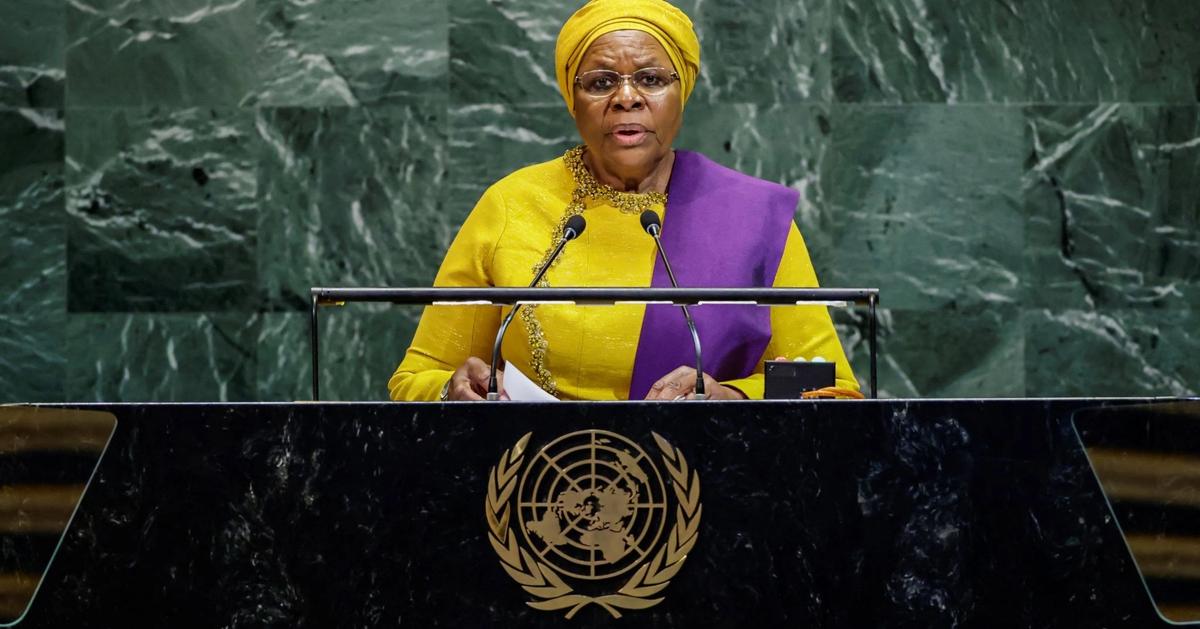
Nigeria’s Trade Minister, Jumoke Oduwole, emphasized the country’s goal during talks with US companies about critical minerals. She stated that Nigeria seeks partners who can ensure value chain development and job creation occur in Nigeria rather than abroad. Similarly, DR Congo's Prime Minister Judith Suminwa highlighted the importance of diversifying both their economy and foreign partnerships to add value locally.
Written for “Africa Value Addition Debate” on 2026-10-05,
grounded in this article and the 0 other(s) covering the same event.
For decades, the debate around Africa’s natural resources has largely been over who gets the value from what the continent digs up and ships out.
asserted
continent → get → what
But at Semafor’s The Next 3 Billion summit in New York this week, the recurring theme was more nuanced.
asserted
theme → recur → York
The question was what economic ecosystems can African economies build around their resources before they leave the continent?
asserted
they → build → continent
That means moving beyond extraction toward processing, manufacturing, infrastructure, energy, and the jobs that can come with them.
asserted
that → mean → them
It also reflects a changing approach to foreign capital.
asserted
It → reflect → capital
African governments increasingly want partnerships that build domestic capacity, rather than simply finance projects or provide an exit route for commodities.
asserted
that → want → commodities
Nigeria’s trade minister Jumoke Oduwole put the ambition plainly when discussing the country’s talks with US companies on critical minerals, saying her government is looking for “partners that will make sure that the value chain development [and] the jobs are created on Nigerian soil.”
asserted
development → put → soil
DR Congo’s Prime Minister Judith Suminwa described diversification of both the economy and its foreign partners as a priority, saying partnerships should “bring a plus” to the country.
asserted
partnerships → describe → country
The implication is that the choice is not necessarily between China, the US, Europe or the Gulf, but whether competition among them can be used to secure more lasting economic capacity.
asserted
competition → use → capacity
Countries that remain primarily exporters of raw materials are vulnerable to commodity cycles and capture relatively little of the value created farther down the supply chain.
asserted
that → remain → chain
More refining, processing, power generation and transport infrastructure could create wider economic spillovers.
uncertain
refining → create → spillovers
But there is also a danger in making “value addition” the answer to every development problem.
asserted
addition → be → problem
Processing minerals or refining oil requires enormous amounts of reliable electricity, transport infrastructure, capital, and technical expertise.
asserted
Processing → process → electricity
In some cases, importing finished products may still be cheaper than producing them locally.
uncertain
importing → import → them
And building a factory does not automatically create a competitive industry.
asserted
building → build → industry
The more interesting test, then, is whether Africa can turn its resource advantage into productive capacity without turning industrial policy into an expensive exercise in symbolism.
asserted
Africa → turn → symbolism
The harder question is what African economies can build that will remain competitive after the foreign partners and commodity boom move on.
asserted
partners → build → what
Notable
- Dangote’s Lagos refinery is one of the starkest examples of the economic power of domestic production: It netted $1.8 billion in profit after tax in the first half of this year, more than its total revenue for 2025.
asserted
It → net → 2025
 The Aporia