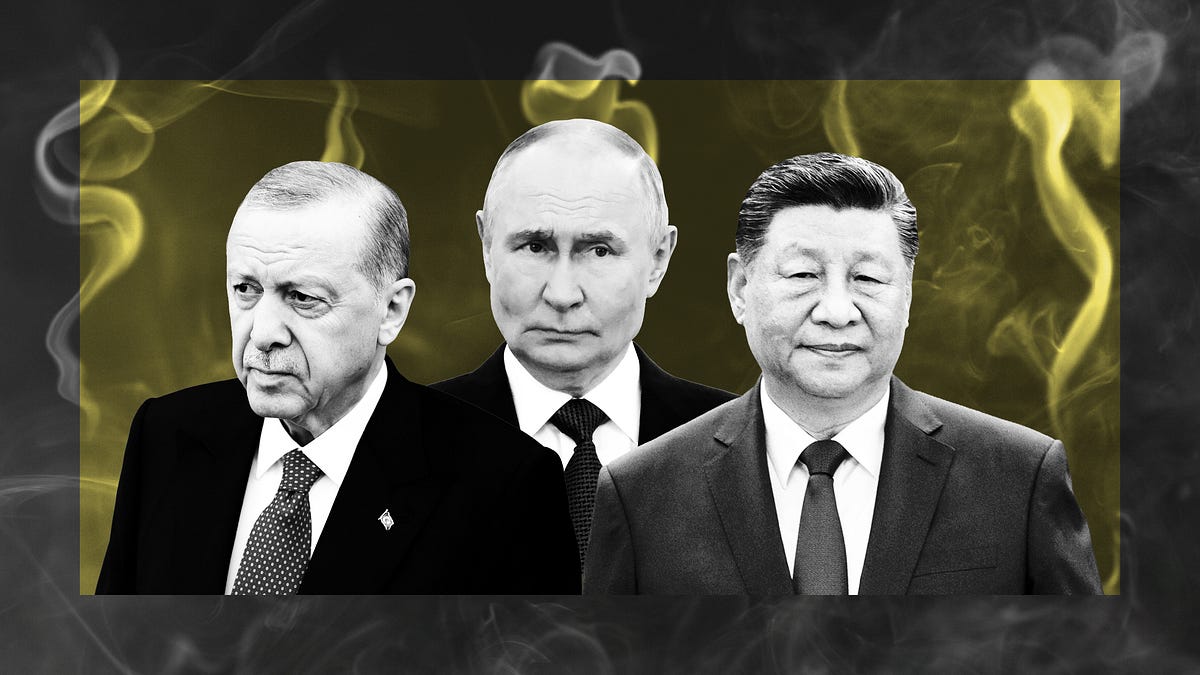
WHY DO AUTHORITARIAN LEADERS purge members of their inner circle?
asserted
LEADERS → purge → circle
Sometimes they’re a threat, sometimes they’re asking for it, and sometimes it’s just an excuse.
asserted
it → ’re → it
That’s how we might sum up Purges, Edward Goldring’s entry into our collective understanding of authoritarian politics.
uncertain
we → ’ → politics
Written for an academic audience, Purges does what it says on the cover, providing a new account of why modern authoritarian leaders arrest, exile, demote, and even execute their own elites—and assessing the implications of these striking actions for the authoritarian strongman and the survival of his regime.
asserted
leaders → write → regime
In the best traditions of academic writing, Goldring lays out his project clearly and early:
asserted
Goldring → lay → project
Dictators purge elites for two primary purposes, which are intended to increase their overall likelihood of surviving in office: (1) to enhance their share of power within the regime and (2) to hold officials accountable.
asserted
officials → purge → regime
To achieve these goals, dictators employ a combination of preemptive and retaliatory purges that aim to alleviate threats from inside and outside the regime.
asserted
that → achieve → regime
If you’re an aspiring autocrat not eager to dip too deeply into the political science literature, Goldring’s lesson may be: Purge your military commanders, and do it early.
uncertain
lesson → ’re → it
Goldring, a political scientist at the University of Melbourne in Australia, combines what social scientists sometimes refer to as middle-range theory (a framework that is explanatory but parsimonious and not trying to explain too much), extensive analysis of a new dataset of purges, and a set of case studies, the most prominent being a paired comparison of periods in North and South Korea’s respective twentieth (and twenty-first) century autocratic histories.
asserted
prominent → combine → histories
From these tools, Goldring develops a layered theory of why leaders in non-democratic states might resort to purges.
uncertain
leaders → develop → purges
There are two main reasons purgers expel elites, both linked—or presumably linked—with regime survival.
asserted
both → be → survival
One, to “enhance their share of power within the regime,” or, two, to “hold officials accountable.”
asserted
officials → enhance → regime
Goldring identifies three types of purges for achieving these goals: consolidation purges, punishment purges, and scapegoating purges.
asserted
Goldring → identify → goals
The first is a preemptive purge made to enhance a dictator’s power, often during the early years of a regime.
asserted
first → make → regime
Take, for instance, South Korea under Park Chung-hee, where, during the early years of his regime, he consolidated power over potential rivals.
asserted
he → take → rivals
The second type of purge focuses on disloyalty; it’s “retaliatory and helps dictators hold officials to account, while concurrently also aiding the goal of increasing the dictator’s share of power.”
asserted
dictators → focus → power
The last type of purge Goldring identifies is also retaliatory, but rather than targeting the unfortunate official’s “disloyalty,” it’s associated with incompetence by subordinate officials, real or imagined, who are hung out to dry to assuage popular dissatisfaction.
asserted
who → identify → dissatisfaction
When China’s Hu Jintao purged his own health minister for supposedly “covering up” the 2003 SARS outbreak—“despite the minister not behaving disloyally or posing any kind of internal threat to his position, such as being seen as a possible alternative or future leader”—he was executing this type of purge.
asserted
minister → purge → purge
Within this typology, consolidation and punishment purges are taken mostly against military elites, who pose something of a threat, while scapegoating purges are targeted against civilian elites.
asserted
purges → take → elites
Goldring carefully builds and limits his concepts, focusing solely on elite purges, which he defines as “when a dictator removes an individual from the regime’s inner circle, known in academic parlance as the ruling coalition.”
asserted
dictator → build → coalition
He excludes purges of larger regime institutions (such as the rank-and-file of ruling parties or military officers below the rank of major), and makes clear that it’s best to understand these sorts of coercive actions by authoritarian regimes against individuals as repression or other forms of regime violence.
asserted
’s → exclude → violence
You can only be purged if you’re already part of the regime’s upper crust.
asserted
you → purge → crust
This distinction lets Goldring be much clearer about what exactly is and is not being explained in his scholarship, and strengthens the case that his explanatory theory is right-sized to the task.
Support our growing coverage of books, arts, movies, ideas, and culture—sign up for a Bulwark+ membership:
asserted
theory → let → membership
This dataset provides an excellent descriptive account of what the world actually looks like.
asserted
world → provide → what
For example, Goldring shows that nearly 15 percent of the post-Cold War authoritarian regimes will purge at least one military or political elite in a given year.
asserted
percent → show → year
This proportion rises to 25 percent for authoritarian regimes with new leaders.
asserted
proportion → rise → leaders
THE WEALTH OF INFORMATION here provides a kind of “Purges 101: The State of the Post-Cold War Authoritarian World.”
asserted
WEALTH → provide → World
Goldring can confidently conclude that “elite purges are a consistent feature of authoritarian politics,” although they remain “quite rare” year-on-year within a given regime—after all, purging an elite with his own fiefdom and influence is still destabilizing.
asserted
purging → conclude → fiefdom
Purges is most persuasive when it zooms in on the place of military elites in a regime’s inner circle and how authoritarian leaders treat them as potential threats to their power and longevity.
asserted
leaders → zoom → power
Of course, purging military leadership can be a fraught business, since they, of all people, are most capable of autonomous violence against the regime apex, should events go awry.
asserted
events → purge → apex
Goldring gives us something quite interesting here: If you are a rising autocrat, the time to purge threatening or potentially disloyal generals is sooner than you think.
asserted
you → give → generals
On average, authoritarians purge their elites in two stages, first, while consolidating power, and second, in the twilight years of their regime.
asserted
authoritarians → purge → regime
Early purges are most likely to be successful: They signal strength and have the flow-on effect of pushing off threats by physically eliminating anyone who might be coup-inclined.
uncertain
who → signal → anyone
It seems this really does work.
asserted
this → seem → ?
By contrast, in a regime’s later days, when the elites’ minds are concentrated by the question of succession, purges struggle.
asserted
purges → concentrate → succession
On the other hand, Purges is least convincing when it focuses on the civilian side of coercive elite politics under authoritarianism, because the argument operates at too abstract a level.
asserted
argument → focus → level
Civilians are purged, in Goldring’s account, primarily for scapegoating purposes.
asserted
Civilians → purge → purposes
The trouble is delineating what we might call “normal” scapegoating in politics, such as firing a minister for poor performance in an economic crisis or after a scandal, from the more eye-catching scapegoating involving imprisonment or execution.
uncertain
we → delineate → imprisonment
The distinction seems to me more conceptually important than Goldring’s framework can provide.
asserted
framework → seem → me
Vladimir Putin is one of the largest purgers in the dataset, but any student of Russian politics will tell you that putting his 2004 cabinet reshuffle, done to provide a fresh face ahead of elections, and his 2024 wartime reshuffle, which ushered in an ongoing purge of the defense ministry bureaucracy, in the same theoretical bucket has somewhat limited explanatory returns.
asserted
which → tell → returns
…and 34 more, not listed.
 The Aporia