The three leading candidates to be the mayor of Toronto clashed over property taxes, the affordability crisis, city finances and more Tuesday night in a hotly contested debate.
asserted
candidates → lead → debate
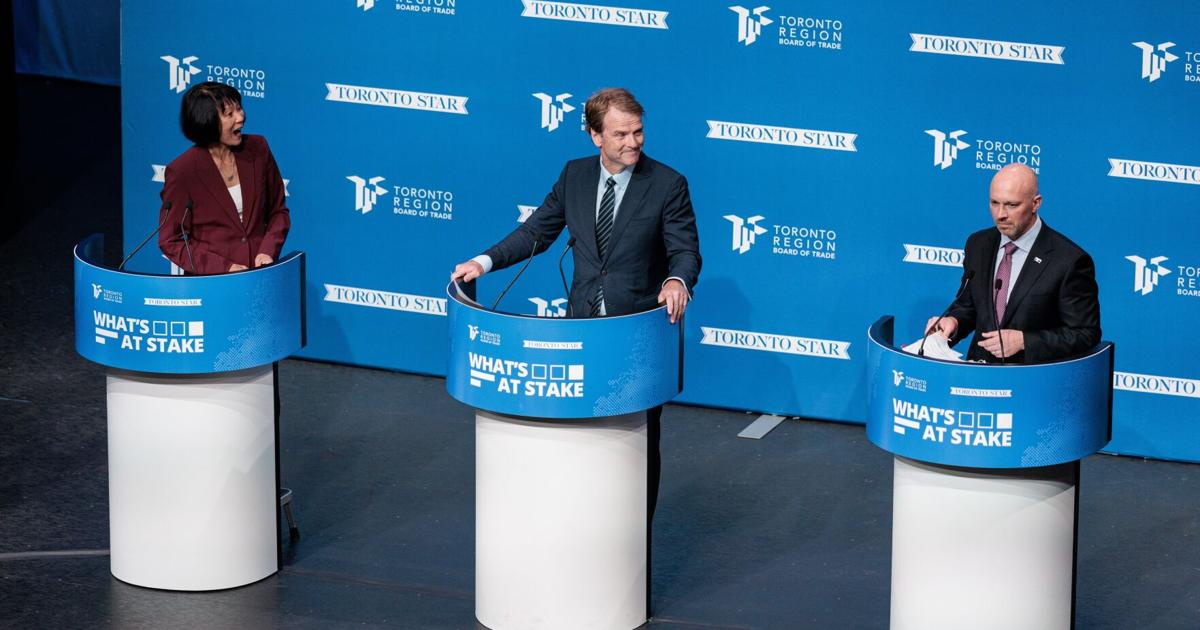
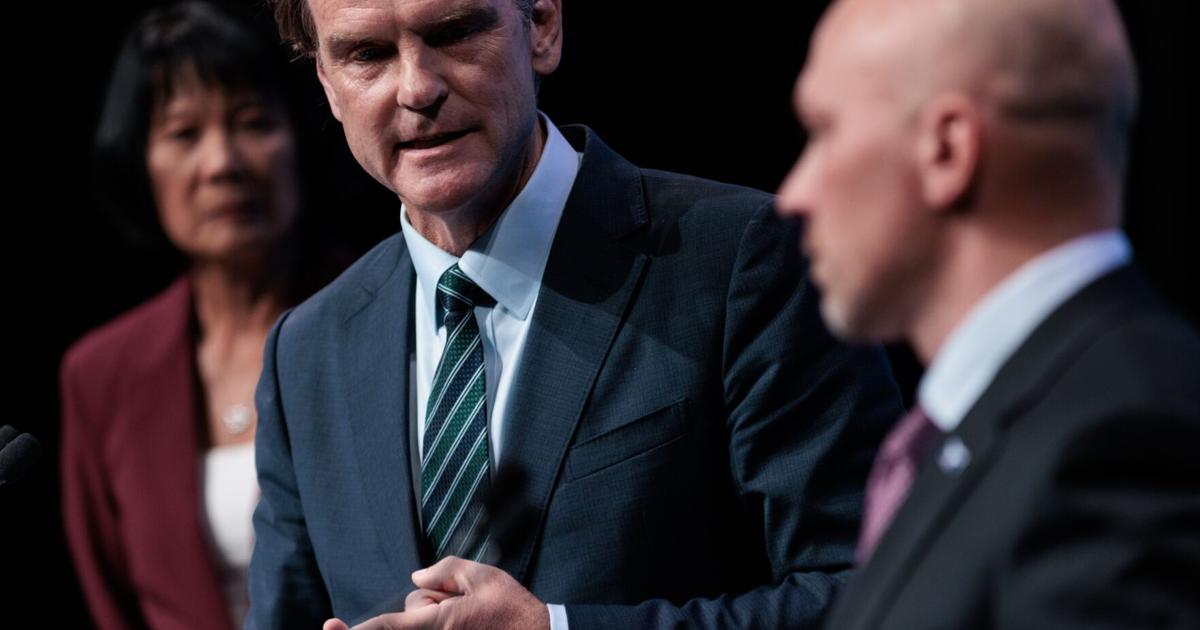
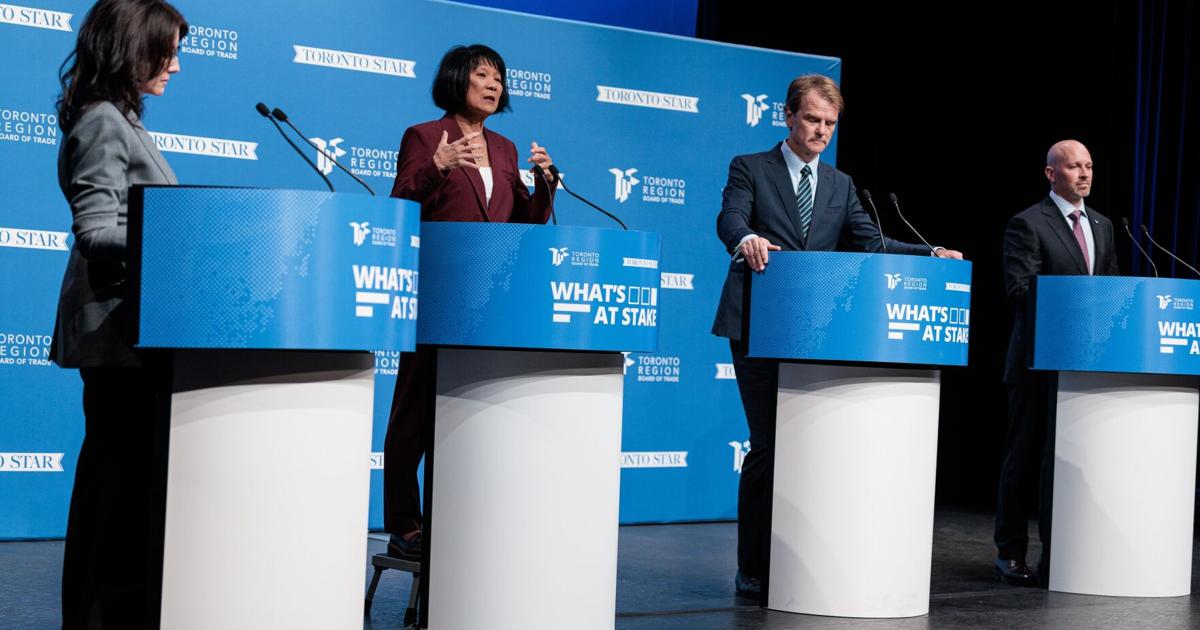
Incumbent Olivia Chow, Coun. Brad Bradford and former federal cabinet minister Chris Alexander squared off for an hour in front of a lively crowd at the Isabel Bader Theatre downtown in the second debate among the three.
asserted
Chow → square → three
The event was hosted by the Toronto Star and the Toronto Region Board of Trade.
asserted
event → host → Trade
“We’ve benefited from decades of fast-growing population, and our economy has flatlined,” said Giles Gherson, president and CEO of the board, in his opening remarks.
“We’re losing ground, and we can’t afford to.
asserted
we → benefit → ground
To top it off, we are now thrust into a spiralling trade war.
asserted
we → top → war
Perhaps no region in Canada is more exposed to a tariff storm than Toronto.
asserted
region → expose → Toronto
Moderator Nicole MacIntyre, the Star’s editor-in-chief, agreed, noting: “This city is at an inflection point.
asserted
city → agree → point
Who we choose (as Toronto’s next mayor in the Oct. 26 election) is going to take us to what’s next, and there’s a lot at stake.”
asserted
what → choose → stake
MacIntyre posed questions — and opened the floor for the candidates to debate each other, at times speaking over each other — about how each candidate would, among other things, manage the city’s economic development, address data centres and get housing built at a time where most renters say they think they’ll never be able to afford a home.
asserted
they → pose → home
There was also a question for the kids, on trees — the only time everybody in the room appeared to be laughing with each other rather than at each other.
asserted
everybody → be → other
Bradford announces partial tax pledge
asserted
Bradford → announce → pledge
While debating the city budget, Bradford revealed — for the first time — what his tax rate would look like, at least for the first year.
asserted
rate → debate → year
“I am going to freeze your property taxes for the first year,” Bradford said, when asked what he would cut “to make the math work” on some of his costly policy promises so far.
asserted
math → go → promises
“Then I’m going to go through diligently, thoroughly, and do that line-by-line review that I’ve been calling for for years, but the mayor has been voting against.”
asserted
mayor → go → years
Bradford announced earlier this week he would order an independent review of every city division, agency and program — the first since 2011.
asserted
he → announce → 2011
In 2011, under mayor Rob Ford’s direction, outside experts found the city’s spending was already lean and the next year recommended major cuts to services including libraries, child care, housing, snow removal and the zoo.
asserted
year → find → libraries
The next year, Ford tried to make significant cuts but council opponents added money back to the budget.
asserted
opponents → try → budget
In a press release earlier this week, Chow contended Bradford’s pitch means the same as Ford’s — “cuts to city services people rely on.”
asserted
people → contend → services
Bradford has, so far, pledged to hire 1,000 more police officers.
asserted
Bradford → pledge → officers
He has also committed to installing platform edge doors, which cost an average $55 million per station, at “priority” stations.
asserted
which → commit → stations
He’s pitched a TTC refund policy for lengthy delays, which last year city staff pegged at upwards of $50 million in annual operating costs and as much as $30 million in capital.
asserted
staff → pitch → capital
Chow rebounds among downtown crowd
Polling has consistently shown that Bradford’s support is based in Etobicoke and Chow’s is in downtown.
asserted
Chow → rebound → downtown
At Tuesday night’s downtown debate, similar to the debate at Daily Bread’s Etobicoke headquarters, that appeared to be borne out.
asserted
that → appear → headquarters
At the debate last week, Chow was booed by an audience that, at times, yelled at her to answer the question directly or heckled Chow over her side-stepping why she did not attend the antisemitism debate-turned-forum.
asserted
she → boo → forum
On Tuesday, Chow was met with frequent, loud cheering, whistling and clapping from what seemed like almost half of the sold-out crowd — whether it was pointing at her record or taking jabs at Bradford, her closest challenger.
asserted
it → meet → Bradford
“Because I’ve eliminated most of the development charges, that our friend Councillor Bradford had levied while he was on council, it’s now saving a couple $35,000 if they buy a new home,” Chow said.
“I think in the middle of an affordability crisis, we have to make it cheaper for people to ride,” she said at another point, before pointing to her promise of a weekly TTC fare cap.
asserted
she → eliminate → cap
Candidates were asked yes-or-no questions about data centres at last week’s debate, but weren’t given the chance to expand.
asserted
Candidates → ask → chance
Local governments are under increasing pressure to limit the development of AI data centres amid public pressure, and several U.S. cities and states have passed moratoriums on building them.
asserted
cities → increase → them
Opponents object to data centres’ large demand for power and water, as well as their greenhouse gas emissions, noise and limited job creation.
asserted
Opponents → object → power
The federal government, however, has prioritized the creation of local data centres in an effort to shore up ”digital sovereignty,” arguing that failing to do so leaves elements of this world-shaping technology under foreign control.
asserted
failing → prioritize → control
Both Alexander and Bradford said they’re open to the idea, but regulations are needed.
asserted
regulations → say → idea
“I think it’s infrastructure that’s important for the city’s future,” Alexander said.
asserted
Alexander → think → future
It’s part of the response to tariffs and a changing geopolitical landscape.
asserted
It → ’ → tariffs
We need be able to keep and process our data here.”
asserted
We → need → data
“It would be irresponsible to blindly oppose infrastructure projects that create jobs, support the internet and email, things that we use and rely on every day,” Bradford said.
asserted
Bradford → oppose → that
“And there’s an opportunity for Toronto to gain a competitive advantage.”
asserted
Toronto → ’ → advantage
Chow did not have a chance to speak.
asserted
Chow → have → chance
At last week’s debate, she was between “yes” and “no” on whether she would allow them, saying the city is still studying the facility’s environmental impacts, electricity and water use and costs of upgrades, the tax revenue as well as jobs it would create and noise levels.
asserted
it → allow → upgrades
Housing was one of the issues the candidates sparred over the most.
asserted
candidates → spar → issues
Alexander, who was met with more applause this debate, pointed to declining housing starts in Toronto for three straight years.
asserted
who → meet → years
…and 11 more, not listed.
 The Aporia