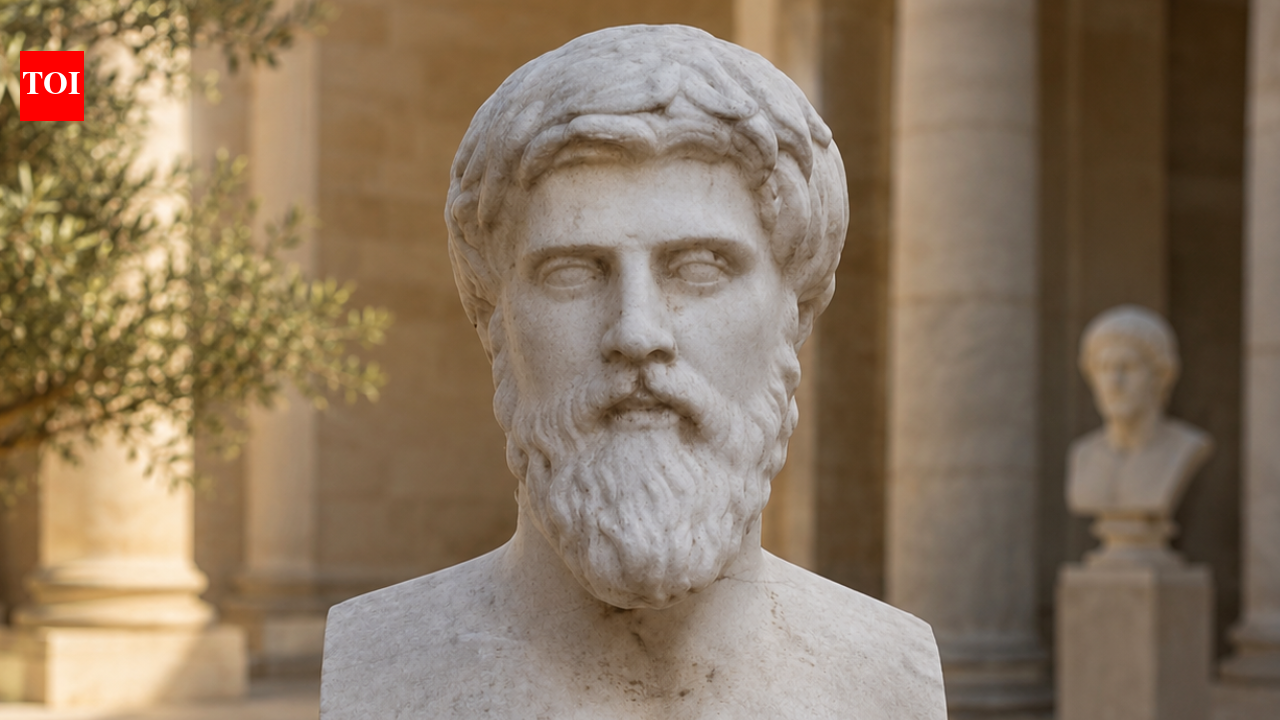
Education is often measured by how much information a person can remember, but learning involves far more than simply collecting facts.
asserted
learning → measure → facts
Plutarch captured this idea with the words, “The mind is not a vessel to be filled, but a fire to be kindled.”
asserted
mind → capture → words
The quote suggests that true education should encourage curiosity, independent thinking and a desire to keep learning rather than treating the mind as an empty container that needs to be packed with information.
uncertain
that → suggest → information
Knowledge becomes more meaningful when it inspires people to ask questions, explore ideas and develop their own understanding.
asserted
it → become → understanding
The ancient Greek thinker’s observation remains relevant in classrooms and workplaces today, particularly as people have access to more information than ever before.
asserted
people → remain → information
Plutarch (c. AD 46–after 119) was an ancient Greek philosopher, biographer and writer whose works explored morality, character, education and human behaviour.
asserted
works → explore → morality
Born in Chaeronea in central Greece, he became one of the most influential writers of the ancient world.
asserted
he → bear → world
His best-known work, Parallel Lives, compared prominent Greek and Roman figures, while his collection of essays known as Moralia covered subjects ranging from ethics and education to politics and religion.
asserted
collection → know → politics
Quote of the day by Plutarch
“The mind is not a vessel to be filled, but a fire to be kindled.”What does this quote mean?
asserted
quote → fill → Plutarch
Plutarch's metaphor contrasts two very different approaches to education.
asserted
metaphor → contrast → education
A vessel can be filled with information and then left as it is, while a fire needs to be lit and continually supplied with fuel.
asserted
fire → fill → fuel
By describing the mind as a fire, Plutarch suggests that learning should create curiosity and encourage people to continue exploring ideas on their own.
uncertain
learning → describe → own
Education, therefore, should not simply involve memorising facts for an examination or repeating information given by someone else.
asserted
Education → involve → someone
It should help people develop the ability to question, reason and make connections between different ideas.
asserted
people → help → ideas
The quote ultimately presents learning as an active process in which knowledge stimulates further thought rather than bringing the search for understanding to an end.
asserted
knowledge → present → end
Education should create curiosity
asserted
Education → create → curiosity
A person can memorise thousands of facts without necessarily understanding how they relate to the wider world.
asserted
they → memorise → world
Curiosity changes that process by encouraging people to ask what lies behind the information they encounter.
asserted
they → change → information
A student who learns about gravity, for example, may move beyond remembering a scientific definition and begin asking why objects behave in a particular way, how the theory was developed and what discoveries it helped make possible.
uncertain
it → learn → discoveries
That curiosity can lead to deeper learning because every answer can create another question.
asserted
answer → lead → question
Plutarch's metaphor of a fire captures this process well.
asserted
metaphor → capture → process
Once curiosity has been sparked, learning can continue even when there is no teacher, examination or immediate reward encouraging it.
asserted
learning → spark → it
Knowledge becomes powerful when people learn to think
Information is useful, but its value increases when people can evaluate and apply it.
asserted
people → become → it
Modern society provides enormous quantities of information through books, universities, search engines and digital platforms, yet having access to information does not automatically produce understanding.
asserted
having → provide → understanding
People must still determine whether a claim is reliable, consider different explanations and decide how the information should be used.
uncertain
information → determine → explanations
A mind that has been encouraged to think can examine information rather than simply accept it.
asserted
that → encourage → it
Plutarch's words therefore suggest that the goal of education should not be to fill people with everything that is already known, but to give them the intellectual tools and curiosity needed to explore what is not yet understood.
asserted
what → suggest → tools
A good teacher does more than provide answers
Plutarch's idea also changes how we can think about the role of a teacher.
asserted
we → do → teacher
A teacher certainly needs to explain concepts and provide accurate information, but effective teaching can go further by encouraging students to investigate ideas independently.
asserted
teaching → need → ideas
Asking questions, discussing different interpretations and allowing students to solve problems can make learning more active.
asserted
learning → ask → problems
The teacher becomes someone who helps ignite intellectual curiosity rather than simply transferring information from one person to another.
asserted
who → become → another
This approach can also help students become more confident in forming their own conclusions.
asserted
students → help → conclusions
Once the desire to learn has been developed, education does not necessarily end when a class or course finishes.
asserted
class → learn → ?
Learning does not end with school
The metaphor of the fire applies far beyond formal education.
asserted
metaphor → end → education
Adults continue learning through work, relationships, travel, reading and personal experience.
asserted
Adults → continue → work
Someone who develops a habit of asking questions can keep acquiring knowledge throughout life.
asserted
who → develop → life
This is particularly important in a world where professions, technologies and industries can change rapidly.
asserted
professions → change → world
Skills that were valuable years ago may need to be updated, while entirely new fields can emerge.
uncertain
fields → need → ?
A person who views learning as a lifelong process is better positioned to adapt to those changes.
asserted
who → view → changes
Plutarch's message therefore extends beyond the classroom and becomes a broader argument for maintaining intellectual curiosity throughout life.
asserted
message → extend → life
…and 19 more, not listed.
 The Aporia