A few weeks ago I went on my buddy Shaun Dawson’s podcast, Raising Men.
asserted
I → go → Men
Shaun wanted to talk about kid sports.
asserted
Shaun → want → sports
I have a lot of thoughts about kid sports.
asserted
I → have → sports
All in all, I think it’s a pretty good forty minutes.
asserted
it → think → ?
You can listen to it here.
asserted
You → listen → it
Today I want to revise and extend some of those thoughts.
asserted
I → want → thoughts
You political sickos who want only Trump talk can opt out.1
asserted
who → want → talk
For everyone else, let’s talk about why kids play sports, what our society does right (and wrong) with youth sports, and what we can do better as parents.
asserted
we → let → parents
For new readers, I want to level set.
asserted
I → want → readers
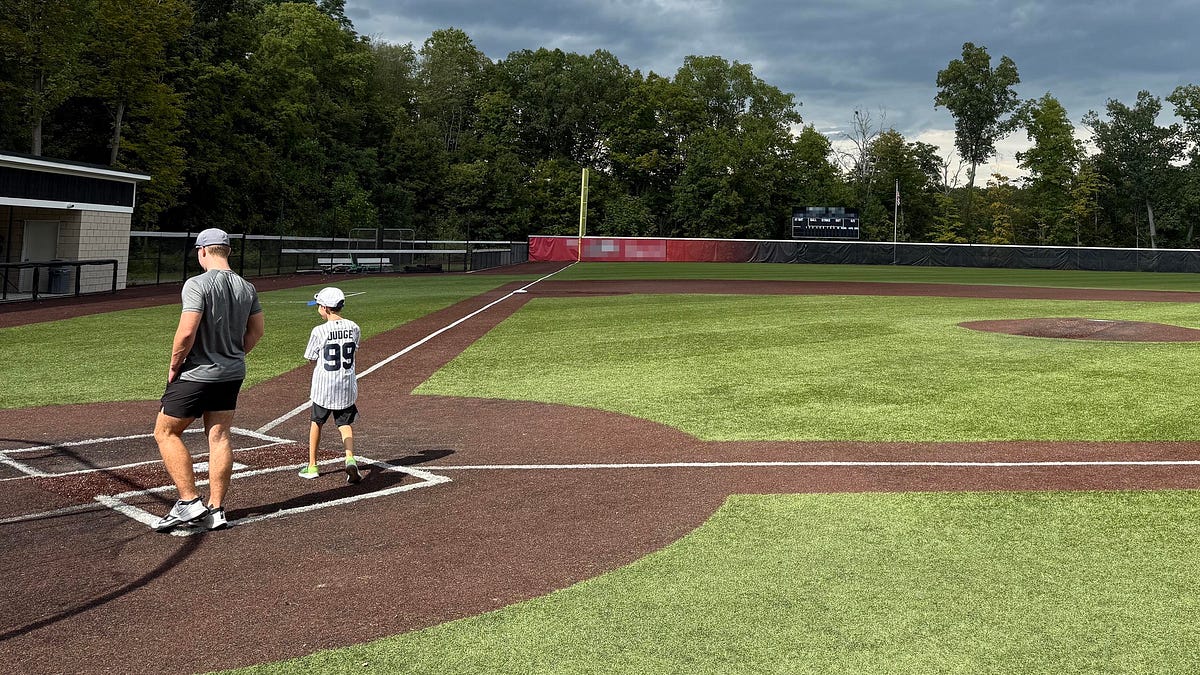
I have one kid who is a high-level athlete.
asserted
who → have → kid
He’s playing college baseball this year.
asserted
He → play → baseball
He has a (very outside) chance of getting drafted after college, depending on how he develops.
asserted
he → have → college
The odds are against that and even if he did wind up in the pros, he’d probably just bounce around the minors for a year or two and then, I don’t know, go to law school or something.
asserted
I → wind → school
️
I have three other kids who are mostly indifferent to sports.
asserted
who → have → sports
Here is something I have told my baseball kid, Flash, since he first started throwing a ball: There are only two reasons to play sports.
asserted
are → tell → sports
That’s not all-the-way true, but it’s true enough.
asserted
it → ’ → ?
If you aren’t getting paid to play a game, then you better be having fun.
asserted
you → pay → fun
If a kid feels like 10-year-old baseball is a grind, then he shouldn’t be playing 10-year-old baseball.
asserted
he → feel → baseball
He should be trying a different sport.
asserted
He → try → sport
He should be exploring the world around him to find something he loves.
asserted
he → explore → something
The idea that kids should pursue sports for some other reason—to help with college admissions, or build a résumé—is mostly wrongheaded.
asserted
kids → pursue → résumé
Because if your kid will be good enough to play in college, then you probably already know it.
asserted
you → play → it
Lesson #1: Elite talent shows up much earlier than you think.
asserted
you → show → ?
We hold this idea in our minds about how great athletes can bloom late.
asserted
athletes → hold → minds
That’s mostly not correct.
asserted
That → ’ → ?
When you see a kid who is going to play at the next level, you notice him or her immediately because they aren’t 10 percent or 50 percent better than everyone else.
asserted
they → see → everyone
They’re in a different category.
asserted
They → ’re → category
A few years ago I wrote about a young girl I’d seen at an elementary school cross-country meet.
asserted
I → write → meet
I watched her run 200 meters and my eyes fell out of my head.
asserted
eyes → watch → head
She was in fifth grade and in thirty seconds you could tell she was different not just from everyone else at the meet but from anyone else you’d ever seen.
uncertain
you → tell → anyone
Last fall she was a high school freshman running cross country and she finished in the top fifty in the nation.
asserted
she → run → nation
And keep in mind that while this girl will absolutely run at the next level, even she will probably never be “elite” enough to make the Olympics.
asserted
she → keep → Olympics
That’s a whole other category difference.2
asserted
That → ’ → ?
Another example: Before he switched to pitching full-time, Flash worked out at a local baseball academy.
asserted
Flash → switch → academy
All very high-level; everyone there would eventually go on to play college ball.
asserted
everyone → go → ball
I walked in one day and saw a 16-year-old taking batting practice and after three swings my jaw was on the floor.
asserted
jaw → walk → floor
In a building full of high-level high school players, this kid was a freak and you could tell after three practice swings.
uncertain
you → tell → swings
He skipped college and went straight to the MLB draft where he was taken in the first round.
asserted
he → skip → round
I could give you story after story illustrating this reality.
uncertain
I → give → reality
A long time ago, a family friend in Connecticut watched a 12-year-old win his club championship (against grown men) by like 5 strokes.
asserted
friend → watch → strokes
…and 15 more, not listed.
 The Aporia