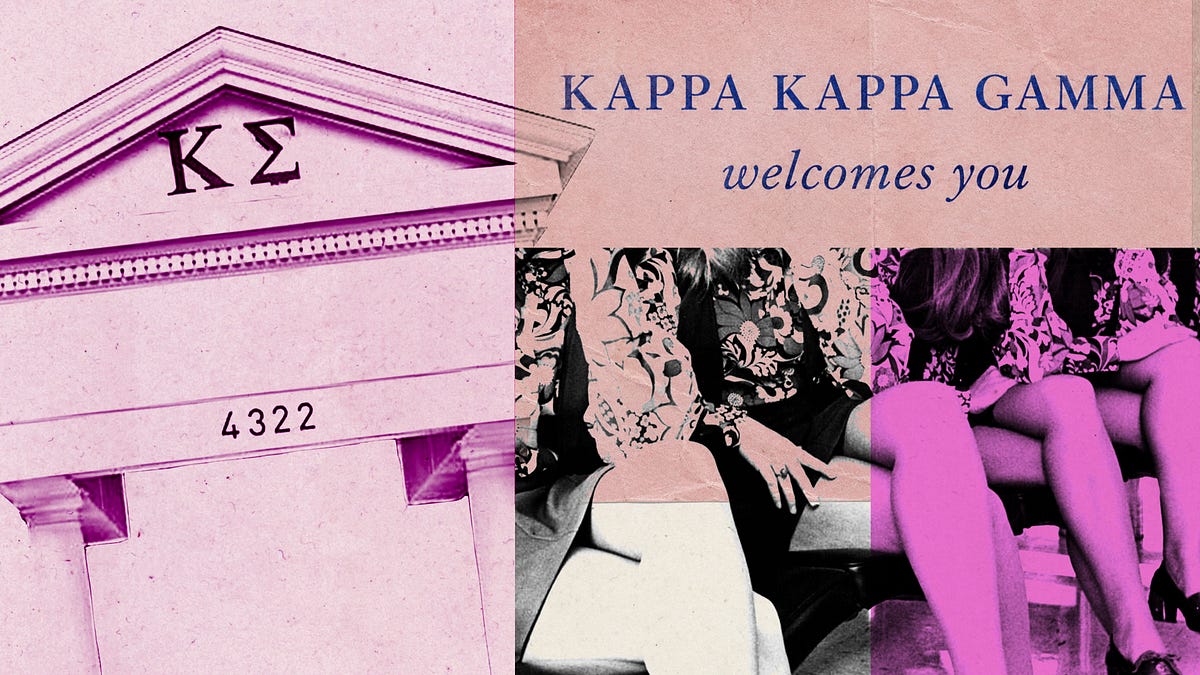
How I Made an AI Sorority Girl Go Viral

The Free Press · collected 2026-08-27 · by Olivia Moore
Read the original at The Free Press ↗

Summary

Olivia Moore, a tech investor, created an AI-generated influencer named Janie as part of a social experiment to see how people react to content generated by artificial intelligence. Janie was generated from a single image and created TikTok videos that averaged tens of thousands of views per video. The experiment took place during the University of Alabama's Bama Rush sorority recruitment process, where 2,500 prospective new members post videos online. Moore used ChatGPT to generate all of Janie's content, including "outfit of the day" videos and dance clips.
Written by the local model on 2026-08-27, using this article's own text rather than the other coverage of the same event (that is the story summary below).

Signals How these are calculated →

Claims extracted
12
claim-shaped sentences
Uncertain
0%
0 of 12 hedged
Leaning
not political
takes no side on a contested political question
Publisher trust
96.2
red-flag proxy, not a credibility rating
Outlets on this story
1
Technology
Narrative spread
1
articles carrying this framing
Analyzed 2026-08-27 · how these are computed

AI analysis (generated at analysis time, not now)

Story summary

19-year-old student named Janie, who participated in Bama Rush at the University of Alabama's annual sorority recruitment, created an AI-generated TikTok account that went viral among thousands of viewers. Janie's AI-generated account averaged tens of thousands of views per video, mirroring the real experiences of over 2,500 prospective new members (PNMs) who also posted outfit-of-the-day videos and house visit recaps on social media. The experiment aimed to test how people react when they discover that an AI-generated influencer is behind a popular online presence.

Written for “Viral Sorority AI Experiment” on 2026-08-31, grounded in this article and the 0 other(s) covering the same event.
Why this leaning score
This article does not take a side on a contested political question, so it has no leaning score. That is an answer rather than a gap: a match report or a rescue can be warmly or critically written without being left or right, and scoring it anyway is how approval of a subject gets recorded as a political position.
No political leaning scored for article 2842 · logged 2026-08-27

Story

📰 Viral Sorority AI Experiment
Technology · 1 article(s) covering the same event. This is the one the site leads with.

How this is being covered How these are calculated →

Article leaning vs. publisher reliability
Source leaning vs. consistency

Compared with similar articles

This article reads unscored and hedges 0% of its claims. Each row says how that neighbour differs.
New York Post
⚖️ Leans left 🔴 4% hedged 2 of 54 📰 publisher trust 95
“The articles cover different topics related to AI, but do not describe the same specific incident or event”
US news | The Guardian
⚖️ leaning not scored 🔴 0% hedged 0 of 22 📰 publisher trust 95
“The articles cover different topics, with Article A discussing AI-generated images of Trump with historical figures and Article B talking about creating an AI-generated influencer to test public reaction”
NBC News Top Stories
⚖️ leaning not scored 🔴 67% hedged 2 of 3 📰 publisher trust 96
“Article A discusses an experiment with AI-generated content, while Article B mentions a $18 billion settlement in a social media lawsuit, which are two unrelated events.”
Semafor
⚖️ leaning not scored 🔴 11% hedged 5 of 47 📰 publisher trust 96
“Article A describes Olivia Moore's experiment with creating an AI-generated influencer, while Article B discusses the increasing use of AI in opinion pages, without any mention of Olivia Moore or her experiment”
Platformer
⚖️ leaning not scored 🔴 8% hedged 13 of 166 📰 publisher trust 96
“The articles describe unrelated topics and do not mention any shared specific incident or occurrence.”
404 Media
⚖️ Leans left 🔴 0% hedged 0 of 27 📰 publisher trust 95
“The articles cover different topics, with Article A discussing AI-generated influencers and Article B exploring the use of chatbots as companions.”
The Free Press
⚖️ Leans left 🔴 0% hedged 0 of 3 📰 publisher trust 96
“Article A describes an experiment by Olivia Moore using AI to create an influencer, while Article B discusses lifestyles and trends among the rich in general”
Beware the Ready-Made Op-Ed different event · 80%
The Dispatch
⚖️ leaning not scored 🔴 0% hedged 0 of 4 📰 publisher trust 96
“Article A describes an experiment by Olivia Moore, while Article B reports on a viral opinion piece by Stanley Druckenmiller that was written with AI, but these are distinct events”

Publisher

The Free Press · 35 article(s) · 0 correction(s) detected
SignalValueWeight
Correction rate 0.000 0.4
Uncertainty density 0.077 0.25
Assertive mismatch rate 0.000 0.35
No corrections detected for this publisher. That may mean careful reporting, or simply that nothing has been checked.

Who wrote this

Olivia Moore
1 article(s) here · 0 carrying a prediction
The only article under this byline in the corpus.

Topics

Bama Rush ChatGPT RushTok TikTok the University of Alabama’s

Subjects

Janie PERSON · 4× the University of Alabama’s ORG · 2× Alabama ORG · 1× Bama Rush ORG · 1× Olivia Moore PERSON · 1× The Editors PERSON · 1× TikTok ORG · 1×

Narrative

Every August, thousands of college women go through an arduous process to join one of the University of Alabama’s sororities, moving through a series of themed rounds of interviews with current members.
framing: assertive · carried by 1 article(s) · first seen 2026-08-27
2026-08-27 · The Free Press
How I Made an AI Sorority Girl Go Viral · assertive framing

Claims (12 extracted, 0 hedged)

Artificial intelligence is reshaping the kinds of content we consume, from books and op-eds written with AI to films generated by it. asserted
we → reshape → it
But nowhere is this shift more visible than on social media, where it has become increasingly difficult to tell what’s real and what’s not. asserted
what → become → media
As AI becomes more ubiquitous on these platforms, what happens when people realize something they’re engaging with was made using it? asserted
they → become → it
Olivia Moore, a tech investor, set out to test that question by creating an AI-generated influencer and watching how people reacted. asserted
people → set → influencer
Read her piece to see what it reveals about how people engage with AI once they know it’s there. asserted
it → read → AI
Earlier this month, a 19-year-old, curly-haired student named Janie went through Bama Rush, the University of Alabama’s annual sorority recruitment. asserted
student → name → Alabama
Like many of the 2,500 prospective new members (PNMs), she posted “outfit of the day” videos, breathless recaps of house visits, and clips fumbling her way through trending dances on social media. asserted
she → post → media
Janie created a TikTok account just for rush, and within a week, she was averaging tens of thousands of views per video. asserted
she → create → video
She was born out of a single image generated by ChatGPT, and every one of her videos was prompted by me. asserted
one → bear → me
Janie worked, in large part, because of RushTok, the annually occurring online spectacle surrounding Alabama’s sorority recruitment. asserted
Janie → work → recruitment
Every August, thousands of college women go through an arduous process to join one of the University of Alabama’s sororities, moving through a series of themed rounds of interviews with current members. asserted
thousands → go → members
The process culminates in “bid day,” when PNMs open offers of membership. asserted
PNMs → culminate → membership
💬 Give feedback
🕘 History 🎫 Support