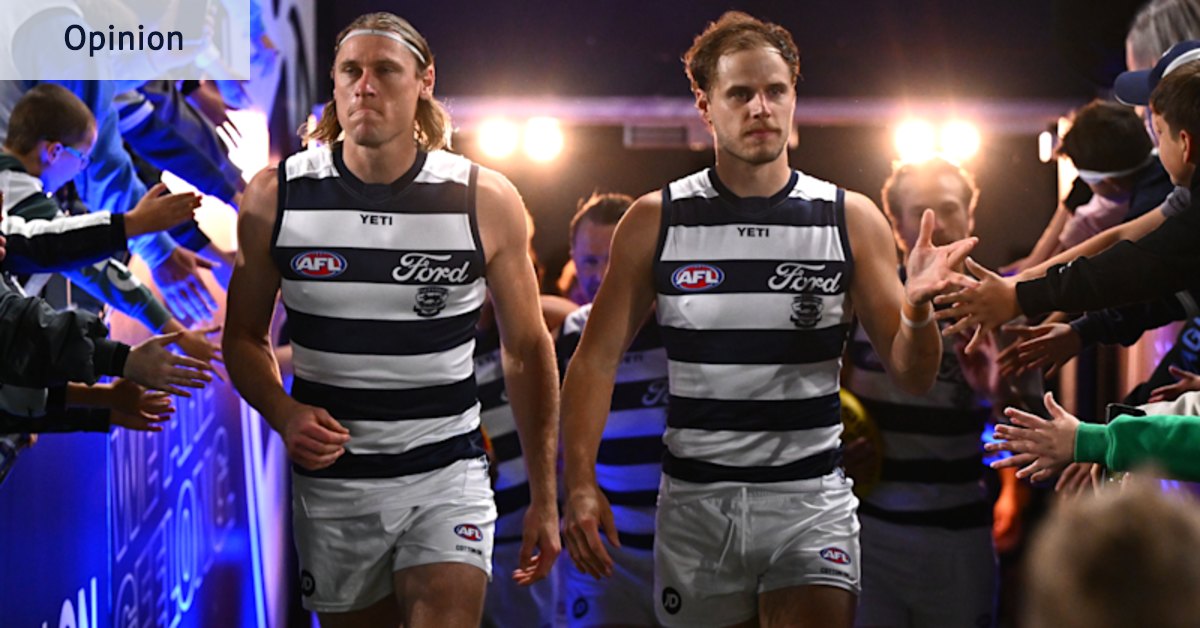
The only conclusion that can be reached from a strict reading of the findings of the investigation into Geelong’s failure to lodge a letter that defender Jake Kolodjashnij signed is that the $140,000 fine imposed on the club is excessive.
asserted
fine → reach → club
Administrative oversights don’t warrant such a whack unless the governing body is looking to mollify the multitudes who are both sick of the cute Cats and the way headquarters have handled concussion in the past.
asserted
headquarters → warrant → past
Clearly the commission considered a heavy fine would satisfy that mob, while the findings of James Peters KC would enable former Geelong president Craig Drummond to continue on as AFL chair.
asserted
findings → consider → chair
Handing over such a cheque might be difficult for the Cats to stomach but, from their perspective, proving to Peters that they “did not intend to conceal the existence of the agreement or deceive the AFL or AFLPA” is more important to their reputation.
uncertain
they → hand → reputation
Many may never accept Peters’ finding, but the fact Geelong opened up a conversation with the AFL’s legal and medical teams, an outside insurance expert, and the player and his family before committing to the ultimately flawed agreement lends weight to Peters’ conclusion.
uncertain
Geelong → accept → conclusion
They should have, in hindsight, opened up the conversation more widely, but I suspect Kolodjashnij, being a retiring unassuming athlete in his early-30s, did not want his medical position discussed in public.
asserted
position → open → public
What no one can hide from is the fact the concussion panel’s inconclusive finding relating to Kolodjashnij left a club to manage something the AFL and the players’ association should have seen as a high priority and a shared responsibility.
asserted
AFL → hide → priority
Particularly when those controlling bodies were alert to the potential complexities ahead because a player had already been allowed to sign a waiver, before returning to the VFL, with an AFL club in a competition containing AFL players.
asserted
player → control → players
The doctors were living the problem because they were (and are) facing increasing professional indemnity insurance.
asserted
they → live → insurance
Insurance experts knew because they were trying to get individual player cover, particularly pertinent now after Zurich’s decision to not cover concussion.
asserted
they → know → concussion
Legal eagles knew because they were following the class action relating to concussion, and the coroner’s report into Shane Tuck.
asserted
they → know → Tuck
But somehow the controlling bodies sent a player back to a club with an ambiguous finding from a concussion panel without any protocols as to what should happen next.
asserted
what → control → protocols
For all the high-minded statements coming from various quarters, that is a system failing.
asserted
that → come → quarters
What surprised most on Thursday was when AFL CEO Andrew Dillon said that the questions surrounding the investigation weren’t moral questions.
Maybe not if you keep the terms of that investigation narrow, but the ethical dilemma this case represents should have been contemplated more vigorously when putting a player in Kolodjashnij’s or the VFL player’s position, and they must be part of the debate now.
Despite the vigorous positions taken, they remain open questions without clear-cut answers.
asserted
they → surprise → answers
How much agency should Kolodjashnij have to decide to continue his career when the risks – both present and future – are explained to him in great detail, and the doctor is prepared to support him?
asserted
doctor → have → him
Should clubs be expected to immediately shut down a player’s career if the doctor says, as the Cats’ doctor David Long at the time wrote, “the only way to avoid increasing the risks associated with concussion and contact sport, [is] that you cease playing contact sport, effective immediately”?
asserted
you → expect → sport
It may be easy to say yes, until you are asked to stare down a player who has not been medically ruled out, yet stands to lose income and be booted from their workplace as he is about to start a family.
uncertain
he → say → family
That may even be a restraint of trade if the player wanted to push the envelope.
uncertain
player → want → envelope
Imposing my view of what others should do in that situation doesn’t seem fair.
asserted
others → impose → situation
Vitally, and important to this case, should Geelong, their board and Drummond have stared squarely into the mirror when supporting Kolodjashnij’s return to play and asked themselves if our want to protect our liability and business is outweighing our care for the player’s long-term health here?
asserted
want → star → health
That’s not to condemn the Cats for perhaps not contemplating that dilemma at the start of 2024 – when the letter was signed – as they seemed prepared to do once the agreement’s existence was revealed, but to recognise that question is definitely up for discussion midway through 2026.
asserted
question → ’ → 2026
And they would have benefited from being open about the situation back then.
asserted
they → benefit → situation
Ultimately, what should clubs do if they are faced with the same dilemma tomorrow as the Cats were in the first weeks of February 2024?
asserted
Cats → do → February
No such waiver, the AFL and the AFLPA says, for now at least.
asserted
AFL → say → ?
Geelong president Grant McCabe says they are open to learning more.
asserted
they → say → more
Protect us and keep the job viable, say doctors.
asserted
doctors → protect → us
The players are asking: What about us and our individual right to decide on what’s an acceptable risk?
asserted
what → ask → us
The revelation this document existed a few weeks back has caused discomfort for many, not least of all Kolodjashnij, who has not played since it came to light and deserves every ounce of support he is getting.
But it has been important to shine a light on the matter because it has sparked a conversation that the governing body and the players’ association have kicked down the road for too long.
asserted
body → exist → road
The ethical, rather than just the legal, discussions about concussion are what matters most now, and the game should be able to conduct them now free of fear.
asserted
game → matter → fear
 The Aporia