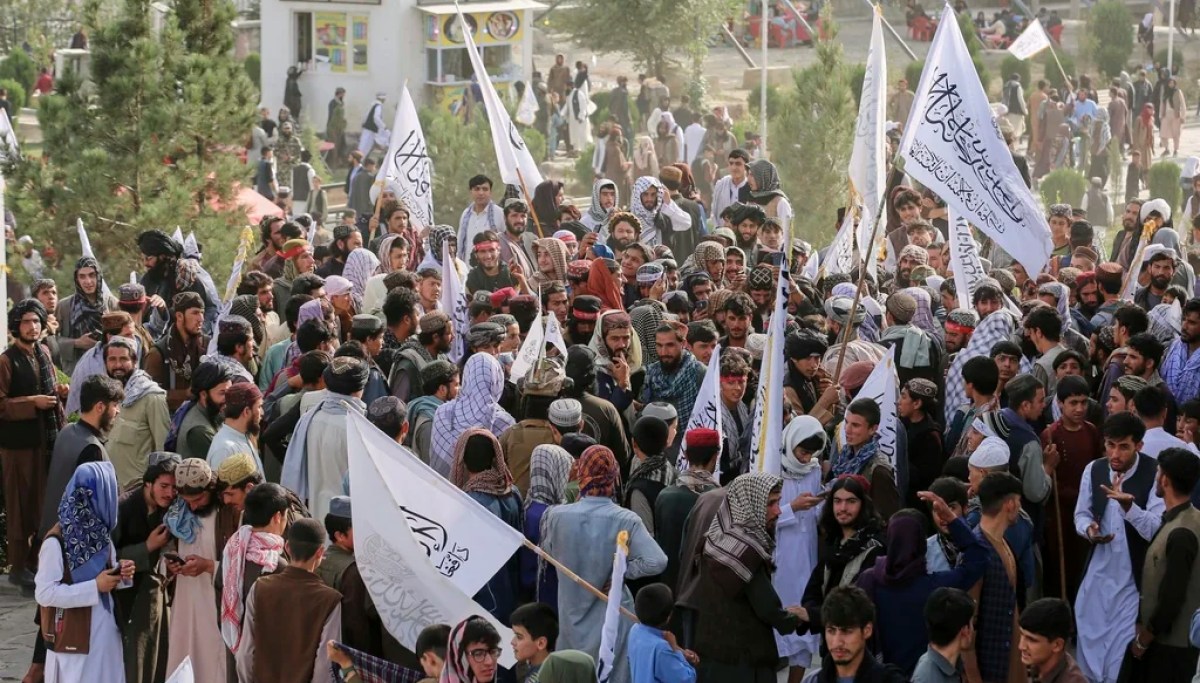
America devoted more than two decades and over $2 trillion to the fight against the Taliban in Afghanistan.
asserted
America → devote → Afghanistan
The price was measured not only in dollars, but in sacrifice.
asserted
price → measure → sacrifice
More than 2,400 brave Americans gave their lives, while many thousands returned home carrying physical and emotional wounds.
asserted
thousands → give → wounds
Families also bore the burden, spending months and years apart from loved ones serving in one of the world’s most dangerous war zones, and then learning how to take care of those loved ones when they came home.
asserted
they → bear → ones
As someone who fought in Operation Enduring Freedom, this topic hits home for me, especially as we approach the 25th anniversary of September 11th.
asserted
we → fight → 11th
Nothing prepares you for a war without clear battle lines or for an enemy that operates without rules.
asserted
that → prepare → rules
But my fellow soldiers and I gave everything we had to defeat the enemy.
asserted
we → give → enemy
That’s why watching the way it ended was so heartbreaking.
asserted
it → ’ → way
I distinctly remember watching footage of hundreds of panicked Afghans piling into a C-17 to evacuate as the Taliban captured Kabul — and others chasing after the plane, trying to hang on the side, or hiding in the wheel well.
asserted
Taliban → remember → well
Most also can recall heart-wrenching footage of an infant being handed over the airport wall to a soldier as his parents were being crushed in the surging crowd.
asserted
parents → recall → crowd
And most especially, I remember the 13 flag-draped coffins coming home after the bombing at Abbey Gate.
asserted
I → remember → Gate
The Biden administration botched the Afghanistan withdrawal.
asserted
administration → botch → withdrawal
While the troops on the ground — from the airmen and soldiers to the Marines and sailors did heroic work during the evacuation, there was a major leadership problem.
asserted
troops → do → evacuation
Prioritizing political optics over the reality on the ground and ignoring warnings from military leaders, former President Joe Biden chose an arbitrary withdrawal deadline — and shared it with the world, including the enemy.
asserted
Biden → prioritize → enemy
For Biden, it was more important to get headlines declaring he ended the longest war than it was to protect U.S. troops, State Department personnel, military contractors, and Afghan and NATO allies.
asserted
it → get → troops
In the end, Biden didn’t get the headlines he wanted, and the people of Afghanistan don’t have the freedom they deserve.
asserted
they → get → freedom
The Taliban had been making inroads for weeks.
asserted
Taliban → make → weeks
They had already captured Zaranj, Herat, and Kandahar.
asserted
They → capture → Zaranj
When General Mark Milley testified before the House Foreign Affairs Committee, he recommended to President Biden that he maintain a minimum of 2,500 U.S. troops on the ground to sustain the Afghan Security Forces until the Taliban met the conditions of the Doha agreement.
asserted
Taliban → testify → agreement
Despite the Taliban’s failure to meet the requirements under Doha, Biden announced on April 14, 2021, that there would be a complete military withdrawal by Sept. 11, 2021, the 20th anniversary of the 9/11 terrorist attacks.
asserted
Biden → meet → attacks
Despite these warnings, the Biden administration’s State Department refused to plan for a noncombatant evacuation operation (NEO) until August 6th, days before Kabul fell.
asserted
Kabul → refuse → 6th
Even worse, the Biden administration didn’t declare an NEO until the Taliban began invading Kabul on August 15.
asserted
Taliban → declare → August
State Department officials, U.S. citizens, and other allies were stuck on the ground with no military support.
asserted
officials → stick → support
The evacuation had to pause until troops could be sent back into Afghanistan.
uncertain
troops → have → Afghanistan
This led to utter chaos on the ground.
asserted
This → lead → ground
Another bad decision with irreparable consequences was staging all evacuations out of Hamid Karzai International Airport (HKIA) in Kabul instead of Bagram Airfield (BAF).
asserted
decision → stag → Airfield
It wasn’t just a tactical error to abandon BAF.
asserted
It → abandon → BAF
The United States had a lot invested in this base, and its close proximity to Iran and China also made it strategically valuable.
asserted
it → have → Iran
But BAF also had two large runways and could have been secured, unlike HKIA.
uncertain
BAF → have → HKIA
The chaos on the runway and the bombing at Abbey Gate — all could have been avoided if the evacuations had taken place at BAF.
uncertain
evacuations → avoid → BAF
This is especially true considering the fact that the ISIS-K terrorist who carried out the Abbey Gate bombing was released from a Bagram prison by the Taliban after the U.S. abandoned it without warning Afghan forces.
asserted
U.S. → consider → forces
It’s been five years since this evacuation, but I know for myself and other Operation Enduring Freedom veterans, the wound is still fresh.
asserted
wound → know → myself
According to a poll done at the time, six in ten veterans said the Biden administration had done a poor job in Afghanistan.
uncertain
administration → accord → Afghanistan
Over the years, many veterans have spoken out about the withdrawal, especially those who were there.
asserted
who → speak → withdrawal
A Marine sergeant who was present at the Abbey Gate bombing testified before the House Foreign Affairs Committee about the withdrawal.
asserted
who → testify → withdrawal
He said, “I opened my eyes to Marines dead or unconscious lying around me. …
asserted
I → say → me
My abdomen had been ripped open; every inch of my exposed body except for my face took ball bearings and shrapnel.”
asserted
inch → rip → bearings
On top of the 13 servicemembers that were killed, 45 were injured, including lost organs and limbs.
asserted
45 → kill → organs
During the disastrous withdrawal, I was asked by multiple people if I was okay.
asserted
I → ask → people
I wasn’t — and neither were those I served with.
asserted
I → serve → ?
…and 29 more, not listed.
 The Aporia