A Student Said He Was a Hobby Plane Spotter. He Was Allegedly Taking Photos for the Chinese Government

404 Media · collected 2026-08-27 · by Joseph Cox
Read the original at 404 Media ↗

Summary

A Canadian undergraduate student, Weiheng Zeng, allegedly took photos of facilities near Chicago's O'Hare International Airport for the Chinese government at the direction of a suspected Chinese official, according to newly filed court records. The student, who has entered the US around 24 times since 2022, claimed he was taking the photos as his hobby, but later revealed he was being paid $20-$30 per picture by his "Chinese Contact". Zeng said this contact had sent him SIM cards and a Huawei phone to communicate, and instructed him to remain undetected. The incident is seen as an example of how Chinese state actors use students to gather sensitive US location imagery.
Written by the local model on 2026-08-27, using this article's own text rather than the other coverage of the same event (that is the story summary below).

Signals How these are calculated →

Claims extracted
29
claim-shaped sentences
Uncertain
17%
5 of 29 hedged
Leaning
Leans left
of the writing, not the subject
Publisher trust
94.8
red-flag proxy, not a credibility rating
Outlets on this story
1
Crime & Law
Narrative spread
1
articles carrying this framing
Analyzed 2026-08-27 · how these are computed

AI analysis (generated at analysis time, not now)

Story summary

Weiheng Zeng, an undergraduate student from the University of Waterloo in Ontario, Canada, allegedly took photos of facilities near Chicago's O'Hare International Airport at the direction of a suspected Chinese government official. According to court records, Zeng was told to use a Huawei phone and destroy SIM cards used for communication to avoid detection. This is reportedly part of a larger effort by Chinese state actors to crowdsource imagery of sensitive US locations or military aircraft using students as "hobby plane spotters". Zeng has allegedly crossed into the United States around two dozen times since 2022, and was interviewed repeatedly by Customs and Border Protection (CBP) when he tried to re-enter the country last Sunday.

Written for “Spying on US Military Bases” on 2026-08-31, grounded in this article and the 0 other(s) covering the same event.
Why this leaning score
The article's own words the score was based on. Each is quoted verbatim and was checked against the article text before being stored, so you can find it in the original.
Score -0.35 Confidence high 1 quote(s) discarded as not found in the article
Leaning score -0.35 for article 2688 (high confidence, 1 verified quote) · logged 2026-08-27

Story

📰 Spying on US Military Bases
Crime & Law · 1 article(s) covering the same event. This is the one the site leads with.

How this is being covered How these are calculated →

Article leaning vs. publisher reliability
Source leaning vs. consistency

Compared with similar articles

This article reads leans left and hedges 17% of its claims. Each row says how that neighbour differs.
The Straits Times World News
⚖️ leaning not scored 🔴 0% hedged 0 of 9 📰 publisher trust 95
“Article A is a general call for Trump administration to ban US citizens from aiding Chinese security agencies, while Article B describes a specific incident of a Chinese student taking photos at the direction of a suspected Chinese government official”

Publisher

404 Media · 26 article(s) · 0 correction(s) detected
SignalValueWeight
Correction rate 0.000 0.4
Uncertainty density 0.104 0.25
Assertive mismatch rate 0.000 0.35
No corrections detected for this publisher. That may mean careful reporting, or simply that nothing has been checked.

Who wrote this

Joseph Cox
7 article(s) here · 0 carrying a prediction
🔮 The baba lao was going to do a ritual designed to ensure a Nigerian scammer would make more money in his blackmailing or manipulation of an overseas victim, maybe back in the United States.
🔮 “I would rather your event flyer look like this than see more AI slop,” one flyer posted to Instagram, written in pencil on a page of lined paper, reads.
2026-08-28 · assertive framing · Businesses Go Viral for Making Signs Without AI
🔮 So the woman could never have been under investigation for having an abortion.
🔮 But handling such a large volume of data in a clean and reliable manner could be a challenge.
2026-08-26 · assertive framing · ICE Wants the Country’s Voter Data
Also by Joseph Cox
Nothing else under this byline is closely related to this article, so these are simply their most recent.
All 7 articles by Joseph Cox →

Topics

Canada Chicago Chinese Huawei U.S.

Subjects

Zeng PERSON · 17× Chinese NORP · 7× U.S. GPE · 4× FBI ORG · 3× FedEx ORG · 3× CBP ORG · 2× Canada GPE · 2× Chicago GPE · 2× Huawei ORG · 2× the United States GPE · 1×

Narrative

Authorities later figured out this was Zeng based on the dark blue Chrysler Town & Country vehicle that left the area and that he was connected to When Zeng tried to enter the U.S. again last Sunday, Customs and Border Protection (CBP) interviewed him repeatedly.
framing: assertive · carried by 1 article(s) · first seen 2026-08-27

Claims (29 extracted, 5 hedged)

A Chinese national studying in Canada allegedly crossed over into the United States earlier this year to take photos of facilities near the Chicago airport at the direction of a suspected Chinese government official, according to newly filed court records. uncertain
national → study → records
The Chinese official repeatedly told the student to destroy the SIM cards they used to communicate and stick to a Huawei phone. asserted
they → tell → phone
The records provide insight into how Chinese state actors continue to use students to essentially crowd source imagery of sensitive U.S. locations or military aircraft, and how those students are told to remain undetected. asserted
students → provide → locations
Seamus Hughes of Court Watch first identified and posted the records on Wednesday. asserted
Hughes → identify → Wednesday
Weiheng Zeng is an undergraduate student at the University of Waterloo, Ontario, Canada and has crossed into the U.S. around two dozen times since 2022, according to an affidavit from an FBI Special Agent. uncertain
Zeng → cross → Agent
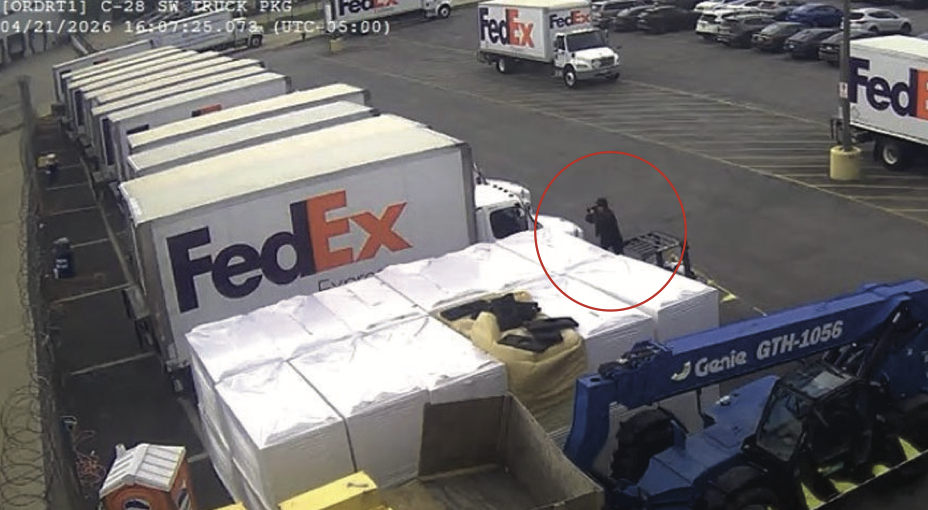
In April, an unknown person was seen inside the FedEx employee parking lot at O’Hare International Airport in Chicago, Illinois, the document continues. asserted
document → see → Chicago
This person looked like they were taking photos of aircraft or other parts of the airport. asserted
they → look → airport
They climbed onto a forklift to take photos in the direction of the aircraft, and tried to get into a FedEx truck, according to photos included in the document. uncertain
They → climb → document
Authorities later figured out this was Zeng based on the dark blue Chrysler Town & Country vehicle that left the area and that he was connected to When Zeng tried to enter the U.S. again last Sunday, Customs and Border Protection (CBP) interviewed him repeatedly. asserted
Customs → figure → him
At first, Zeng said he planned to travel with his sister and a classmate. asserted
he → say → sister
CBP agents then reviewed his phone and found multiple photos of aircraft, the document says. asserted
document → review → aircraft
Zeng told the agents “he takes pictures of model aircraft being tracked for a flight radar website,” it adds. asserted
it → tell → website
At one point he said he takes the photos as his hobby. asserted
he → say → hobby
Agents also found photos of Zeng and others in tactical clothing holding rifle-styled firearms. asserted
Zeng → find → firearms
Zeng said this was an airsoft gun. asserted
this → say → ?
Zeng changed his story repeatedly, before revealing taking the photos was more than a hobby. asserted
taking → change → hobby
Instead, he knows someone referred to in the court record as his “Chinese Contact.” asserted
he → know → Contact
This contact assigned Zeng specific planes and their tail numbers to photograph, and then paid Zeng $20 to $30 per picture. asserted
contact → assign → picture
Zeng said this Chinese Contact sent him SIM cards to communicate, and then told him to destroy the cards, their chats, and delete the photos he took. asserted
he → say → photos
Later Zeng said the contact told him to use his Huawei phone to communicate, and never take that phone into the U.S. Zeng claimed the Chinese Contact approached him through “an aviation spotter website” around a year and a half ago, the document continues. asserted
document → say → website
Zeng said he believed this person was connected to the Chinese Communist Party, and later told the FBI the person sent a photo of an official looking badge. asserted
person → say → badge
The language the contact used “was very organized and managed, not language typically used between friends,” the document adds. asserted
document → use → friends
When the FBI later looked into this site, the agency found it appeared to not exist, according to the court record. uncertain
it → look → record
One of the photographed planes was an American United aircraft which had “a unique, temporary paint job, of which photographs were highly desired,” according to Zeng. uncertain
photographs → photograph → Zeng
The contact wanted Zeng to go to places in Orlando, Las Vegas, and Los Angeles to take photographs of specific locations around airports, the document says. asserted
document → want → airports
Zeng said he denied these requests and accepted two tasks over 18 months. asserted
he → say → months
One of those was to get the photos of the interior of the FedEx facility at O’Hare International Airport. asserted
One → get → Airport
In all, he made $500, the document says. asserted
document → make → 500
“ZENG stated ‘Chinese Contact’ was not satisfied with the photographs and the photographs were fine, but not what were ‘expected’,” the document adds. asserted
document → state → photographs

💬 Give feedback
🕘 History 🎫 Support