Toronto Star
· collected 2026-09-21 · by Ryan J. Foley The Associated Press
analysis
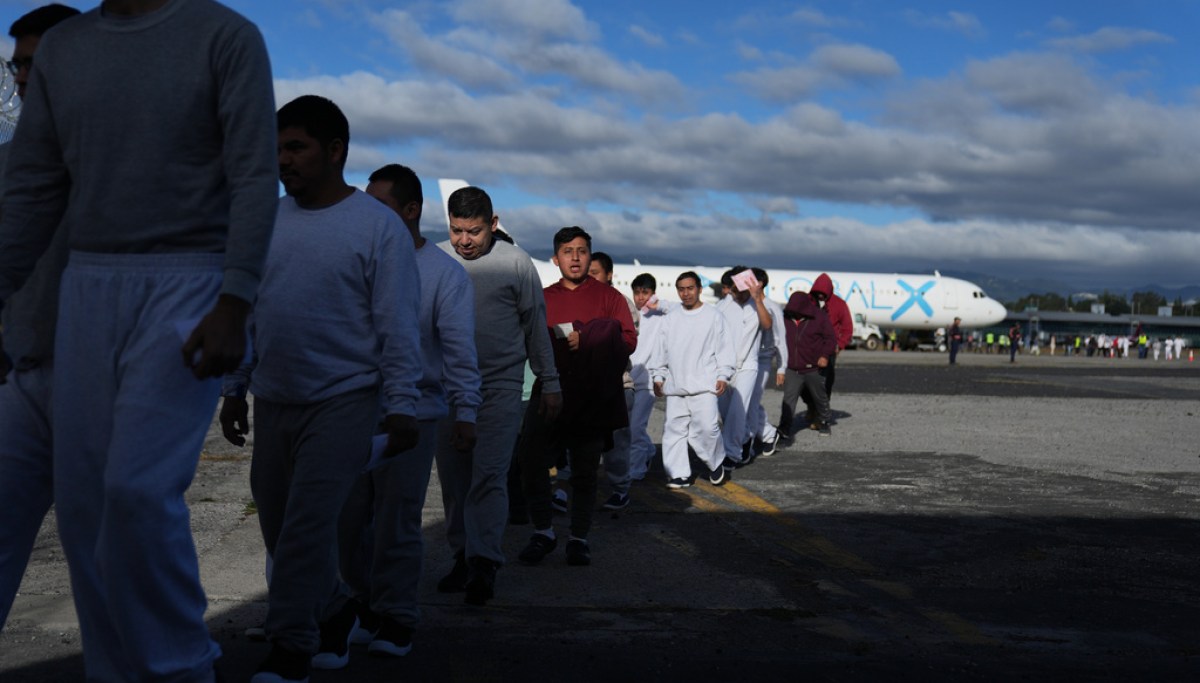
U.S. Immigration and Customs Enforcement has stopped publicly revealing where it is holding thousands of detainees who are subject to final deportation orders, an unannounced move that has made it far more difficult for lawyers and relatives to find them, according to current and former officials familiar with the practice.
uncertain
lawyers → stop → practice
ICE removed those detainees from its online detainee locator system on Sept. 15, according to three current and former ICE officials who spoke on condition of anonymity because they were not authorized to discuss the change.
uncertain
they → remove → change
Several lawyers contacted by The Associated Press confirmed their clients vanished from the system this week, and the American Immigration Lawyers Association warned its members about the situation Friday.
asserted
Association → contact → situation
The move represents a stark departure from previous practice and highlights the hardline nature of President Donald Trump’s immigration crackdown, leaving thousands of detainees exceedingly hard to trace and potentially unable to exercise all of their legal options.
asserted
move → represent → options
The practice, which applies to detainees who have received final orders of removal from an immigration court, could speed deportations by making last-minute legal challenges harder to pursue, immigration lawyers said.
uncertain
lawyers → apply → deportations
Nearly 16,000 people who were arrested and booked into ICE detention in July were subject to final removal orders, more than a third of the overall bookings, according to ICE data obtained by the Deportation Data Project based at U.C. Berkeley and UCLA.
uncertain
who → arrest → Berkeley
The practice does not apply to detainees held at a detention facility in Adelanto, California or at temporary holding facilities in Minneapolis, New York City or suburban Chicago, the sources said.
asserted
sources → apply → Minneapolis
Judges have ordered ICE to list detainees in those facilities in the online locator promptly upon their arrival, as part of litigation over their detention practices.
asserted
Judges → order → practices
Lawyers and relatives distressed by lack of information on detainees
The effort to hide their locations adds to the ways in which the Trump administration has made life harder for detainees and their families as it has increased pressure on them to waive appeals and agree to deportation.
asserted
it → distress → deportation
ICE did not publicize the move and in a statement issued to the AP, the agency did not confirm or deny it.
asserted
agency → publicize → it
The statement said detainees with final removal orders were being prioritized for deportation, even as ICE faces a “historic number of injunctions” from courts stopping individual removals.
asserted
ICE → say → removals
As a result of the change, lawyers and relatives lost track of their clients and loved ones without explanation, which is especially concerning because detainees are frequently moved to new facilities before deportation, said Greg Chen, senior director of government relations at the American Immigration Lawyers Association.
asserted
Chen → lose → Association
“Families are freaking out because they think the person has been deported and they don’t know where the person might be,” he said.
uncertain
he → freak → ?
“On the attorney side, this has serious implications for the ability to contact their client.
asserted
this → have → client
It certainly has implications about how it will interfere with the attorney-client relationship.”
asserted
it → have → relationship
The Department of Homeland Security, ICE’s parent agency, has argued that people who are subject to final removal orders have received due process.
asserted
who → argue → process
That usually means an immigration judge has ordered their removal after a hearing, including cases when immigrants fail to show up, and the decision was affirmed on appeal or not appealed.
asserted
decision → mean → appeal
Detainees with final removal orders still have options to appeal
asserted
Detainees → have → options
Still, those detainees have options to challenge their detention and removal, including seeking to reopen the case or by bringing what’s known as a habeas petition asking a judge to release them on constitutional grounds.
asserted
what → have → grounds
Federal judges have granted thousands of rulings ordering that detainees be released or granted bond hearings.
asserted
detainees → grant → hearings
ICE detention facilities held more than 65,000 people as of early July, the most recent available data.
asserted
facilities → hold → data
Around 30% of them likely have final removal orders, said Michelle Mendez, legal director at the National Immigration Project.
asserted
Mendez → have → Project
More people have been issued final removal orders after failing to show up for hearings in recent months because the administration’s immigration courts have taken steps to make it harder to participate and to reopen such cases, she said.
asserted
she → issue → cases
“To me, it’s just another iteration of disappearing people,” she said.
asserted
she → ’ → people
“Why would we do that in the United States of America?
asserted
we → do → America
It’s something we’d hear about in another country and be concerned about individual rights and due process.
asserted
we → ’ → rights
Some with final removal orders also have legal protections against deportation to their countries of origin based on the likelihood they would be tortured or persecuted.
asserted
they → have → likelihood
Many of them are facing removal to third-party countries where they have no ties and their disappearance in ICE’s system will make legal challenges harder, lawyers said.
asserted
lawyers → face → system
Lawyers say clients have vanished from ICE locator system
ICE initiated the online detainee locator system in 2010 to allow relatives, lawyers and the public to search for people in custody.
asserted
ICE → say → custody
Previously they had to call ICE regional offices or individual facilities to try to track them down.
asserted
they → have → them
Many advocates and lawmakers have complained that the system updates too slowly and contains too much inaccurate or missing information, allowing ICE to shield the locations of detainees for days or weeks.
asserted
ICE → complain → days
Minors, people who have been held by U.S. Customs and Border Protection for less than 48 hours, and detainees who are being transported are not in the system, among others.
asserted
who → hold → others
But the exclusion of detainees with final removal orders has no apparent parallel, several immigration lawyers said.
asserted
lawyers → have → parallel
Atenas Burrola Estrada, a deputy program director with the Amica Center for Immigrant Rights, said that “every single one of our clients who has a final order has disappeared from the locator,” including 17 in all as of Monday.
asserted
who → say → Monday
Among those disappeared from the locator system are eight Somali men being detained at the U.S. military base in Guantanamo Bay, Cuba, according to one of their attorneys, My Khanh Ngo, of the American Civil Liberties Union.
uncertain
men → disappear → Union
She said the change could make it “nearly impossible” for people to challenge their removals in some cases.
uncertain
people → say → cases
“If you can’t find your client, don’t know what’s happening to your client, you can’t get that information to the court to stop their removal,” she said.
asserted
she → find → removal
 The Aporia