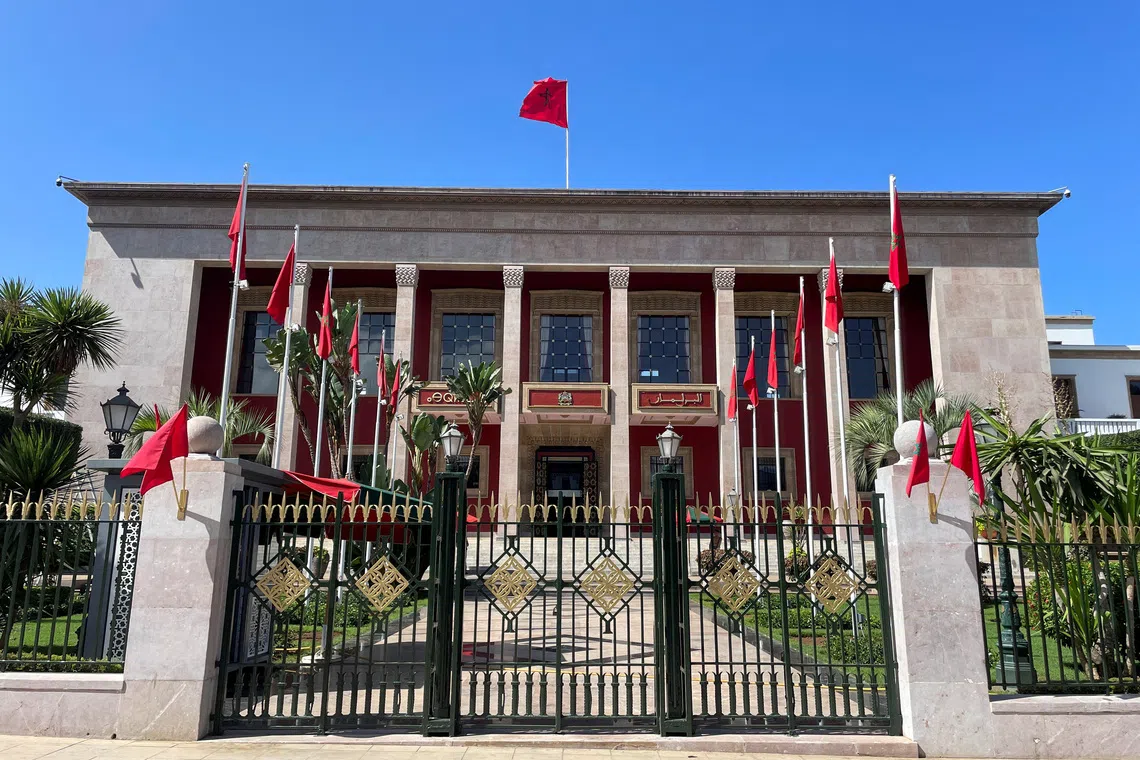
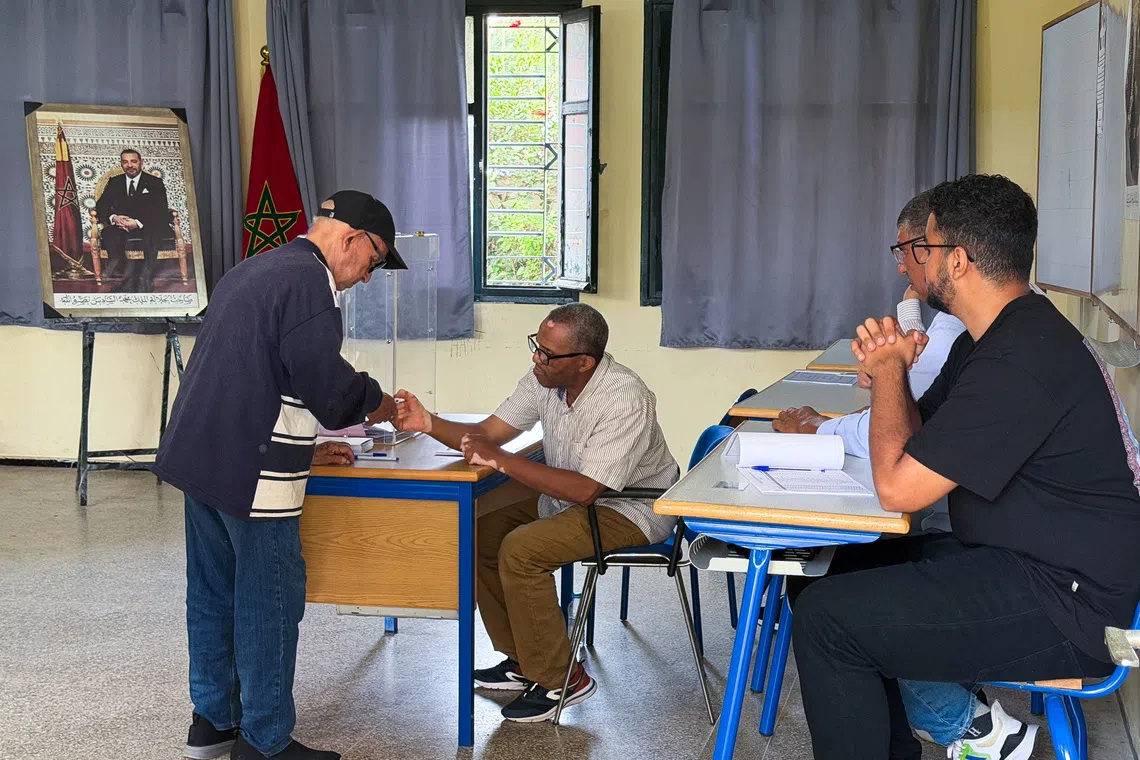
Political parties in Morocco are intensifying campaign efforts before legislative elections on September 23, which will ultimately decide Morocco’s next government.
asserted
which → intensify → government
Twenty-seven political parties are competing for 395 seats in the House of Representatives and the vote comes at a crucial time for the country.
asserted
vote → compete → country
Recommended Stories
list of 4 items- list 1 of 4Migrant crossings to Europe by sea drop sharply amid heightened risks: IOM
- list 2 of 4Police clear Ceuta migrants off beaches in Spanish enclave
- list 3 of 4Morocco’s 2026 election: A test of political trust and engagement
- list 4 of 4Morocco’s PJD: what has the party learned ahead of the 2026 election?
asserted
party → drop → election
Rising living costs, pressure on public services, and high youth unemployment – currently at 37.3 percent for Moroccans aged 15 to 24 – are all issues being hotly debated.
asserted
costs → rise → Moroccans
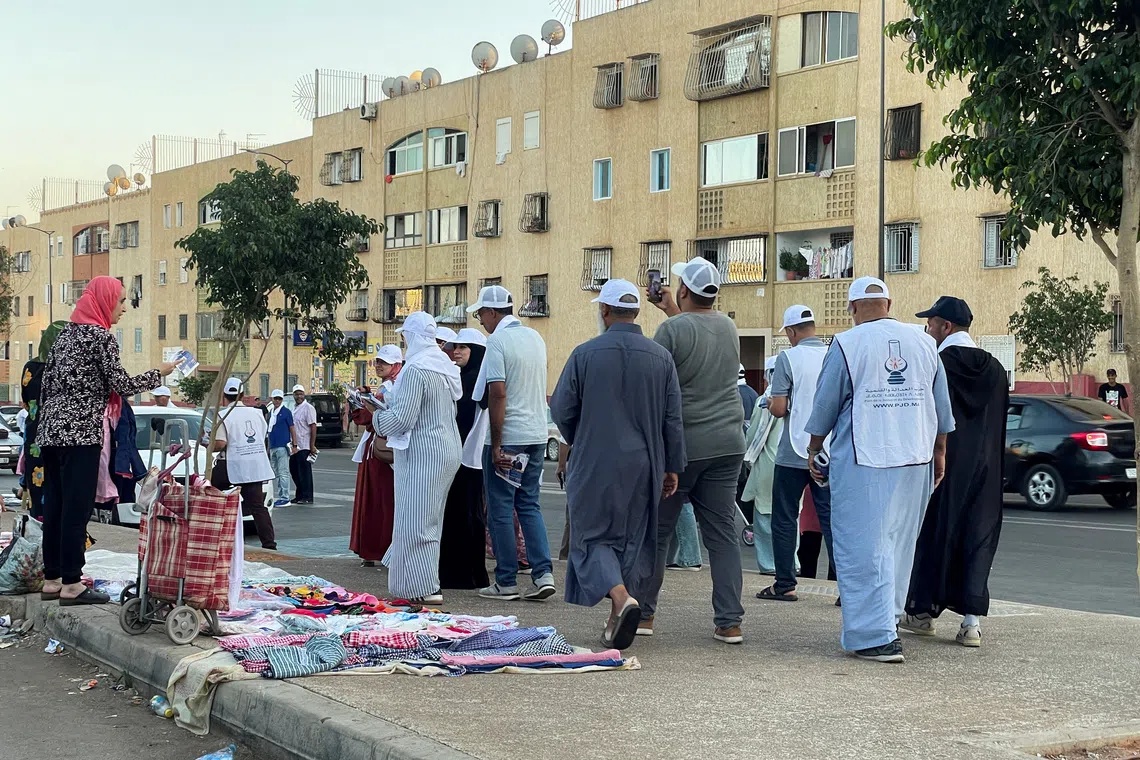
Party headquarters across Morocco and sites at packed city neighbourhoods and markets have been transformed into electioneering operation rooms.
asserted
headquarters → pack → rooms
Campaign teams navigate crowded streets with loudspeakers, music, and leaflets to catch the attention of Morocco’s 15.8 million registered voters.
asserted
teams → navigate → voters
“We choose communication locations carefully; we start from a field map where we define the spaces where citizens meet naturally, then we divide the team according to tasks between direct communication and recording observations,” al-Wali al-Shtouki, campaign manager for the Justice and Development Party (PJD) in the Medina-Sidi Youssef Ben Ali district, told Al Jazeera.
uncertain
Shtouki → choose → Jazeera
“We also hold small meetings at the headquarters because they allow a calm and direct dialogue to understand what the citizen actually expects.
asserted
citizen → hold → what
What we hear in the field is what guides our daily work.
asserted
what → hear → work
After every tour or meeting, we collect observations and repeated questions and discuss them within the team, then we distinguish between local issues that need follow-up and those related to public policies and parliamentary work.
asserted
that → collect → policies
While physical headquarters serve as hubs for election campaigns, a party’s success ultimately relies on its roots within a community, Jawad al-Shafdi, head of the Moroccan Observatory for Political Participation, said.
asserted
Shafdi → serve → Participation
“In the Moroccan case, the strength of the candidate, their local extension, their network of relationships, and their electoral record also play essential roles,” al-Shafdi told Al Jazeera.
asserted
Shafdi → play → Jazeera
“We may find a party with limited organisational presence in a specific district achieving a significant result thanks to a strong candidate, and vice versa.
uncertain
party → find → candidate
Winning votes is achieved through a more complex system that combines party organisation, candidate strength, local extension, networks of elected officials, direct and digital communication, in addition to the party’s image and political offering.
asserted
that → win → offering
“Therefore, the true criterion is not the number of people who enter the headquarters, but its ability to convert organisational movement into electoral mobilisation, mobilisation into votes, and votes into seats.”
asserted
who → enter → seats
Digital, direct engagement
The competition has forced political groups to adopt multi-channel strategies that balance street-level outreach with digital campaigns to reach a broader audience.
asserted
that → force → audience
Fatima al-Tamni, a candidate for the Left Alliance in the Ain Sebaa – Hay Mohammadi district in Casablanca, highlighted the necessity of direct engagement with voters rather than superficial campaign displays.
asserted
Tamni → highlight → displays
She believes that party campaigns should serve as a space to listen to the concerns of the electorate and propose solutions, while building a strategic vision for transport, housing, pollution and other issues.
“We do not want to speak to the citizen from above, nor turn the campaign into a festival of pictures and slogans…
asserted
We → believe → pictures
We want to speak with them in clear language, and hear from them before we speak in their name,” she said.
asserted
she → want → name
“[It] is not an end in itself, but the beginning of a new political relationship with citizens based on clarity, accountability, and fulfilling commitments.”
asserted
It → base → commitments
Youssef Ait Sidi Said, a political activist with the Progress and Socialism Party in the Chichaoua province, said campaigning remains an evolving process.
asserted
campaigning → say → province
“For the party, this campaign is no longer just a specific period to introduce candidates and the electoral programme, but has become an opportunity for direct and continuous communication with the population and listening to their concerns and expectations,” Ait Sidi Said told Al Jazeera.
asserted
Said → introduce → Jazeera
“Digital platforms allow reaching broad groups, especially youth, and grant them the possibility to interact, ask questions, and express their opinions.
asserted
platforms → allow → opinions
However, we do not consider that digitisation can replace direct communication.
asserted
digitisation → consider → communication
On the contrary, we see that each tool has its function.
asserted
tool → see → function
”
Ultimately, direct engagement with voters should remain the hallmark of party campaigns, he said.
asserted
he → remain → campaigns
“Field communication allows direct listening to the citizen, while digital platforms allow expanding the reach, interaction, and documenting activities,” Ait Sidi Said added.
asserted
Said → allow → activities
 The Aporia