Recent reporting about a British naval drone unknowingly sending data to China offers an urgent warning to policymakers in the United States.
asserted
drone → send → States
During a routine cybersecurity assessment, the U.K. Ministry of Defence exposed a serious breach.
asserted
Ministry → expose → breach
It found that a component in its naval drones was secretly transmitting data to China.
asserted
component → find → China
The hidden vulnerability was not.
asserted
vulnerability → hide → ?
It uses intellectual-property theft, cyberespionage and industrial policy to become indispensable to Western supply chains and then exploits that access to collect intelligence and create vulnerabilities it can use against its adversaries.
asserted
it → use → adversaries
Our standard response has been to restrict Chinese technology only after the risks become impossible to ignore, often spending billions of dollars to rip and replace equipment already embedded in American networks and infrastructure.
asserted
risks → restrict → networks
Now, Beijing has its sights on conducting widespread espionage and sabotage in another sector – automobiles.
asserted
Beijing → have → sector
But this time, America has the opportunity to act before it’s too late.
asserted
it → have → opportunity
China is now the world’s largest vehicle exporter, and Chinese companies are major players not only in electric vehicles but in the batteries, software, sensors and connected technologies critical to modern cars.
asserted
companies → connect → cars
Chinese automakers are using a variety of strategies to enter U.S. markets, and China’s rise as an automotive power presents an obvious challenge for American manufacturers.
asserted
rise → use → manufacturers
But as cars become more connected, China’s entry poses severe national security risks.
asserted
entry → become → risks
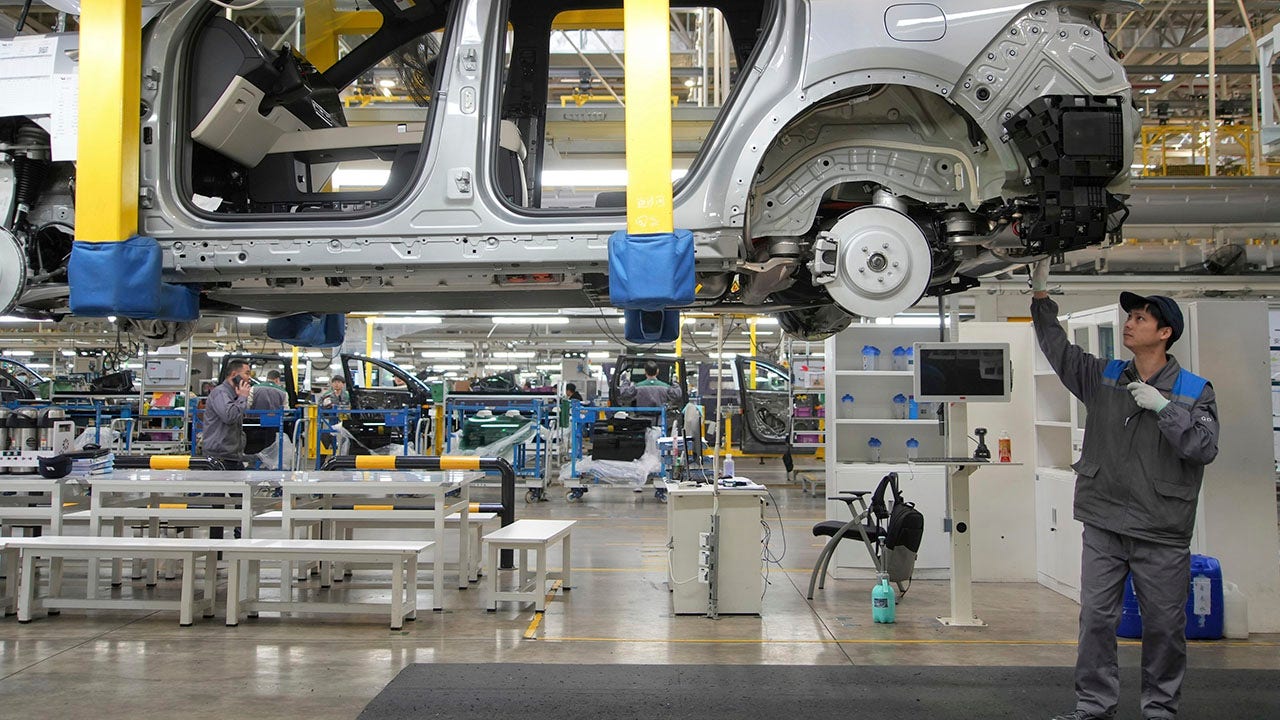
Modern vehicles are computers on wheels, equipped with cameras, microphones, sensors, GPS systems and internet-connected hardware.
asserted
vehicles → equip → cameras
They collect enormous amounts of data about their drivers and surroundings, while software increasingly controls critical functions including steering, braking and acceleration.
asserted
software → collect → steering
In the wrong hands, that access could provide a powerful tool for surveillance and espionage or potentially allow an adversary to remotely manipulate or disable vehicles.
uncertain
adversary → provide → vehicles
Chinese cars on American roads would represent the most direct threat.
asserted
cars → represent → threat
But Chinese companies don’t need to sell millions of vehicles in America to gain a foothold in the U.S. automotive ecosystem.
asserted
companies → need → ecosystem
The same risks can be embedded in American, European, Japanese or South Korean vehicles through Chinese-made batteries, software and connected components.
asserted
risks → embed → batteries
At scale, these technologies could offer Beijing an extraordinary intelligence picture: where Americans live and work, which roads they travel and which vehicles regularly enter military bases, ports, power plants and other sensitive facilities.
uncertain
vehicles → offer → bases
In a crisis or conflict, the consequences could extend beyond surveillance.
uncertain
consequences → extend → surveillance
Vulnerabilities in technology embedded across millions of vehicles could potentially provide an adversary a means to disrupt transportation on a massive societal scale.
uncertain
Vulnerabilities → embed → scale
Chinese automakers are using a variety of strategies to enter U.S. markets, and China’s rise as an automotive power presents an obvious challenge for American manufacturers.
asserted
rise → use → manufacturers
But as cars become more connected, China’s entry poses severe national security risks.
asserted
entry → become → risks
Congress has an opportunity to address that threat before it manifests by passing the bipartisan Connected Vehicle Security Act, sponsored by Ohio Republican Sen. Bernie Moreno and Michigan Democrat Sen. Elissa Slotkin.
asserted
it → have → Moreno
The legislation builds on the Commerce Department’s connected-vehicle rule, which restricts vehicles, software and connectivity hardware linked to our enemies.
asserted
which → build → enemies
Commerce concluded that foreign-adversary access to these technologies could enable the collection of sensitive data and remote manipulation of vehicles.
uncertain
access → conclude → vehicles
That was an important first step, but we must do more.
asserted
we → do → more
Executive rulemaking can be reversed, but Congress has the chance to make it last.
asserted
it → reverse → chance
Only an act of Congress can make these national security protections permanent.
asserted
protections → make → Congress
The Connected Vehicle Security Act would codify and expand the protections outlined in the Commerce Department’s rulemaking across the supply chain.
asserted
Act → codify → chain
Critically, it reaches beyond finished Chinese automobiles to the connected technologies inside them, including software, communications equipment and electronics integrated into batteries.
asserted
it → reach → batteries
The Senate Commerce Committee advanced it unanimously in July.
asserted
Committee → advance → July
Congress should pass this legislation and send it to the president’s desk.
asserted
Congress → pass → desk
America has repeatedly become dependent on Chinese technology only to later discover how difficult and expensive those dependencies were to unwind.
asserted
dependencies → become → technology
Connected vehicles offer a chance to act before another dependency becomes entrenched.
asserted
dependency → connect → chance
 The Aporia