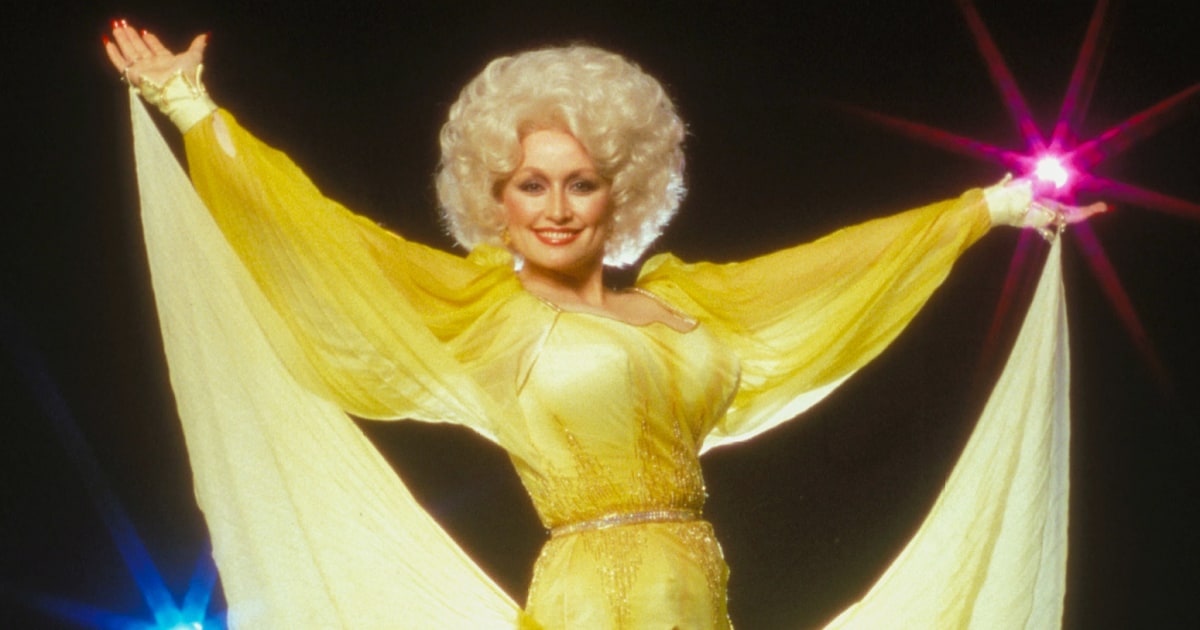
Remembering Dolly Parton, who gave away everything but her songs

Read the original at The Hindu ↗
Cite

Rhine, R. (2026, August 26). Remembering Dolly Parton, who gave away everything but her songs. The Hindu. https://www.thehindu.com/entertainment/music/remembering-dolly-parton-who-gave-away-everything-but-her-songs/article71392330.ece

Dated when The Aporia collected the article, usually within hours of publication. Check the original for its exact date and byline.

The Hindu · collected 2026-08-26 · by Rachel Rhine

Quick Summary

In 1974, Dolly Parton faced a significant decision when Colonel Tom Parker demanded half the publishing rights to "I Will Always Love You" for Elvis Presley to record it. Despite her young age and lack of assurance in her solo career success after leaving a popular TV show, Parton refused the offer. This article highlights a moment that showcases Parton's commitment to retaining full control over her work.
Written locally by qwen2.5:14b on 2026-09-16, using this article's own text rather than the other coverage of the same event (that is the story summary below).

AI analysis runs on qwen2.5:14b, locally

Story summary

Dolly Parton, the "Queen of Country Music", died on August 25 at the Vanderbilt-Ingram Cancer Center in Nashville surrounded by her family. The country music legend was known for her generosity, but what's lesser-known is that she made a crucial decision early in her career that secured her financial future. In 1974, just before Elvis Presley was set to record her song "I Will Always Love You", her manager Colonel Tom Parker demanded that he receive half of the publishing rights in exchange for allowing Elvis to record the song. Parton, who had recently left a successful TV show and wasn't guaranteed success as a solo artist, refused, opting to keep full control over the song's rights. Her decision was vindicated when Whitney Houston recorded the song 18 years later, making it one of the best-selling singles of all time, and earning Parton significant royalties.

Written for “Dolly Parton's Generosity” on 2026-10-16, grounded in this article and the 0 other(s) covering the same event.

Story

📰 Dolly Parton's Generosity
Entertainment · 1 article(s) covering the same event.

Compared with similar articles

This article reads unscored and hedges 0% of its claims. Each row says how that neighbour differs.
Evening Standard
⚖️ leaning not scored 🔴 3% hedged 1 of 32 📰 publisher trust 67
“Article A discusses Dolly Parton's decision to keep publishing rights for 'I Will Always Love You', while Article B mentions her performances and charity work in London, but does not reference the same specific event or incident as Article A”
CBC News
⚖️ leaning not scored 🔴 11% hedged 8 of 76 📰 publisher trust 60
“Article A describes a past incident involving Dolly Parton in 1974, while Article B reports on her recent death at age 80.”
NBC News
⚖️ leaning not scored 🔴 0% hedged 0 of 12 📰 publisher trust 95
“Article A describes Dolly Parton turning down Elvis Presley's offer of half the publishing rights to 'I Will Always Love You' in 1974, while Article B provides a broader biographical context and mentions her appearance on Porter Wagoner's TV show in 1967, but does not mention the specific event”
How this article was measured signals, leaning charts, publisher record, byline, topics and claims

Signals How these are calculated →

Claims extracted
6
sentences that state something as happening or true
Uncertain
0%
0 of 6 hedged ("reportedly", "may", "according to")
Leaning
not political
takes no side on a contested political question
Publisher signals
60/100
The Hindu's corrections and hedging, across everything collected from it. Not a measure of accuracy.
Outlets on this story
1
Entertainment
Same framing elsewhere
1
articles that frame the event the way this one does
Analyzed 2026-09-16 · source text last changed 2026-09-16 · how these are computed

How this is being covered How these are calculated →

Article leaning vs. publisher reliability
Source leaning vs. consistency

Publisher

The Hindu · 907 article(s) · 2 correction(s) detected
Running correction rate · 2 correction(s)

Who wrote this

Rachel Rhine
1 article(s) here · 1 carrying a prediction
🔮 In 1974, the night before Elvis Presley was due in the studio to record ‘I Will Always Love You’, Dolly Parton’s phone rang.
The only article under this byline in the corpus.

Topics

America

Subjects

America GPE · 1× Colonel Tom Parker PERSON · 1× Dolly Parton’s PERSON · 1× Elvis PERSON · 1× Elvis Presley PERSON · 1× Parker PERSON · 1× Parton PERSON · 1× Presley PERSON · 1×

Narrative

She had just walked away from the television show that made her a household name in America, with no guarantee that a solo career would succeed.
framing: assertive · carried by 1 article(s) · first seen 2026-09-16
🔮 In 1974, the night before Elvis Presley was due in the studio to record ‘I Will Always Love You’, Dolly Parton’s phone rang.
2026-09-16 · The Hindu
Remembering Dolly Parton, who gave away everything but her songs · assertive framing

Claims (6 extracted, 0 hedged)

In 1974, the night before Elvis Presley was due in the studio to record ‘I Will Always Love You’, Dolly Parton’s phone rang. asserted
phone → record → You
Colonel Tom Parker, Presley’s manager, had a condition nobody had mentioned earlier. asserted
nobody → have → condition
Elvis would record the song only if Parker’s side received half the publishing rights to it. asserted
side → record → it
She had just walked away from the television show that made her a household name in America, with no guarantee that a solo career would succeed. asserted
career → walk → guarantee
The biggest star in the world wanted her song. asserted
star → want → song
She said no and, by her own account, cried all night. asserted
She → say → account
💬Give feedback
🕘History 🎫Support