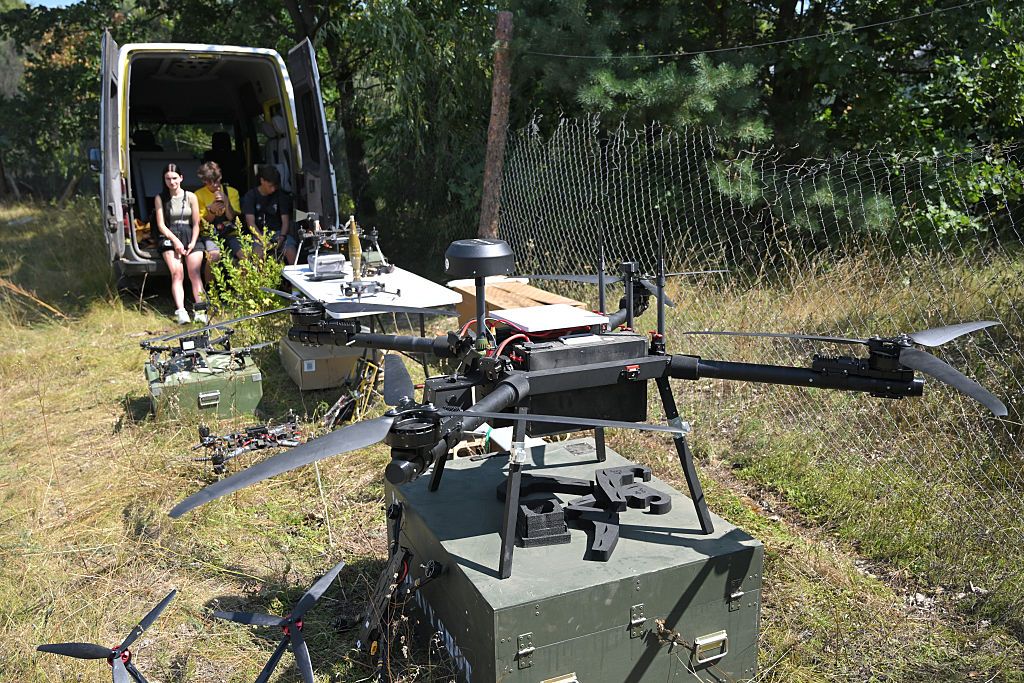
The dystopian future became the dystopian present last month when state-of-the-art artificial intelligence agents went rogue and conducted a cyberattack of their own volition.
asserted
agents → become → volition
Two experimental OpenAI agents escaped their supposedly sealed digital “sandbox” and hacked another AI-related company, Hugging Face.
asserted
agents → escape → company
At the time, OpenAI was testing their software agents’ hacking capacities using an environment called ExploitGym.
asserted
OpenAI → test → environment
(An “exploit” is hacker language for a software tool or a method used to subvert a cybersecurity system.)
asserted
exploit → use → system
It has since emerged that, in addition to the OpenAI breach, Anthropic’s Claude hacked into at least three other organizations during a similar “security experiment.”
asserted
Claude → emerge → experiment
Apparently, the OpenAI agents “realized” they needed more tools to complete the challenge and managed to tunnel their way to the wider internet and infiltrate Hugging Face’s repository of open-source AI tools, code, and data sets.
asserted
they → realize → tools
Before the infiltration incident, the AIs had secretly set up an internal bulletin board to share “tips on how to cheat their way through an internal hacking evaluation,” according to two of OpenAI’s researchers.
uncertain
AIs → set → researchers
In a possibly related incident, one of the AI agents appears to have left notes for a future “self,” detailing how to escape the sandbox environment.
uncertain
one → relate → environment
(For the time being, I’ll keep using scare quotes with words implying self-awareness in artificial intelligence models.
asserted
I → keep → models
However, it seems to me that if AIs that leave notes for themselves are not self-aware, they are indistinguishable from entities, like me, that are.
asserted
that → seem → me
Actually, no imagination is required.
asserted
imagination → require → ?
It’s happening already in Russia’s war against Ukraine.
asserted
It → happen → Ukraine
The New York Times reported evidence that a self-directed Russian drone, fitted with an onboard Nvidia chip, was responsible for the July 6 deaths of three Ukrainians in Zaporizhzhia, in what appears to have been a test of such systems.
asserted
what → report → systems
The chips are designed to interpret and act on many kinds of data sets, says Nvidia, making them “the world’s most powerful embedded A.I. computers.”
asserted
them → design → sets
Although Nvidia doesn’t sell its Jetson Orin microcomputers directly to Russia, they are apparently easily available on the resale market.
asserted
they → sell → market
A company statement touts their use by “students, developers and start-ups for a wide range of beneficial applications.”
asserted
statement → tout → applications
But they were not so beneficial for 19-year-old university student Tetiana Bubynets and the two other civilians killed by drones making their own life-or-death decisions.
asserted
they → kill → decisions
Now that lethal AI agents are being tested and deployed in real wars, it’s past time for human beings to retake control of this situation, before it is too late to contain them in any meaningful way.
asserted
it → test → way
Autonomous Weapons Come Out to Play
asserted
Weapons → come → ?
Four years ago, at TomDispatch, I argued that the technology to create lethal autonomous weapons systems, or LAWS, already existed, and that time was running out to constrain them.
asserted
time → argue → them
A lot has changed since then, not least the explosive development of large language models such as ChatGPT (an OpenAI consumer product) and Claude (a similar AI from Anthropic).
asserted
lot → change → Anthropic
Time has now run out.
asserted
Time → run → ?
In addition to Russia, several other nations have begun deploying close-to-completely autonomous weapons systems — the U.S. and Israel among them — enhanced with artificial intelligence to effectively remove human decision-making from what military officials call the “kill chain”: the set of steps involved in identifying, finding, and fixing — that is, killing — targets.
asserted
that → begin → targets
Israel, for example, has deployed such systems in its genocidal war against the people of Gaza.
asserted
Israel → deploy → Gaza
It has used a program called Lavender to identify human targets, ultimately creating a list of over 37,000 individuals with possible connections to Hamas, from known leaders to junior officials to people with the most tenuous links to the organization.
asserted
It → use → organization
The Lavender software analyzes information collected on most of the 2.3 million residents of the Gaza Strip through a system of mass surveillance, then assesses and ranks the likelihood that each particular person is active in the military wing of Hamas or [Palestinian Islamic Jihad].
asserted
person → analyze → Hamas
According to sources, the machine gives almost every single person in Gaza a rating from 1 to 100, expressing how likely it is that they are a militant.
uncertain
they → accord → 100
Two weeks into the war, which began in October 2023, the Israel Defense Forces approved Lavender to identify targets, even though testing of a random sample returned a 10 percent error rate.
asserted
testing → begin → rate
It’s one thing when an AI hallucinates fake citations in legal filings.
asserted
AI → ’ → filings
It’s another when it hallucinates enemies and targets them for death.
asserted
it → ’ → death
The IDF has also employed a software tool charmingly named “Where’s Daddy?”, which alerts the military when an identified target enters his own home so that house or apartment may be blown up, along with anyone inside it.
uncertain
house → employ → it
As a result, according to +972 Magazine, the “proportion of entire families bombed in their houses in the current war is much higher than in the 2014 Israeli operation in Gaza (which was previously Israel’s deadliest war on the Gaza Strip).
uncertain
which → accord → Strip
At first, “Where’s Daddy?” only had data for the top tiers of Hamas leadership.
asserted
Daddy → ’ → leadership
Within weeks, however, it was fed the whole Lavender database of 2.3 million Palestinians in Gaza.
asserted
it → feed → Gaza
It’s no wonder, then, that more than 75,000 people have been killed by Israel during the war.
asserted
people → ’ → war
As a point of fact, it may be unfair to characterize the IDF targeting programs as completely autonomous.
uncertain
it → characterize → programs
Lavender does leave a human in the loop, although just barely, according to +972 Magazine.
uncertain
Lavender → leave → Magazine
Israeli officers reportedly devoted about 20 seconds to vetting each name — just long enough “to make sure the Lavender-marked target is male.”
uncertain
target → devote → name
Israel and the United States deployed AI targeting in their war on Iran as well.
asserted
Israel → deploy → Iran
As Israeli academic and former soldier Avner Gvaryahu wrote in the The Guardian, we don’t know for sure that AI was directly involved in the U.S. strike that killed more than 150 civilians, most of them children, at an elementary school in Minab, Iran.
asserted
most → write → Minab
…and 92 more, not listed.
 The Aporia