For more than three decades, a collection of animal bones from Ireland’s Ferriter’s Cove was considered some of the earliest evidence that farming had reached the island.
asserted
farming → consider → island
But new research has now overturned that interpretation.
asserted
research → overturn → interpretation
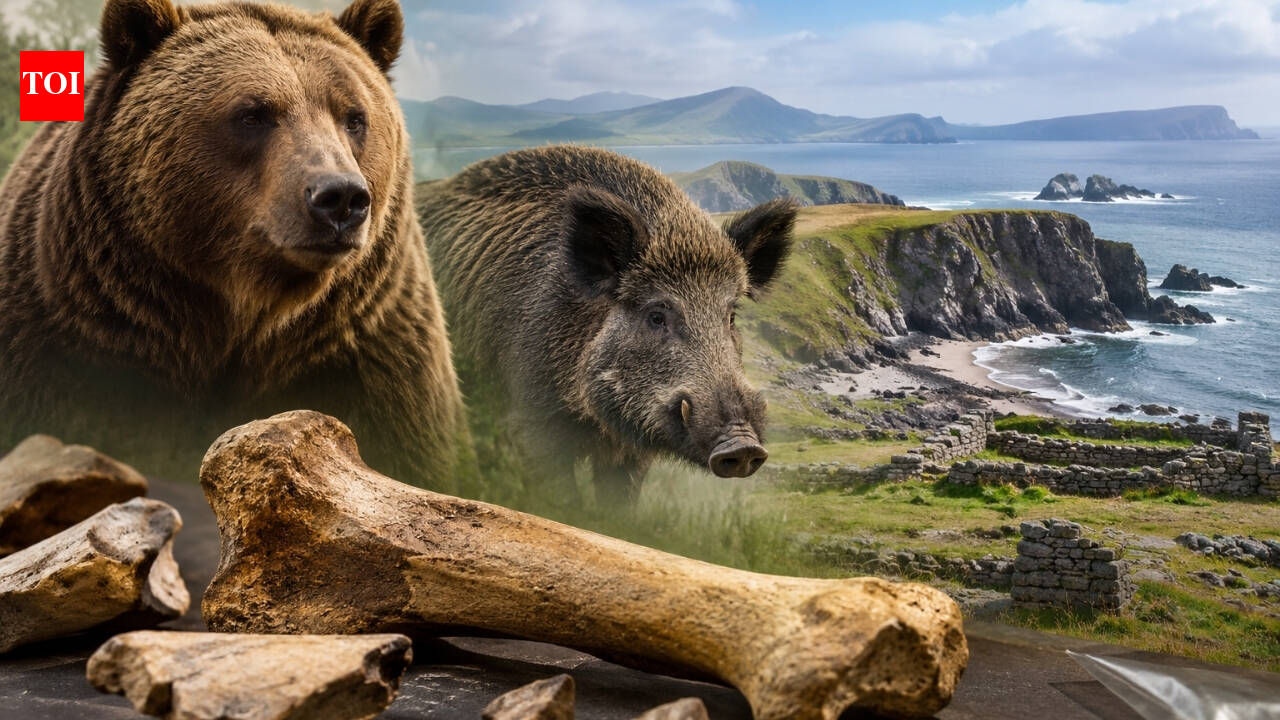
According to University College Dublin (UCD), bones once identified as cattle have instead been identified as belonging to a bear and wild boar.
uncertain
bones → accord → bear
The finding challenges a long-standing understanding of Ireland’s transition from hunter-gatherer societies to farming communities.
asserted
finding → challenge → communities
It also highlights how modern scientific techniques can reveal new information from archaeological remains that were excavated and studied decades ago.
asserted
that → highlight → remains
The mystery of the “Kerry cow” bones
The bones were discovered during excavations in the 1980s and 1990s at Ferriter’s Cove, a small bay on the Dingle Peninsula in County Kerry, southwestern Ireland.
asserted
bones → discover → Kerry
They were associated with the Late Mesolithic period, a time when people on the island still lived primarily as hunter-gatherers.
asserted
people → associate → gatherers
Because they had been identified as cattle bones, archaeologists regarded them as particularly important.
asserted
archaeologists → identify → them
Domestic cattle would have indicated contact between Ireland’s Mesolithic communities and Neolithic farming societies elsewhere in Europe.
asserted
cattle → indicate → Europe
For more than 30 years, the remains were therefore used as evidence that farming communities or their animals had reached Ireland before agriculture became firmly established there.
asserted
agriculture → use → Ireland
The bones became informally known as the “Kerry cow” remains.
asserted
bones → know → remains
Scientists take another look
asserted
Scientists → take → look
The original identification was not as certain as its long-standing importance might suggest.
uncertain
importance → stand → ?
Researchers from University College Dublin and University College Cork recently revisited the specimens and found that their original classification was ambiguous.
asserted
classification → revisit → specimens
Instead of relying only on the physical appearance and shape of the fragments, the researchers used a modern technique called Zooarchaeology by Mass Spectrometry, or ZooMS.
asserted
researchers → rely → Spectrometry
The method examines proteins preserved in the collagen of ancient bones.
asserted
method → examine → bones
Different animal species have distinctive protein patterns, allowing scientists to identify remains even when the bones are fragmented or lack obvious features.
asserted
bones → have → features
The team sent samples to a laboratory at France’s National Centre for Scientific Research in Lille for analysis.
asserted
team → send → analysis
The results showed that the supposedly bovine remains actually came from a bear and wild boar.
asserted
remains → show → bear
That finding removed what had been considered a crucial piece of evidence for the early arrival of domestic animals in Ireland.
asserted
what → remove → Ireland
Why the discovery matters
The significance of the discovery goes far beyond correcting the identity of a few old bones.
asserted
significance → matter → bones
For decades, archaeologists had used the supposed cattle remains to support the idea that Mesolithic hunter-gatherers in Ireland had interacted with Neolithic farming communities elsewhere in Europe before 4000 B.C.E. If the bones were not cattle, that evidence disappears.
asserted
evidence → use → B.C.E.
According to UCD researchers, the new findings mean there is currently no archaeological evidence that domesticated cattle, and by extension early farming communities, had reached or influenced Ireland before 4000 B.C.E.
uncertain
cattle → accord → B.C.E.
This could require archaeologists to reconsider when and how the transition from hunting and gathering to farming occurred on the island.
uncertain
transition → require → island
Farming involved not only the cultivation of crops and keeping of domesticated animals, but also major changes in settlement, diet, technology and social organisation.
asserted
Farming → involve → settlement
The Irish story of that transformation now appears less straightforward than previously thought.
asserted
story → appear → transformation
The surprising identity of the bear
The researchers have established that at least some of the remains came from a bear, but they have not yet determined exactly which type.
asserted
they → establish → bear
Scientists are carrying out further analysis to determine whether the bear remains belonged to brown bears or polar bears.
asserted
remains → carry → bears
This question is significant because brown bears once lived across Ireland before eventually becoming extinct there.
asserted
bears → live → Ireland
The discovery could therefore contribute not only to archaeological research into farming but also to the study of Ireland’s ancient wildlife.
uncertain
discovery → contribute → wildlife
A lesson from old collections
The story also demonstrates how modern scientific techniques can transform interpretations of archaeological discoveries made decades ago.
asserted
techniques → demonstrate → discoveries
The bones were not newly discovered.
asserted
bones → discover → ?
Researchers simply returned to material that had already been excavated and preserved.
asserted
that → return → material
With technologies unavailable to the original investigators, they were able to ask new questions of the old specimens.
asserted
they → ask → specimens
Martin Moucheron, an archaeologist at University College Dublin who led the research, emphasised that re-examining existing archaeological material with new techniques could reveal evidence that earlier researchers were unable to recognise.
uncertain
researchers → lead → that
The “Kerry cow” story is therefore a reminder that archaeology is not always about finding something new in the ground.
asserted
archaeology → find → ground
Sometimes, a major discovery can come from taking a second look at something that has been sitting in a collection for decades.
asserted
that → come → decades
In this case, that second look transformed supposed cattle bones into evidence of ancient wildlife, and potentially removed one of the key pieces of evidence supporting an early connection between Ireland’s hunter-gatherers and Europe’s first farming communities.
asserted
look → transform → gatherers
 The Aporia