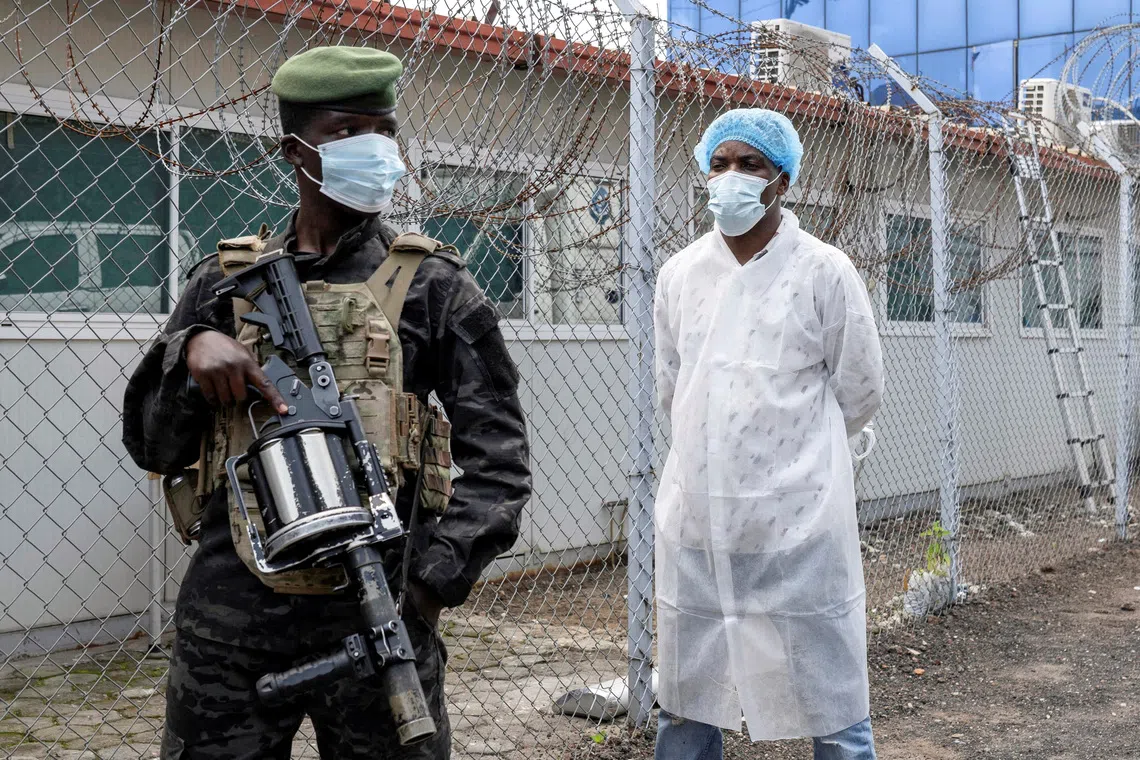
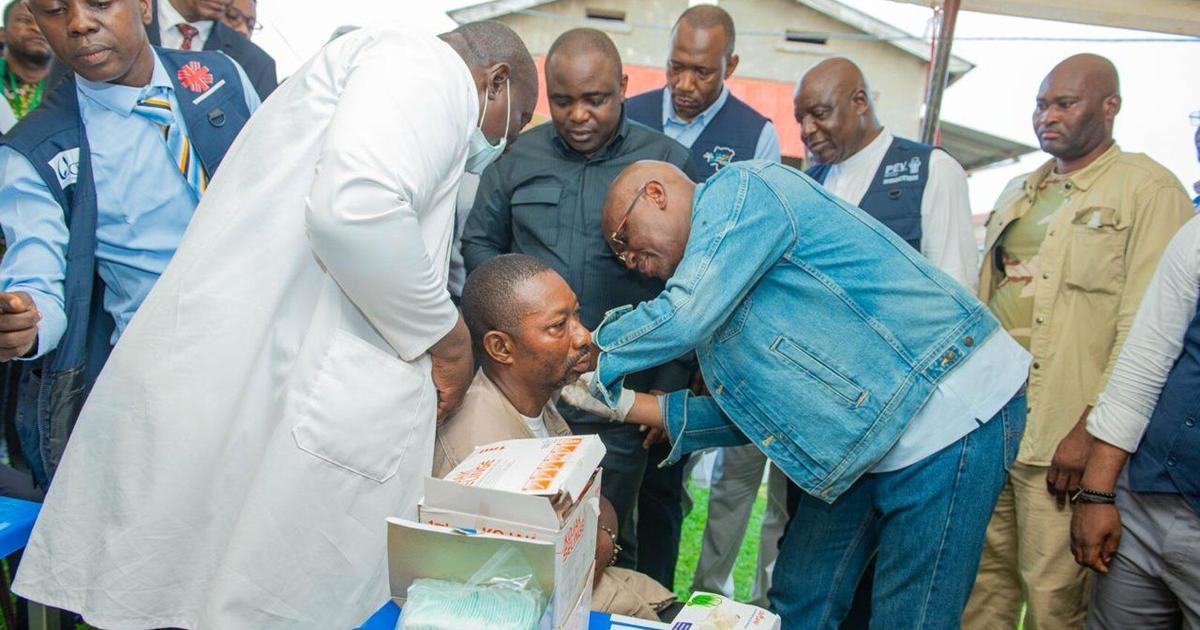
Maternal deaths in Ituri province, the epicentre of the Democratic Republic of Congo’s deadliest Ebola epidemic, are surging as the fastest-growing outbreak in history outpaces the health response.
asserted
outbreak → surge → response
In just over three months since the outbreak was declared, deaths among pregnant women have roughly doubled, the United Nations reproductive health agency, or UNFPA, told The Independent, with 63,700 pregnant women still at risk in affected areas.
asserted
women → declare → areas
Overall, more than 2,600 people have died during the outbreak – with more than 5,500 cases found.
asserted
cases → die → outbreak
Ebola restrictions placed on frontline health facilities are preventing some blood transfusions being administered, potentially contributing to increasing maternal mortality, a separate aid source told The Independent.
asserted
source → place → Independent
In July, a refusal to administer a blood transfusion to a woman with severe anaemia, who then died, led an angry mod to storm the Ituri hospital that had been treating her.
asserted
that → administer → her
As a result, several of their 10 Ebola patients escaped, potentially spreading the virus to others.
asserted
several → escape → others
Even before this Ebola outbreak, the DRC already had one of the highest rates of maternal mortality globally, with ongoing conflict, mass displacement, weak health infrastructure and financial barriers severely limiting access to safe obstetric care.
asserted
conflict → have → care
Maternal haemorrhage, including severe bleeding after childbirth, is the leading cause of maternal death worldwide, with anaemia increasing the risk of severe complications and death.
asserted
anaemia → include → complications
A fifth of pregnant women in the DRC suffer from the deficiency, rising to 40 per cent in some parts of the country.
asserted
fifth → suffer → country
Previous Ebola outbreaks have shown alarming maternal mortality rates – catching the virus during pregnancy has historically killed between three-quarters and all women, with an almost 100 per cent rate of fetal loss, miscarriage or stillbirth.
asserted
catching → show → loss
Epidemics also overwhelm clinics and strain health systems, preventing women from accessing routine care and safe deliveries.
asserted
Epidemics → overwhelm → care
Women now account for more than half of confirmed Ebola cases – originating in a mining area, the outbreak originally affected more men, but women’s roles as primary caregivers for the sick and as health workers has shifted the balance.
asserted
roles → account → balance
At least 160 frontline health workers have been infected and 43 have died, with more than ten cases a week in high-transmission zones.
asserted
43 → infect → zones
Midwives face a very high risk of infection due to exposure to bodily fluids during childbirth, and require personal protective equipment and targeted training.
asserted
Midwives → face → equipment
Nurses represent more than a quarter of health worker cases.
asserted
Nurses → represent → cases
Nearly seven in ten of new health workers globally are women, as well as more than 80 per cent of nurses and 96 per cent of midwives, according to a study published in The Lancet Public Health last week.
uncertain
ten → accord → Health
False claims about Ebola have also been linked to attacks on treatment facilities, assaults on health workers and disruptions to burials.
uncertain
claims → link → burials
More than 260 healthcare workers have been attacked in the past six months and eight killed, according to UN officials, disrupting the response.
uncertain
eight → attack → response
Misinformation as to the source and spread of the virus, and fear of contracting it, has also kept women from attending health centres, The Independent previously reported.
asserted
Independent → contract → centres
"As fear spreads, women bear the heaviest burden of this epidemic.
asserted
women → spread → epidemic
Pregnant women are terrified to seek care, dreading being treated as Ebola patients if complications arise or fearing they will contract Ebola in health facilities,” said Noemi Dalmonte, UNFPA Deputy Representative in DRC.
asserted
Dalmonte → terrify → DRC
“At the same time, women are on the front lines as caregivers in the communities and families, but also as nurses and midwives, risking their lives every day while facing a devastating secondary crisis – where fear halts communities to get to essential reproductive care, maternal deaths rise, and survivors of gender-based violence are left without critical support,” she added.
asserted
she → risk → support
As well as being the fastest-growing, this outbreak is second-deadliest on record, after the 2014-2016 outbreak in West Africa during which 11,000 people died.
asserted
people → grow → which
This outbreak has expanded across six provinces over an area larger than France and the fatality rate has risen from 20 per cent in early June, to almost half of cases.
asserted
rate → expand → cases
Fear of infection has caused antenatal care visits to drop by a third, while the number of obstetric complications being managed by health facilities has almost halved, according to UNFPA.
uncertain
number → cause → UNFPA
“Complications during childbirth that would normally be treated at a clinic or hospital become life-threatening without medical care and can lead to increased maternal and neonatal morbidity and mortality,” said UNFPA.
asserted
UNFPA → treat → morbidity
The outbreak is also disproportionately affecting women of reproductive age, considered to be 18 to 49.
asserted
outbreak → affect → age
Contraception is a key strategy to prevent unintended pregnancies and reduce maternal mortality and an essential tool for enabling women to make informed decisions to protect themselves and their families during an Ebola outbreak, the agency added.
asserted
agency → prevent → outbreak
Almost two children a day have been orphaned since the start of the outbreak, according to Save the Children, with at least 180 losing both parents or primary caregivers.
uncertain
180 → orphan → parents
The UN has said the DRC outbreak is on course to be the largest ever, potentially surpassing the 2014-2016 West Africa crisis.
asserted
outbreak → say → crisis
Response efforts have been severely hampered by unprecedented international humanitarian aid cuts, reducing the capacity of humanitarian organisations by more than 30 per cent and leaving local health networks unprepared.
asserted
efforts → hamper → networks
The international humanitraian organisation also warned last week that the response is now running out of funding, with only enough to cover “the next weeks” as promised allocations are yet to be distributed.
asserted
allocations → warn → weeks
This article has been produced as part of The Independent’s Rethinking Global Aid project
asserted
article → produce → project
 The Aporia