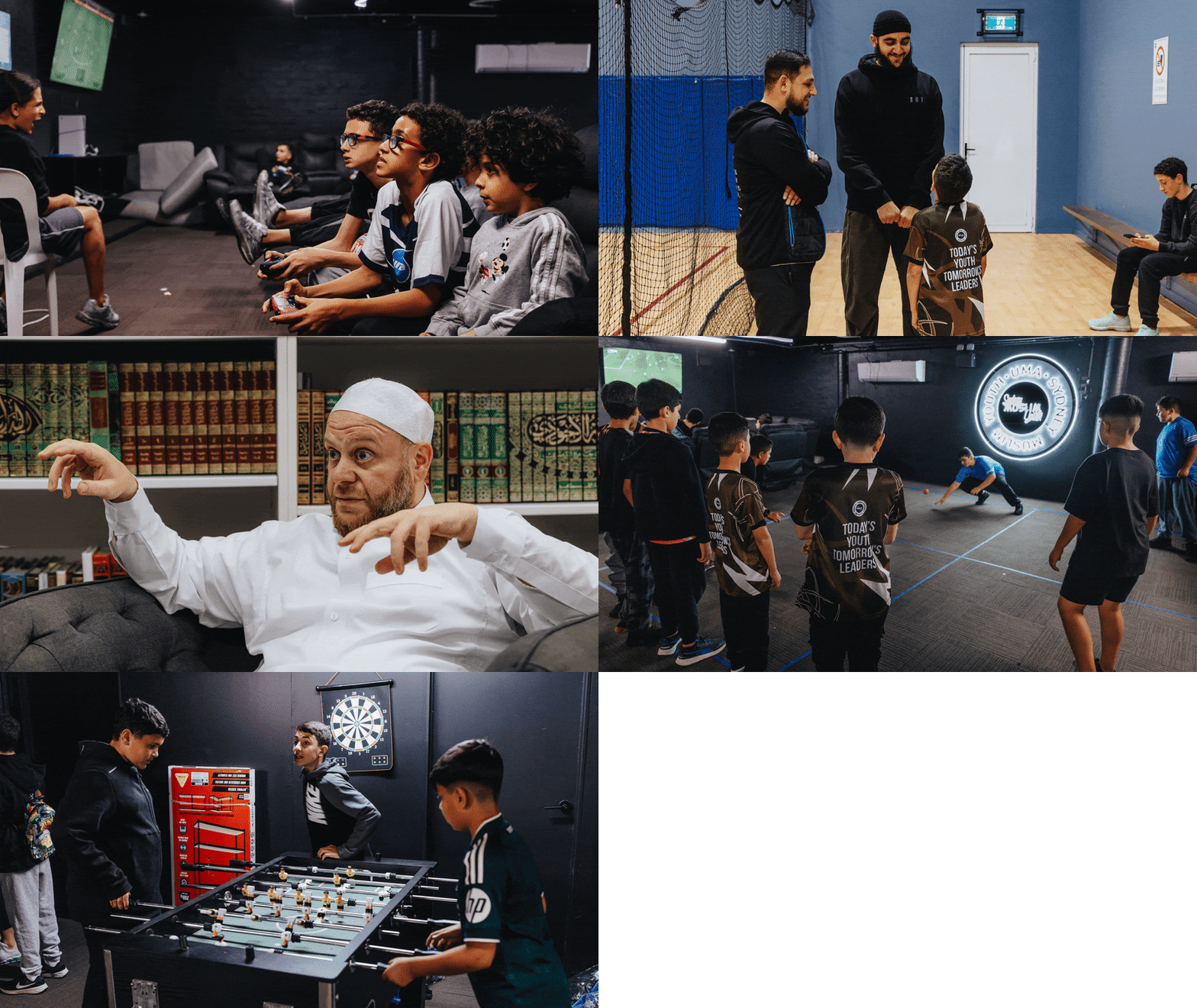
As the time ticks towards 7.30pm on a Friday, the bustle of young boys running through the corridor quietens to a hush; dozens of men and children trickle into the prayer room of United Muslims of Australia’s sprawling western Sydney headquarters as the evening worship begins.
asserted
worship → tick → headquarters
For 10 minutes, only the rhythm of Isha – the night’s final prayer – can be heard.
asserted
rhythm → hear → Isha
As quickly as it subsides, though, the racket of the boys’ excitement returns.
asserted
racket → subside → excitement
With their praying done, they rush out of the room, shove itchy feet into shoes, and race away into the maze of the centre
asserted
they → do → centre
; some make for the gaming consoles, while others – in the football jerseys of their sporting idols – are already halfway to the hardwood of the indoor futsal court.
asserted
others → make → court
While the games serve as an incentive for the boys to gather with their peers in the Muslim community, football is just one of many items on the agenda this Friday night.
asserted
football → serve → agenda
Hundreds of boys and girls – aged nine to 15 – flock to the Padstow centre each Friday for youth programs offering guidance for those at risk of wandering to the wrong side of the tracks, teaching them about Islam, and instilling a sense of pride in young Muslims struggling with identity in a politically charged Australia.
asserted
Hundreds → flock → Australia
“We want our children to be proud Muslims without compromising their faith,” says UMA founder Sheikh Shadi Alsuleiman.
asserted
Alsuleiman → want → faith
“I want them to be proud Australians that contribute back to their community.”
asserted
that → want → community
Alsuleiman welcomes this masthead to the centre at a time when the question of how to keep young boys – especially those in western Sydney – off the streets and away from organised crime is at the centre of a growing challenge for community leaders and authorities trying to combat the rise of criminal networks recruiting impressionable children.
asserted
question → welcome → children
In the past 18 months, police have charged hundreds of teenage boys, some of them from Muslim families, over their involvement in Sydney’s escalating gangland conflicts.
asserted
police → charge → conflicts
The recruitment of children, some as young as 14, to carry out targeted attacks has become a hallmark of recent underworld violence and one of the most challenging aspects of policing feuds between rival criminal groups.
asserted
recruitment → carry → groups
Last Wednesday, homicide squad detectives arrested and charged two boys, aged 14 and 16, over the mistaken-identity killing of 23-year-old university student Marco Tapia, who was shot dead lying in his bed.
asserted
who → arrest → bed
This month, NSW Premier Chris Minns announced proposed legislative changes designed to deter children from working for organised crime networks.
asserted
Minns → announce → networks
Under a proposed expansion to the serious children’s indictable offences scheme, children charged with offences linked to organised crime, including those related to public shootings and firebombings, would be tried as adults in the state’s District Court and Supreme Court, where they would face longer prison terms than if they were prosecuted as juveniles.
asserted
they → propose → juveniles
At UMA, the centre’s youth programs are designed to not only teach boys about their faith, but give them the sense of belonging many their age seek in criminal gangs.
asserted
many → design → gangs
“You’ve kind of got to ask yourself what those boys are finding in those gangs,” says Zaid Omran, UMA’s youth co-ordinator.
asserted
Omran → get → gangs
“They’re finding brotherhood, they’re finding identity, they’re finding social insurance, they’re finding a home away from home, they’re finding … people who see them, people who hear them, people who value them.”
asserted
who → find → them
The key to keeping Muslim boys on the right path is offering comforts grounded in faith and community rather than crime, Omran says.
asserted
Omran → keep → crime
“If you can win a young person’s heart, then you have the ability to redirect whatever energy he has into something productive, into being a positive impact on the rest of society,” he says.
asserted
he → win → society
“The ability for you to hold someone’s hand from as young as nine years old, if you have the steadfastness, if you have the fortitude to follow through and stay holding that person’s hand from as young as nine, from such a young age, then you’re decreasing the possibility of that person ever even coming close to all of that stuff.”
asserted
person → hold → stuff
Omran says the acceptance young boys may feel within a gang is short-lived, unsustainable and fake.
uncertain
boys → say → gang
The second they are no longer useful to those in charge, the boys are turfed.
asserted
boys → turf → charge
“That’s very, very powerful, for a young person to be seen – in every sense of that word – for them to feel heard,” he says.
asserted
he → ’ → word
“We have the brotherhood to offer you.”
asserted
We → have → you
Community leaders are also facing the challenge of organised crime and criminal gangs being glorified on social media, says Ibrahim Kayellou, 26, a youth mentor at the centre.
asserted
Kayellou → face → centre
Keeping boys away from content that could set them on a path to crime has become as much a priority for youth program leaders as teaching Islamic values.
uncertain
that → keep → values
“It’s hard for the parents to keep up with it,” Kayellou says.
asserted
Kayellou → ’ → it
Outside the centre’s walls, Muslims face rising Islamophobia and negative stereotypes that threaten boys’ sense of identity and instil a sense of fear and anxiety within the community, Alsuleiman says.
asserted
Alsuleiman → face → community
“Islamophobia’s becoming the norm,” he says.
asserted
he → become → ?
“It’s been accepted to insult Muslims, to speak against Muslims, to demonise Muslims, to vilify Muslims, and it is a huge concern across the board with the Muslim community.”
asserted
it → accept → community
He has also attracted criticism for public comments on homosexuality.
asserted
He → attract → homosexuality
“I have previously noted passages in the holy Quran which do not support homosexuality,” Alsuleiman said in a statement to this masthead in 2016.
asserted
Alsuleiman → note → 2016
“However, I always follow such statements with a personal commitment to tolerance and encouragement that all Muslims and all people approach all individuals, no matter their faith, race or sexuality, in a considerate and respectful way.
asserted
Muslims → follow → way
Now, Alsuleiman says many of the Muslim community’s most vulnerable members – women and children – feel unsafe.
asserted
many → say → members
The bollards blocking the centre’s front door are not for decoration, he points out, adding that there is a strong sense within the community that an attack on Muslims like the Christchurch massacre in 2019 may be repeated.
uncertain
attack → block → 2019
“It’s not about if, it’s about when,” he says.
asserted
he → ’ → when
Some community members are so concerned about their safety that they are scared to walk on the street or commute to work.
asserted
they → walk → work
Coupled with what Alsuleiman says are harmful anti-Muslim rhetoric and narratives being pushed by prominent right-wing political parties, tensions between his community and others have become inflamed.
asserted
tensions → couple → community
Last month, he told the Royal Commission on Antisemitism and Social Cohesion that recorded instances of Islamophobia had increased by more than 600 per cent since 2022.
asserted
instances → tell → 2022
…and 17 more, not listed.
 The Aporia