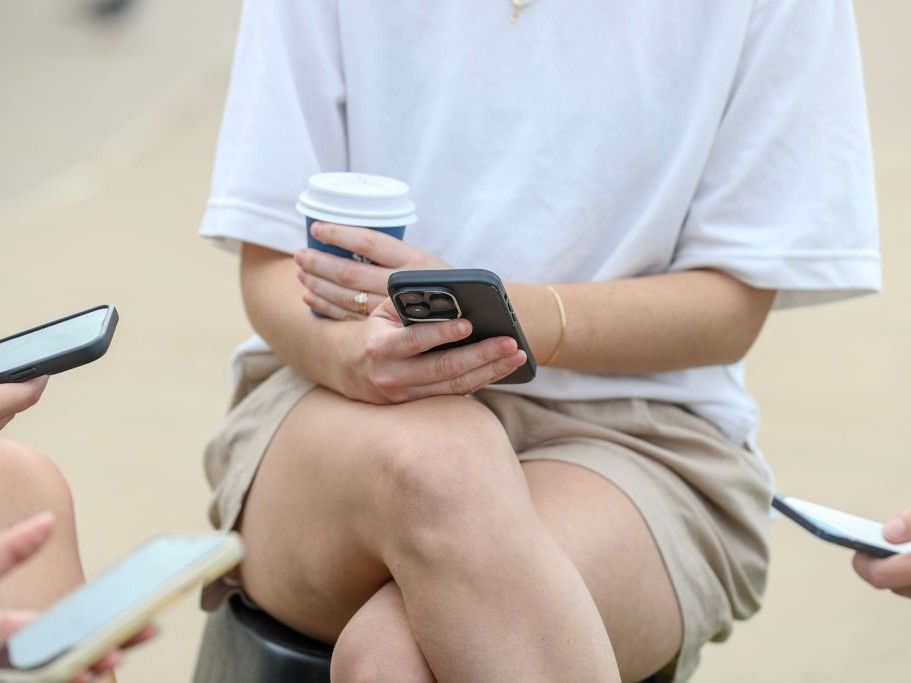
It used to be that one could make bad choices largely in private, but in today’s world of location sharing, there are few secrets.
uncertain
one → use → sharing
“I know messy things about people.
asserted
I → know → people
I know when my friends are hanging out with their toxic ex-boyfriend again or when someone’s visiting their hometown that they hate,” said Paige Bradbury.
asserted
Bradbury → know → that
Bradbury, 24, lives in Toronto and shares her location with her closest friends — the type she’d trust to housesit.
asserted
she → live → friends
Most of the time it’s for a practical purpose, like meeting up at a music festival.
asserted
it → ’ → festival
Sometimes, it’s for an urgent purpose.
asserted
it → ’ → purpose
“Urgency is, your friend decides to go on a last-minute blind date at 7p.m. on a Friday and sends you her location, just in case.
asserted
friend → decide → case
Now you’re her designated detective and have the responsibility of checking in with her until she tells you she’s home.
asserted
she → ’re → you
You’re kind of a designated driver, but for safety,” Bradbury said.
asserted
Bradbury → ’re → safety
And every now and then, she gets to have a bit of fun with it, too.
asserted
she → get → it
If she sees a friend is at an ex’s house or with a toxic “situationship”, she’s not afraid to ask questions.
asserted
she → see → questions
“I’ll screenshot it to send it to them later with a bunch of question marks and side-eye emojis,” she said.
asserted
she → screenshot → marks
A 2026 study of 203 adults who use location-sharing apps found participants shared their whereabouts with an average of nearly four people.
asserted
participants → use → people
Romantic partners were the most common sharing recipients, at 62.6 per cent, followed by friends at 37.9 per cent, siblings at 31 per cent and mothers at 27.9 per cent.
asserted
partners → follow → cent
And the reasons extended well beyond emergencies.
asserted
reasons → extend → emergencies
Researchers grouped them into four broad categories: safety, practicality, casual use and relationship-related reasons such as trust.
asserted
Researchers → group → trust
Friends and romantic partners most often shared for practical purposes, while safety was the most common reason for sharing among family members.
asserted
safety → share → members
Some participants described sharing as simply “natural” or “common” within certain relationships, suggesting the practice has developed its own social expectations.
asserted
practice → describe → expectations
As digital location tracking using apps such as Life360 or Apple’s Find My are becoming increasingly common, the etiquette around it is forming in real time.
asserted
etiquette → use → time
Who gets your location?
asserted
Who → get → location
Where’s the line between tracking and monitoring?
asserted
line → ’ → tracking
Must you explain why you’re somewhere?
asserted
you → explain → ?
And once you’ve started sharing, can you turn it off without explanation?
asserted
you → start → explanation
Though these rules might be unspoken, they’re the silent negotiations each person makes before clicking “accept” when they’re notified a contact wants to start location sharing.
uncertain
contact → ’re → sharing
For those who willingly share their location, there’s a difference between knowing someone can find you and having someone follow your every move.
asserted
someone → share → move
“For me personally, it gives me this extra layer of confidence that someone’s always looking out for me,” Bradbury said.
asserted
Bradbury → give → me
That doesn’t mean she expects her friends to spend their days watching her dot move around a map.
asserted
dot → mean → map
“Having their location is more like you’ll check it when prompted,” she said.
asserted
she → have → it
Mary Lymburner, 79, and in Ontario, uses location sharing to keep tabs on travelling friends and coordinate with family.
asserted
Lymburner → use → family
“I like to call my sister once a week, but I use location sharing to see if she’s home before I do,” Lymburner said.
asserted
Lymburner → like → sharing
When she’s at the family cottage on Lake Huron, location sharing is just a matter of convenience.
asserted
sharing → ’ → convenience
She times the arrival of her daughters with her to-do list.
asserted
She → time → list
“I know they’re on their way and I see how close they are, so I can get their bedrooms ready or get dinner ready,” she said.
asserted
she → know → way
Those mundane uses show up in the research, too.
asserted
uses → show → research
The 2026 study found people regularly bypassed a conversation altogether, checking someone’s location to coordinate meetings or decide when to start dinner.
asserted
people → find → dinner
Researchers also found people checked simply to “stay informed” about where someone was, usually without describing that behaviour as surveillance or mistrust.
asserted
someone → find → surveillance
“For me personally, it gives me this extra layer of confidence that someone’s always looking out for me
Paige Bradbury, 24
But there is a line.
asserted
someone → give → me
“It would be a breach of trust if you have your phone out and are following their exact route along the course of events of a day,” said Adam Boothe, 39, of Edmonton, who shares his location with his wife.
asserted
who → have → wife
“Monitoring is a lot more meticulous and you’re doing it with a different purpose than just making sure someone is OK.”
asserted
someone → do → purpose
Boothe remembers when even the advent of cellphones made some people uncomfortable with the idea that they could suddenly be reached anywhere.
uncertain
they → remember → idea
…and 53 more, not listed.
 The Aporia