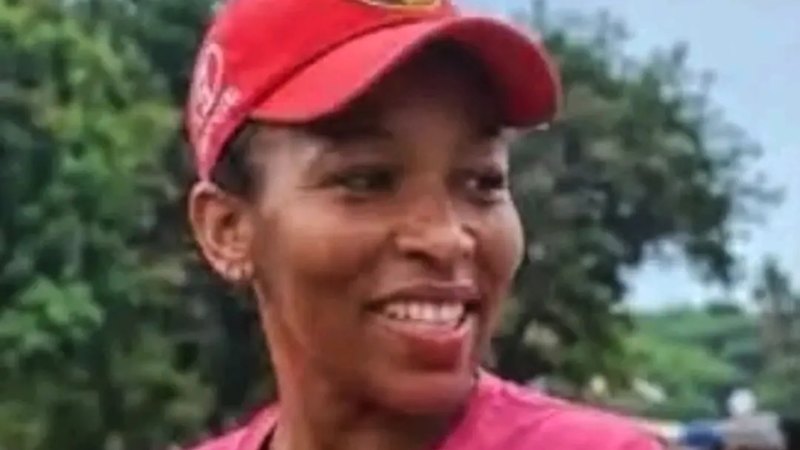
Elizabeth Mokolo Moselakgomo, 38, went for an afternoon run on September 9 but was never seen again. Her body was discovered three days later in Dawn Park, near Johannesburg, joining those of eight other women found over the past two months in eastern Gauteng Province, raising fears of a serial killer. The article highlights South Africa’s high rates of violence against women, with President Cyril Ramaphosa pledging thorough investigations into these recent deaths.
Written locally by qwen2.5:14b on 2026-09-20,
using this article's own text rather than the other coverage of the
same event (that is the story summary below).
Warning: This story contains graphic content
Nairobi:
asserted
story → contain → content
Elizabeth Mokolo Moselakgomo, 38, went for an afternoon run on September 9.
asserted
Moselakgomo → go → September
She never made it home.
asserted
She → make → it
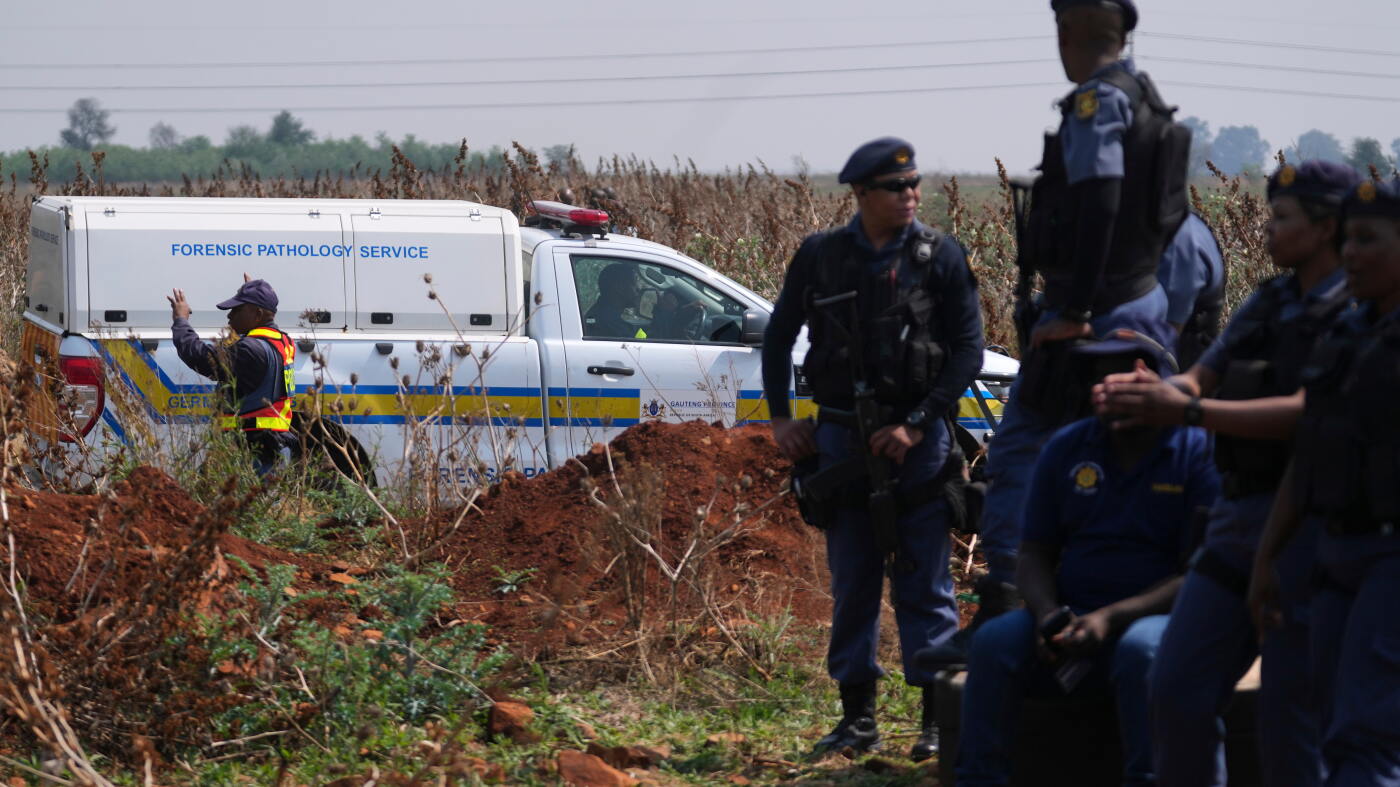
Her body was discovered three days later, half naked and bruised, sparking outrage in South Africa – a country that grapples with one of the highest recorded rates of violence against women, according to the South African Medical Research Council.
uncertain
that → discover → Council
Moselakgomo’s body was the fifth to be discovered in an apparent series of killings: the bodies of eight other women have been discovered over the past two months in eastern Gauteng Province, near Johannesburg, sparking fears that a serial killer could be responsible.
uncertain
killer → discover → fears
The ninth body was found on Thursday (Johannesburg time) in the town of Dawn Park, some 32 kilometres north of Kempton Park, where five other bodies – including Moselakgomo’s – were discovered.
asserted
bodies → find → Moselakgomo
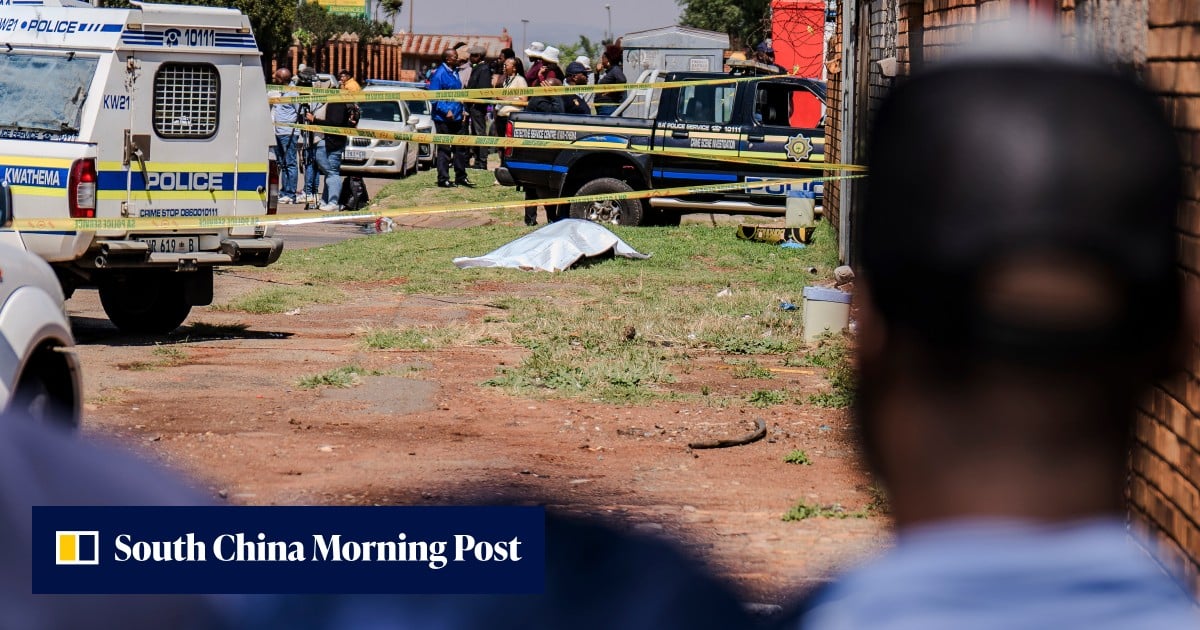
Other bodies were discovered in the Olifantsfontein and Kwa-Thema areas, both about 32km from where Moselakgomo’s body and the other four were found.
asserted
four → discover → areas
Police said most of the bodies were bruised, partially or entirely undressed, and eight showed signs of sexual assault.
asserted
eight → say → assault
At least one of the women’s throats had been slit, acting Gauteng police commissioner Fred Kekana told reporters.
asserted
Kekana → slit → reporters
Police arrested a suspect in connection with the discovery of the first woman’s body on July 15 in Kempton Park.
asserted
Police → arrest → Park
The woman, 37, was found half naked with bruises on her body and tied up with cables.
asserted
woman → find → cables
Police have not released further information about the suspect, including whether he could be connected to the other deaths, saying only that he was a foreigner.
uncertain
he → release → deaths
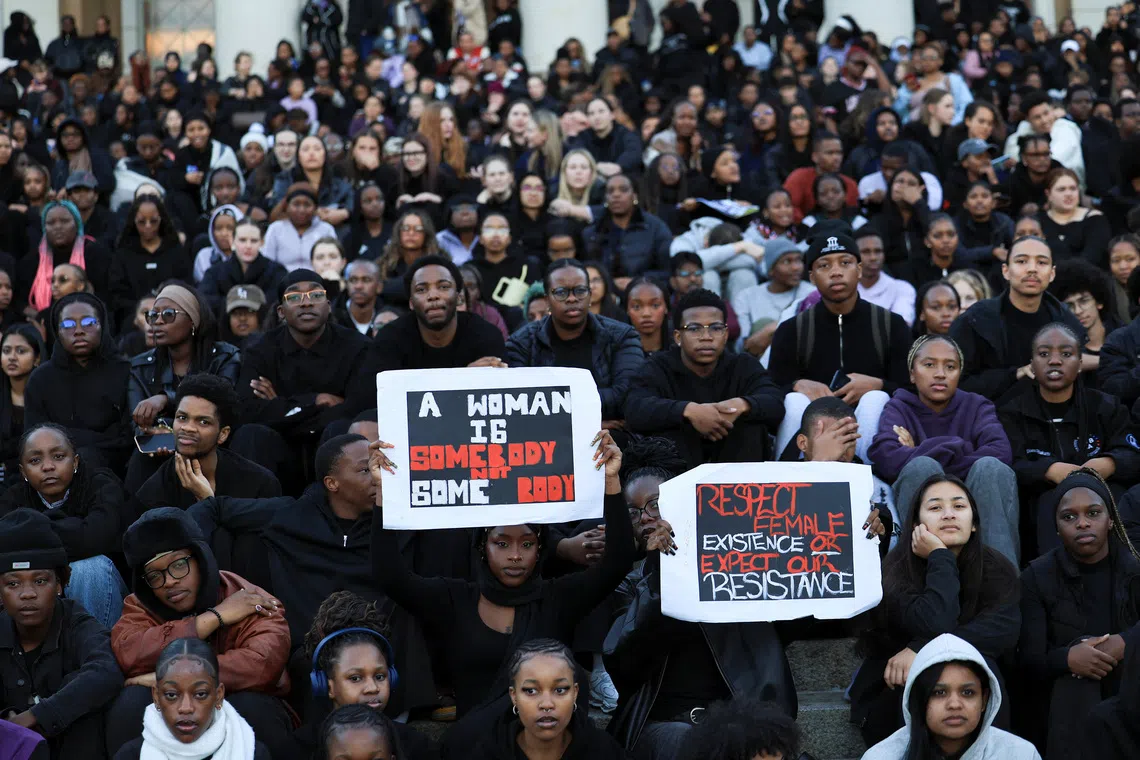
On Thursday, demonstrators – mostly women – in the Ekurhuleni district where the bodies were found, marched in the streets, donning black.
asserted
bodies → find → black
Some held placards calling for an end to femicide.
asserted
Some → hold → femicide
South African President Cyril Ramaphosa said in a statement that law enforcement agencies were investigating the deaths, and that there would be “no stone left unturned”.
asserted
agencies → say → deaths
While serial killings are unusual, the apparent spate of slayings has sparked a broader conversation about violence against women in South Africa.
asserted
spate → spark → Africa
In 2020, amid the coronavirus pandemic, Ramaphosa referred to the killing of women and children by men as “another pandemic that is raging in our country”.
asserted
that → refer → country
Research published last year by South Africa’s parliamentary research unit showed that at least 33 per cent of women older than 18 had experienced physical violence.
asserted
cent → publish → violence
The report cites statistics released by South African police indicating that out of 39,304 reported incidents of sexual offences between April and December 2024, 31,303 were cases of rape.
asserted
31,303 → cite → rape
South Africa has one of the leading rates of femicide in the world.
asserted
Africa → have → world
Women in South Africa are killed at a rate five times higher than the global average, according to UN Women.
uncertain
Women → kill → Women
In November 2025, South Africa declared gender-based violence and femicide a national disaster.
asserted
Africa → declare → violence
“South Africa has lived with persistently high levels of femicide for many years.
asserted
Africa → live → years
What the discovery of these bodies has done is make that continuing emergency brutally visible,” said Mpiwa Mangwiro, the policy development and advocacy manager at Sonke Gender Justice, a rights group based in South Africa.
asserted
Mangwiro → do → Africa
“Government responses also remain highly reactive,” she said.
asserted
she → remain → ?
“We mobilise task teams, additional police and public statements after women’s bodies have been found.
asserted
bodies → mobilise → teams
Prevention requires us to respond to warning signs before a woman is killed.”
asserted
woman → require → signs
While the single suspect’s nationality remains unknown, word from police that he was a foreign national spread fear on social media that the case could spark anti-immigrant backlash.
Anti-immigrant marches and vigilante groups have driven a wave of social upheaval in South Africa this year, often blaming foreign migrants for the country’s high crime rate.
uncertain
marches → remain → rate
Get a note directly from our foreign correspondents on what’s making headlines around the world.
asserted
what → get → world
 The Aporia