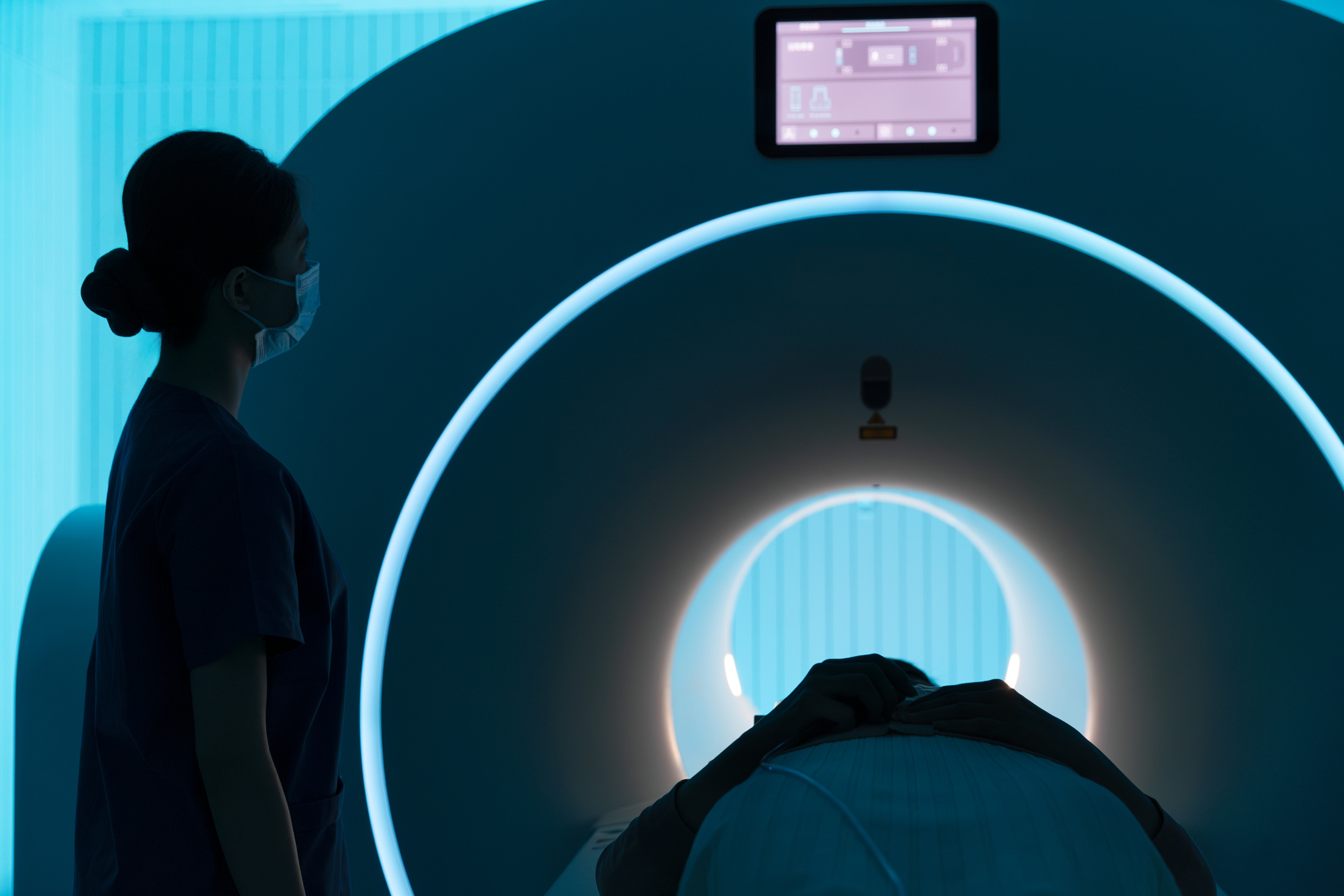
Today, if you wish, you can go get a staggering amount of granular data about your health without your doctor’s involvement.
asserted
you → wish → involvement
All on your own, you can get an MRI of your entire body, a CT of your coronary calcium, an ultrasound of your blood vessels, and maybe someday an immersion ultrasound in a spa.
asserted
you → get → spa
As a radiologist, a doctor specialized in the alchemy of turning information into health, I translate data hidden in images into words that motivate behavior to promote healthier, longer lives.
asserted
that → specialize → lives
, radiologists have grappled for decades with the question of whether and how information improves health.
asserted
information → grapple → health
It turns out to be surprisingly complicated.
asserted
It → turn → ?
In order to make a difference in someone’s health, the test must accurately predict or diagnose a condition, resulting in a change in mindset and behavior, and that change in mindset and behavior must produce a better outcome than not doing the test.
asserted
change → make → test
For example, whole-body MRI of the general public, a test not recommended by any medical guideline, medical society, or payer, creates information by taking a picture of your body.
asserted
MRI → recommend → body
It might change your mind by finding something you didn’t know about, like a small mass in your kidney or thyroid gland, which then might change what you or your doctor does.
uncertain
you → change → what
For example, your doctor might order another test to better understand if the mass is important or perform surgery to take it out.
uncertain
mass → order → it
This seems logical.
asserted
This → seem → ?
But the reason whole-body MRI of the general public isn’t recommended while other screening tests are is because in the absence of evidence, it is believed to be unlikely to produce a better outcome than doing nothing at all.
asserted
it → recommend → nothing
Many people think, as I once did, that early diagnosis always improves health.
asserted
diagnosis → think → health
Finding something with a diagnostic test might not help, despite creating an illusion that it does.
uncertain
it → find → illusion
For both examples I gave—small thyroid masses, small kidney masses—it has been well documented that aggressive efforts to treat them, despite many being cancer, does not help most people.
asserted
many → give → people
Yet despite ourselves, we keep finding and removing them.
asserted
we → find → them
That’s the tricky thing with diagnostic tests.
asserted
That → ’ → tests
It’s terrifically hard to unsee something.
asserted
It → ’ → something
For those who receive no benefit from treatment, only secondary harm results: surgical pain and complications, the anxiety of a scary diagnosis, and financial burden.
asserted
harm → receive → diagnosis
There are numerous non-intuitive examples like this in which only in retrospect do we realize patients have been harmed because a diagnostic test and its downstream actions were promoted to millions before confirming things worked as intended.
asserted
things → be → millions
It’s really hard to know if something is hurting or helping if we rely on common sense.
asserted
we → ’ → sense
The likelihood of benefit and the likelihood of harm matter tremendously.
asserted
likelihood → matter → harm
For example, if whole-body MRI is performed on a high-risk patient with a cancer-causing genetic syndrome, it is much more likely to create health benefits than if it were to be performed in the general population.
asserted
it → perform → population
It’s not just about test accuracy.
asserted
It → ’ → accuracy
Equally important is the people being tested, because baseline risk strongly influences the benefits.
asserted
risk → test → benefits
Harm is often caused not by the test itself, but from actions taken to manage the information of unknown significance it produces.
asserted
it → cause → significance
It is in this way that a seemingly harmless test can hurt people.
asserted
test → hurt → people
We do tests to find things, and when we find things, we commonly act, even when we shouldn’t, because we aren’t rational decision-makers.
asserted
we → do → things
Direct-to-consumer testing will change how medicine is practiced.
asserted
medicine → change → consumer
It empowers us to make personal decisions about our health and generates novel, complex information that will unlock scientific breakthroughs.
asserted
that → empower → breakthroughs
When buying one of these tests, we should pay attention to what the company is claiming.
asserted
company → buy → what
The need for scientific support, informed disclosure, and regulatory compliance increases as the test moves from curiosity toward clinical care.
asserted
test → increase → care
If the test has only been shown to provide information or to make a diagnosis, or has only been shown to improve health in patients with specific risk factors different from our own, we should be skeptical.
asserted
we → show → own
As they say, buyer beware.
asserted
buyer → say → ?
Many companies encourage us to assume their test improves our health.
asserted
test → encourage → health
In such cases, the information we are buying may help us, hurt us, or be a placebo and do nothing at all.
uncertain
we → buy → nothing
 The Aporia