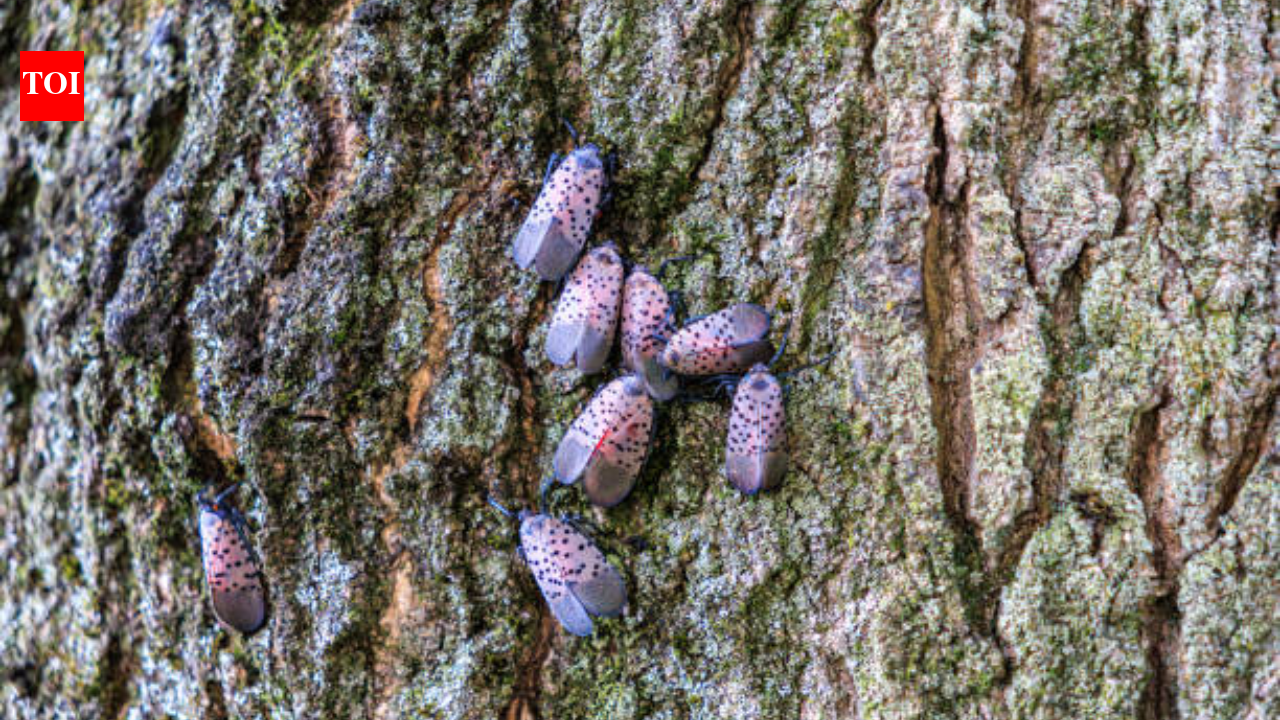
Canada has recently confirmed the first detection of spotted lanternfly in the country.
asserted
Canada → confirm → country
On September 15, 2026, the Canadian Food Inspection Agency (CFIA) confirmed the first detection of SLF in Canada in Windsor, Ontario.
asserted
Agency → confirm → Windsor
Movement restrictions have been placed to prevent the movement of regulated materials, including potentially infested plant materials.
asserted
restrictions → place → materials
Moreover, surrounding areas are under surveillance to determine the extent of the infestation and the next steps.
asserted
areas → surround → infestation
Spotted lanternflies are considered an invasive species in South Korea and the United States.
asserted
lanternflies → consider → Korea
A species is invasive when it’s introduced, often unintentionally by people, to a non-native area and spreads, frequently causing harm to the new environment.
asserted
it → introduce → environment
They were first reported as an introduced species in Korea in 1932.
asserted
They → report → 1932
However, it’s possible that this may have been a misidentification, as none were reported again until 2006, when they suddenly became a common sight.
uncertain
they → ’ → 2006
In Japan, the insects may have occurred sporadically since the 1930s, but 2008 saw outbreaks of spotted lanternflies in Ishikawa Prefecture.
uncertain
2008 → occur → Prefecture
It was first detected in Berks County in Pennsylvania, North America in 2014.
asserted
It → detect → 2014
It is known to feed on more than 100 species of trees and plants but significant impacts have been noticed on grapes and ultimately, the wine industry.
asserted
impacts → know → grapes
This pest could also have an impact on other crop growers and the horticulture and forestry industries, as well as residential yards and neighbourhood parks.
uncertain
pest → have → yards
Spotted lanternfly can have widespread economic, ecological, and social impacts if allowed to spread uncontrolled.
asserted
lanternfly → have → impacts
“You can help identify and report new invasive species, such as spotted lanternfly,” says Colin Cassin, Executive Director of the Invasive Species Centre.
asserted
Cassin → help → Centre
“The earlier an invasive species is detected, the better the chances of reducing spread to other areas.
asserted
species → detect → areas
Spotted lanternfly egg masses appear as grey smears of mud on host trees or any hard surface outdoors.
asserted
masses → appear → trees
They typically begin appearing in September and throughout winter until they hatch in spring.
asserted
they → begin → spring
Adults have pinkish-grey wings with black spots.
asserted
Adults → have → spots
Visible in spring and summer, they tend to congregate in swarms and ascend plants and trees to feed.
asserted
they → tend → plants
They also congregate in large swarms on trees, grapevines, and other plants and may be seen from summer until they die in late fall/early winter.
uncertain
they → congregate → fall
Adults are most active in September and October, when they are mating and laying eggs.
asserted
they → mat → eggs
Honeydew (clear, sticky liquid insect excrement) can accumulate at the base of a host tree.
asserted
Honeydew → accumulate → tree
It can foster the growth of sooty mould and often attract bees and wasps.
asserted
It → foster → bees
In case you spot any of these, you need to take a photo or video and then put the insect or egg masses into a sealable plastic bag or container.
asserted
you → spot → bag
All Canadians must report any suspect sightings of SLF to the Canadian Food Inspection Agency (CFIA) immediately.
asserted
Canadians → report → Agency
A good report includes an accurate location and photos of the insect.
asserted
report → include → insect
The CFIA will follow up on reports of spotted lanternfly and take appropriate action, which may include site surveying and insect collection.
uncertain
which → follow → surveying
If you are travelling back from infested areas in US, it is important to check your car, camper, trailer or RV before making the return trip.
asserted
it → travel → trip
Be sure to check any camping gear or equipment you have with you before returning to Canada.
asserted
you → check → Canada
Check your yard as well, as the spotted lanternfly could be on your trees and plants.
uncertain
lanternfly → check → trees
Spotted lanternflies are known to cause severe agricultural damage by secreting sticky waste that grows black sooty mould.
asserted
that → know → mould
Most at risk are cultivated and wild grapes.
asserted
Most → cultivate → risk
Large swarms weaken vines, eliminate crop yields, lower winter hardiness, and can kill the plant entirely.
asserted
swarms → weaken → plant
Vineyards have reported up to a 90% loss in crop yield.
asserted
Vineyards → report → yield
In Pennsylvania alone, if the spotted lanternfly isn’t contained, a 2019 study estimated that they could drain the state’s economy by up to $324 million (£240 million) each year and cause the loss of 2,800 jobs.
uncertain
they → contain → jobs
Trees like maples, black walnuts, apples, and peaches suffer from heavy sap-sucking.
asserted
Trees → suffer → sucking
High concentrations of the pests can suppress photosynthesis, stunt sapling growth, cause branch dieback, and stress mature trees.
asserted
concentrations → suppress → trees
Economists estimate that uncontained infestations could cost vulnerable agricultural states like Pennsylvania over $300 million annually in crop losses, nursery impacts, and management costs.
uncertain
infestations → estimate → losses
 The Aporia