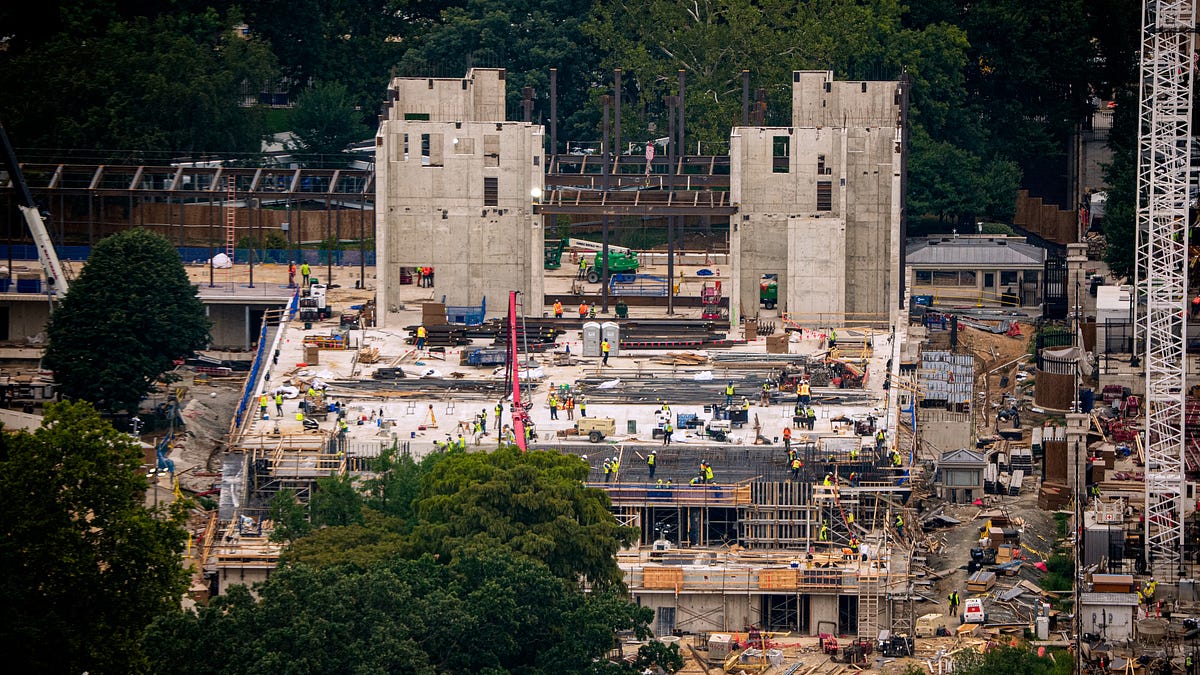
The U.S. Supreme Court has allowed President Donald Trump to continue construction on a new White House ballroom with a temporary stay issued Friday—just before the aboveground portion of the project was about to be halted.
asserted
portion → allow → project
Chief Justice John Roberts, in a one-sentence order, stayed a federal district court judge’s injunction that barred further development.
asserted
that → stay → development
The move gives the full Supreme Court more time to consider the Trump Administration’s request to keep the injunction on hold while it seeks further review.
asserted
it → give → review
However, there is no established timeline for when Roberts or the Court might take further action.
uncertain
Roberts → be → action
The ruling comes after months of debate over a legal challenge brought by the National Trust for Historic Preservation, which argues that a President cannot unilaterally make a major, permanent change to federally owned property when Congress has not authorized it, pointing toward the Property Clause of the Constitution.
asserted
Congress → come → Constitution
“We reiterated that the Administration has no unilateral legal authority—constitutional, statutory, or otherwise—to build a Ballroom on the site of the now-demolished East Wing, unless and until Congress expressly approves,” the National Trust for Historic Preservation said in a statement last week.
asserted
Trust → reiterate → statement
“Each court that has reviewed this case has agreed with the National Trust.
asserted
that → review → Trust
We hope the Supreme Court will uphold the rule of law by stopping this illegal project.”
asserted
Court → hope → project
Trump reacted to the administrative stay on Truth Social on Friday, praising both the Supreme Court and Roberts, who was appointed by former President George W. Bush in 2005.
asserted
who → react → 2005
“We are grateful for the Decision of the United States Supreme Court,” Trump said.
asserted
Trump → say → Court
“The Military/Ballroom Complex being built on the hallowed grounds of the White House, which is so vital for National Security, will be THE GREATEST OF ITS KIND!”
asserted
which → build → KIND
How did the ballroom case reach the Supreme Court?
asserted
case → reach → Court
Two lower-court decisions brought the dispute before the Supreme Court.
asserted
decisions → bring → Court
First, Senior Judge Richard Leon of the U.S. District Court for the District of Columbia found that the National Trust was likely to succeed on its claim that the project required congressional approval, and he ruled in March that construction on the aboveground ballroom could not take place while litigation continued.
uncertain
litigation → find → place
He modified that preliminary injunction on April 16 to clarify that security-related work could continue if it is "strictly necessary to ensure the safety and security of the White House.”
uncertain
it → modify → House
The second decision came when the Trump Administration appealed, and a D.C. Circuit panel upheld the modified injunction.
asserted
panel → come → injunction
In its August ruling, it said that each President is a “temporary tenant, not the owner,” of the White House.
asserted
President → say → House
According to Kimberly Wehle, professor of law at the University of Baltimore School of Law, the injunction is meant to ensure that the project does not advance while the courts review its legality, the limits of presidential authority, and whether it might cause irreparable harm.
uncertain
it → accord → harm
“The court is saying, ‘We just need to stop the bleeding right now, because if this continues, it'll just cause more harm,’” she tells TIME.
asserted
she → say → TIME
The Trump Administration then asked the Supreme Court to intervene through an emergency application, which is meant for urgent review of time-sensitive matters that fall outside of the typically months- or years-long case review timeline for the country’s highest court.
asserted
that → ask → court
The case was put in front of Roberts, who oversees emergency appeals filed in the D.C. Circuit.
asserted
who → put → Circuit
That led to the administrative stay—a short-term order that freezes a lower court decision or deadline in order to buy time for a bench to review an emergency request.
asserted
bench → lead → request
An administrative stay does not reflect a case’s merits or legality; it acts as an interim measure for a future ruling from Roberts or the Court.
asserted
it → reflect → Roberts
In this case, it paused the preliminary injunction originally handed down by Leon.
asserted
it → pause → Leon
Therefore, the stop-work order was put aside for the time being, allowing construction to continue.
asserted
construction → stop → being
"We are aware of the administrative stay," the National Trust tells TIME, in response to the latest developments.
asserted
Trust → tell → developments
"To be clear, this is not a final decision on the merits of the government’s stay application, and we await further action.”
asserted
we → await → action
No court has issued a final ruling on the project’s legality.
asserted
court → issue → legality
But next steps will likely include determining whether the renovation is two distinct projects—aboveground and below—or a singular build.
asserted
renovation → include → ?
Is Trump building a ballroom or a military complex?
asserted
Trump → build → ballroom
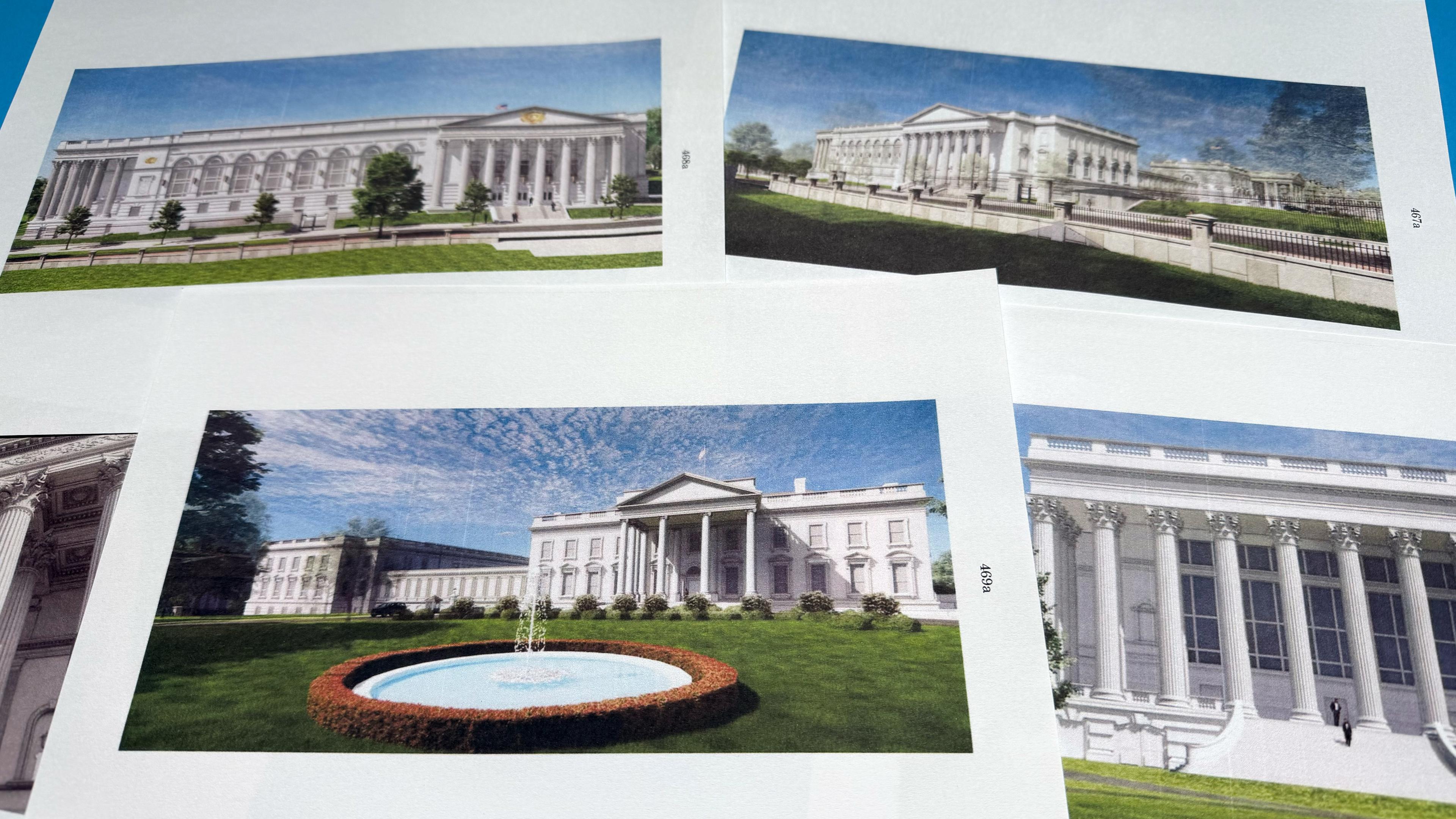
Trump’s 90,000-square-foot construction project comprises a luxury ballroom—which is meant to host 650 seated guests—with an underground military complex beneath it, featuring “protective missile resistant steel columns, beams, drone proof roofing materials, and bullet, ballistic, and blast proof glass,” according to one court document.
uncertain
which → comprise → document
Lower courts treated the two components separately, finding that the National Trust was likely to establish that the aboveground ballroom required congressional approval while exempting underground security construction from the injunction.
asserted
ballroom → treat → injunction
In making his injunction determination, Leon said: “Defendants themselves distinguished between below-ground and above-ground construction, stating that ‘the below-surface work is driven by national security concerns independent of the above-grade construction.’”
asserted
work → make → construction
Leon and the D.C. Circuit said the Administration had shifted from treating the components as independent to describing them as inseparable.
asserted
Administration → say → them
The Administration disputes that characterization, saying the design became less flexible as construction progressed.
asserted
construction → dispute → characterization
It now argues that the entire project is integrated and that halting the aboveground work would compromise its structural integrity and security functions.
asserted
halting → argue → integrity
“Every day the President does not have access to the vital security features of the military complex presents unacceptable risk, no matter how long the Project takes to complete,” Solicitor General John Sauer argued in court filings last week.
asserted
Sauer → have → filings
“Built with integrated engineering, the Project will provide in a very large way, a ‘safe room’ for the Presidency and the continuity of government.”
asserted
Project → build → government
Presidents in the past have relied on the White House’s Presidential Emergency Operations Center (PEOC), which dates to World War II, as a safe room or bunker.
asserted
which → rely → room
The Administration has argued that the former East Wing’s security infrastructure had become vulnerable to modern threats, including drones and missiles, making the new construction urgent.
asserted
construction → argue → drones
…and 19 more, not listed.
 The Aporia