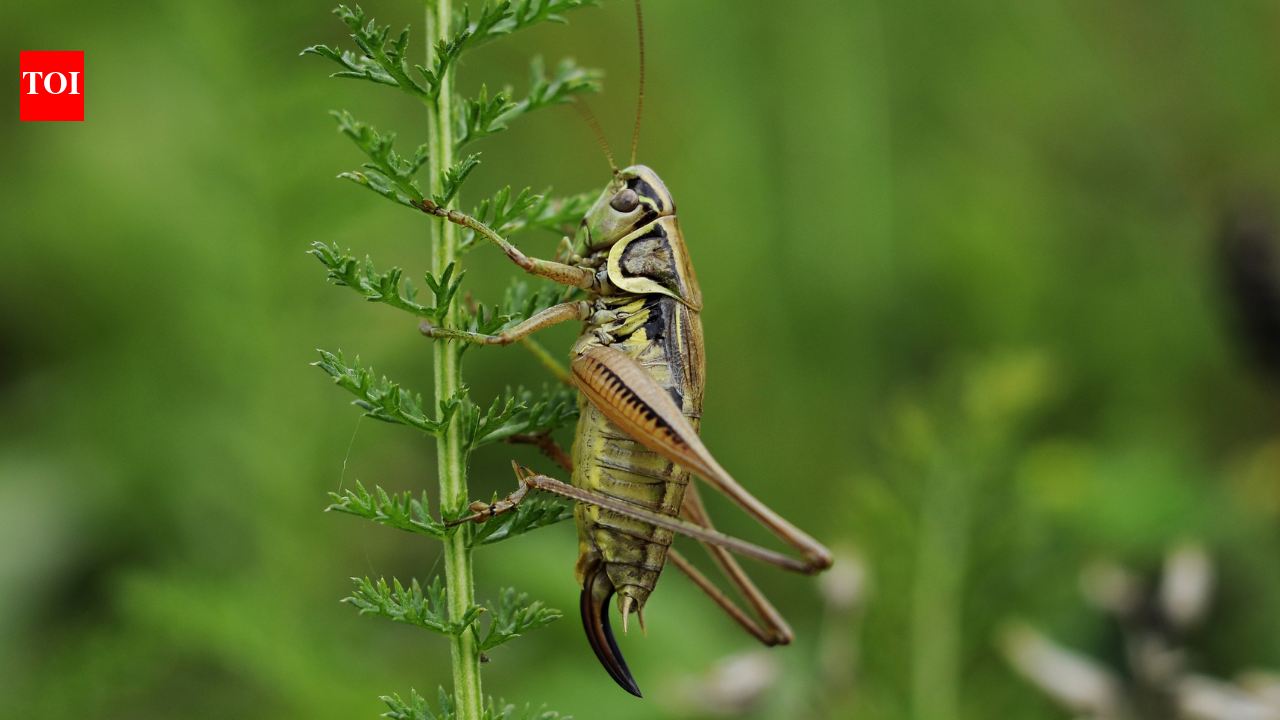
In 2005, scientists conducted an unusual experiment aboard the International Space Station (ISS) to investigate how microgravity affects reproduction and early development.
asserted
microgravity → conduct → reproduction
According to a
NASA technical publication on ISS research, crickets were fertilised in orbit, allowing scientists to observe embryos and larvae that began developing under microgravity.
uncertain
that → accord → microgravity
The study examined 112 embryos and first-stage larvae from the spaceflight group, along with ground controls.
asserted
study → examine → controls
One of the notable findings was that larvae exposed to microgravity hatched earlier than those developing under normal Earth gravity.
asserted
larvae → expose → gravity
Studying development in space
Gravity is an important part of the environment in which life on Earth has evolved.
asserted
life → study → Earth
From the movement of fluids through the body to the development of the nervous system, biological processes can be influenced by gravitational forces.
asserted
processes → influence → forces
Studying organisms in microgravity allows scientists to separate some of these effects and examine how living systems respond when the usual pull of gravity is greatly reduced.
asserted
pull → study → gravity
The cricket experiment, known as Crickets in Space-2, or CRISP-2, built on earlier research conducted during NASA's Neurolab mission in 1998.
asserted
experiment → know → 1998
Researchers were particularly interested in the development of the cricket nervous system and how altered gravity affected the neurons involved in the animal's response to its environment.
asserted
gravity → alter → environment
Crickets were useful for this research because scientists can identify and study individual neurons in their nervous systems.
asserted
scientists → identify → systems
This makes them valuable models for investigating how gravity influences neural development.
asserted
gravity → make → development
Fertilisation aboard the ISS
A major feature of the 2005 experiment was that fertilisation took place during the spaceflight.
asserted
fertilisation → take → spaceflight
This allowed researchers to study development from an early stage rather than
asserted
researchers → allow → stage
Female house crickets, Acheta domesticus, were housed aboard the ISS and provided with equipment that allowed them to lay eggs.
asserted
them → house → eggs
The resulting embryos developed while exposed to microgravity.
asserted
embryos → result → microgravity
After the mission, researchers examined the embryos and larvae to determine whether their development differed from that of crickets raised under normal gravitational conditions.
asserted
development → examine → conditions
NASA's technical publication records 112 embryos and first-stage larvae from in-flight fertilisation for the study.
asserted
publication → record → study
Researchers also had 103 ground-control specimens, giving them a comparison group that had developed under Earth's normal gravity.
asserted
that → have → gravity
The use of ground controls was important because developmental differences can have many possible causes.
asserted
differences → have → causes
By comparing the space-exposed specimens with animals raised under similar conditions on Earth, scientists could better determine which changes were associated with microgravity.
uncertain
changes → compare → microgravity
Larvae hatched earlier
One of the most interesting observations involved the timing of hatching.
asserted
One → hatch → hatching
The larvae that experienced microgravity during their development hatched earlier than the larvae in the ground-control group.
asserted
that → experience → group
This observation suggested that exposure to microgravity could influence the timing of development.
uncertain
exposure → suggest → development
However, the experiment did not show that microgravity simply disrupted the crickets' development.
asserted
microgravity → show → development
The embryos were able to develop, and the researchers observed the formation of the neural structures they were studying.
asserted
they → develop → structures
According to the NASA report, the neurons examined in the spaceflight group developed in broadly similar ways to those in the ground controls.
uncertain
neurons → accord → controls
This indicated that microgravity did not prevent the basic development of these important parts of the cricket nervous system.
asserted
microgravity → indicate → system
The combination of normal neural development and earlier hatching made the findings particularly interesting.
asserted
findings → make → development
It suggested that an organism can maintain essential developmental processes while still experiencing changes in the timing of those processes.
uncertain
organism → suggest → processes
How organisms adapt
asserted
organisms → adapt → ?
Scientists studying life in space are interested not only in whether organisms survive, but also in how they adapt to unusual conditions.
asserted
they → study → conditions
Microgravity represents a major environmental change, and organisms may respond through biological mechanisms that help them maintain normal development.
uncertain
them → represent → development
The cricket experiment provided an opportunity to examine this question at a very early stage.
asserted
experiment → provide → stage
The fact that embryos developed successfully in orbit suggested that the absence of normal gravity did not prevent the basic processes required for development.
uncertain
absence → develop → development
At the same time, the difference in hatching time showed that gravity can have more subtle effects.
asserted
gravity → show → effects
Biological development is controlled by complex interactions between genes, cells and environmental conditions.
asserted
development → control → genes
A change in one environmental factor can potentially alter the timing of these processes without causing obvious structural abnormalities.
asserted
change → alter → abnormalities
Why the experiment matters
asserted
experiment → matter → ?
Experiments involving insects can provide useful information for space biology because they allow researchers to study fundamental biological processes in controlled conditions.
asserted
researchers → involve → conditions
They can help scientists investigate questions about development, nervous-system function and adaptation that would be more difficult to examine directly in humans.
asserted
that → help → humans
…and 6 more, not listed.
 The Aporia