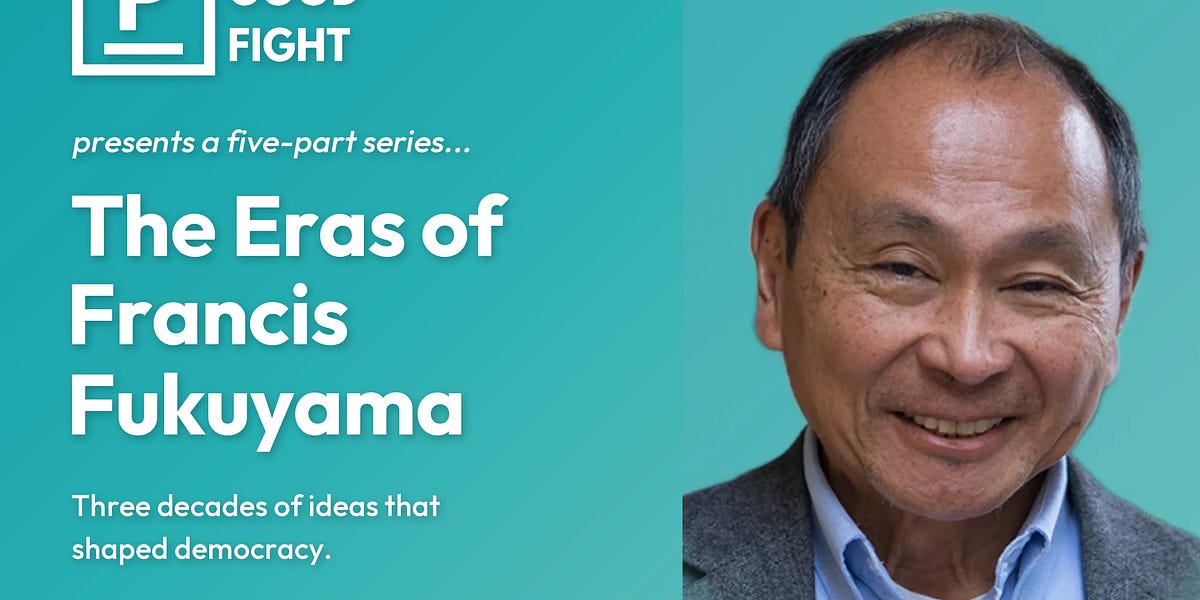
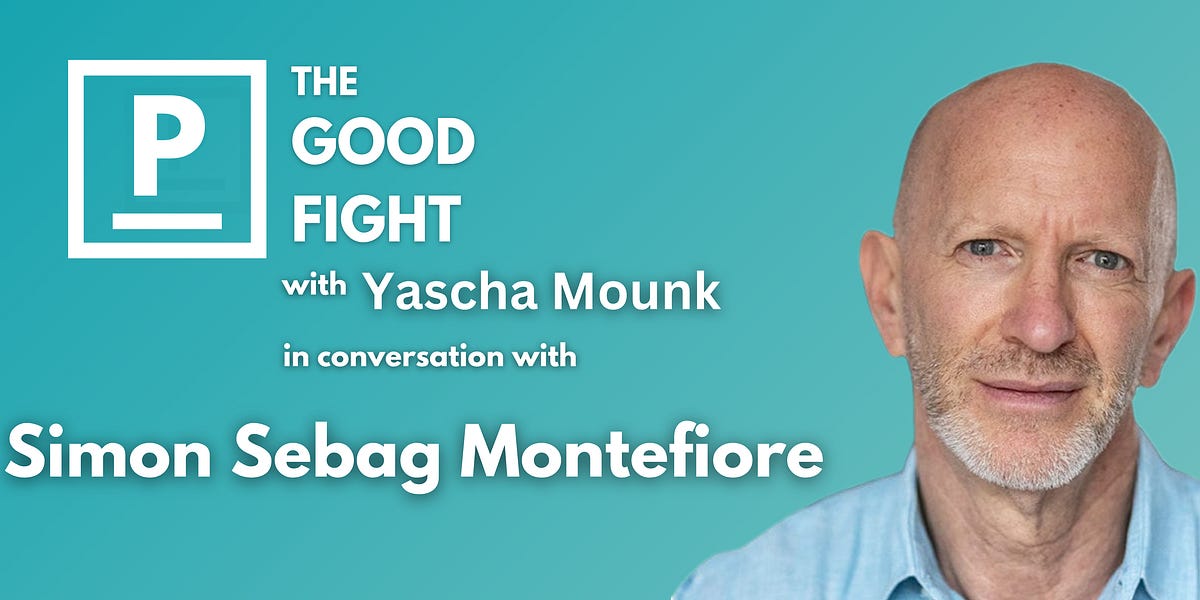
In this week’s conversation, Yascha Mounk and Francis Fukuyama discuss why Fukuyama initially supported the Iraq War and what changed his mind, how the neoconservative movement’s experience of Eastern Europe shaped its disastrous assumptions about the Middle East, and what his break with former colleagues cost him personally and professionally.
asserted
break → discuss → him
In an event exclusively for readers of American Purpose and Persuasion, Yascha Mounk will be interviewing Francis Fukuyama about his life and thought at 5pm on Sunday, September 6 at The Abbey Centre, London.
asserted
Mounk → interview → Centre
Paying subscribers of Persuasion and American Purpose can access a code for a free ticket here.
asserted
subscribers → pay → ticket
We’re delighted to feature this conversation as part of our series on Liberal Virtues and Values.
asserted
We → feature → Virtues
This series, made possible with the generous support of the John Templeton Foundation, features content making the case that liberalism has its own distinctive set of virtues and values that are capable not only of responding to the dissatisfaction that drives authoritarianism, but also of restoring faith in liberalism as an ideology worth believing in—and defending—on its own terms.
asserted
that → make → terms
This transcript has been condensed and lightly edited for clarity.
asserted
transcript → condense → clarity
We left in the 1990s, or I suppose the early 2000s, with your writing about human nature.
asserted
I → leave → nature
So I think we’re going to try and cover the next fifteen or twenty years in this conversation.
asserted
we → think → conversation
The starting point to a lot of political debate, and perhaps to some big changes in your reflections about the world, was the terrible terrorist attacks of September 11th and the decision by the administration of George W. Bush to invade Iraq.
asserted
point → invade → Iraq
You initially supported that idea and then changed your mind about it.
asserted
You → support → it
Well, I had fallen in with a group of people that later became known as the neoconservatives—people like Bill Kristol and his Project for the New American Century, which started in the 1990s.
asserted
which → fall → 1990s
I frankly hadn’t been thinking about foreign policy all that much in the 1990s.
asserted
I → think → 1990s
I was more interested in things like the wars in Central America, or the peacekeeping missions that had been undertaken in that period.
asserted
that → undertake → period
It’s so long ago—we had this thing called the responsibility to protect, at a time when the West seemed so overpoweringly powerful and influential.
asserted
West → ’ → time
And the question was: when were we going to intervene to restore order to disorderly developing countries?
asserted
we → go → countries
That now seems incredibly hubristic.
asserted
That → seem → ?
I remember being quite skeptical about that idea when I first came across it as a young student.
asserted
I → remember → student
But of course, this came out of the failure to intervene in Rwanda—the sense that we had let these horrible genocides go on without doing anything.
asserted
genocides → come → anything
And so, if we had the power, if we had the ability, why shouldn’t we go in and save people from genocide?
asserted
we → have → genocide
And we have the ability to do that—well, why shouldn’t we take it one step further and spread the joys of democracy and good government around the world?
asserted
we → have → world
You have to give it its due—you have to place it in the historical context of where that instinct came from.
asserted
instinct → have → where
I had been thinking about developing world conflicts, civil wars, intervention, and I hadn’t paid that much attention to this ongoing crisis over Iraq—even though when I was an intern at the RAND Corporation back in 1978, that’s what I did.
asserted
I → think → what
I wrote a whole study that summer about Iraq’s—Saddam Hussein’s—relationship to the Soviet Union, which at that time was the most radical Arab rejectionist country.
asserted
which → write → time
So I did sign on to a letter that Bill Kristol had sent around urging intervention in Iraq.
asserted
Kristol → sign → Iraq
To my embarrassment, I actually hadn’t thought that carefully about it.
asserted
I → think → it
Then September 11th happened.
asserted
11th → happen → ?
I was sitting in my office at SAIS on Massachusetts Avenue when the Pentagon was struck.
asserted
Pentagon → sit → Avenue
One of my colleagues came into my office and said, “You’d better turn on the TV, because something big is happening.”
asserted
something → come → TV
And we watched the second plane go into the second tower, and looking out the windows we could actually see the smoke rising from the Pentagon, which had also been hit that morning.
uncertain
which → watch → Pentagon
Everything seemed to change.
asserted
Everything → seem → ?
And the question then was: what do we do about this?
asserted
we → do → this
This led to this really bitter and prolonged debate over the causes of September 11th, and the inclination of a lot of my conservative friends to try to link this to Saddam Hussein and this longstanding problem that they’d had with Iraq and its attempt to develop weapons of mass destruction.
asserted
they → lead → destruction
I don’t know that it’s worth going through all of the ins and outs of that latter issue.
asserted
it → know → issue
The elder Bush had intervened to get Iraq out of Kuwait back in 1991.
asserted
Iraq → intervene → 1991
In the subsequent years, they discovered that Iraq was actually working on a nuclear program.
asserted
Iraq → discover → program
They sent nuclear inspectors in, and Saddam Hussein kicked them out.
asserted
Hussein → send → them
And it did look like he was trying to do his best to deceive the outside world as to the existence of these WMD programs.
asserted
he → look → programs
But after September 11th, there was an attempt to link all of this to the September 11th attacks, and that laid the ground for the disastrous intervention in 2003.
asserted
that → be → 2003
So that was the general background out of which I was operating back then.
asserted
I → operate → which
So at the time when you favored this intervention, which of the different kinds of justifications for the war did you find to be most compelling?
asserted
you → favor → war
…and 248 more, not listed.
 The Aporia