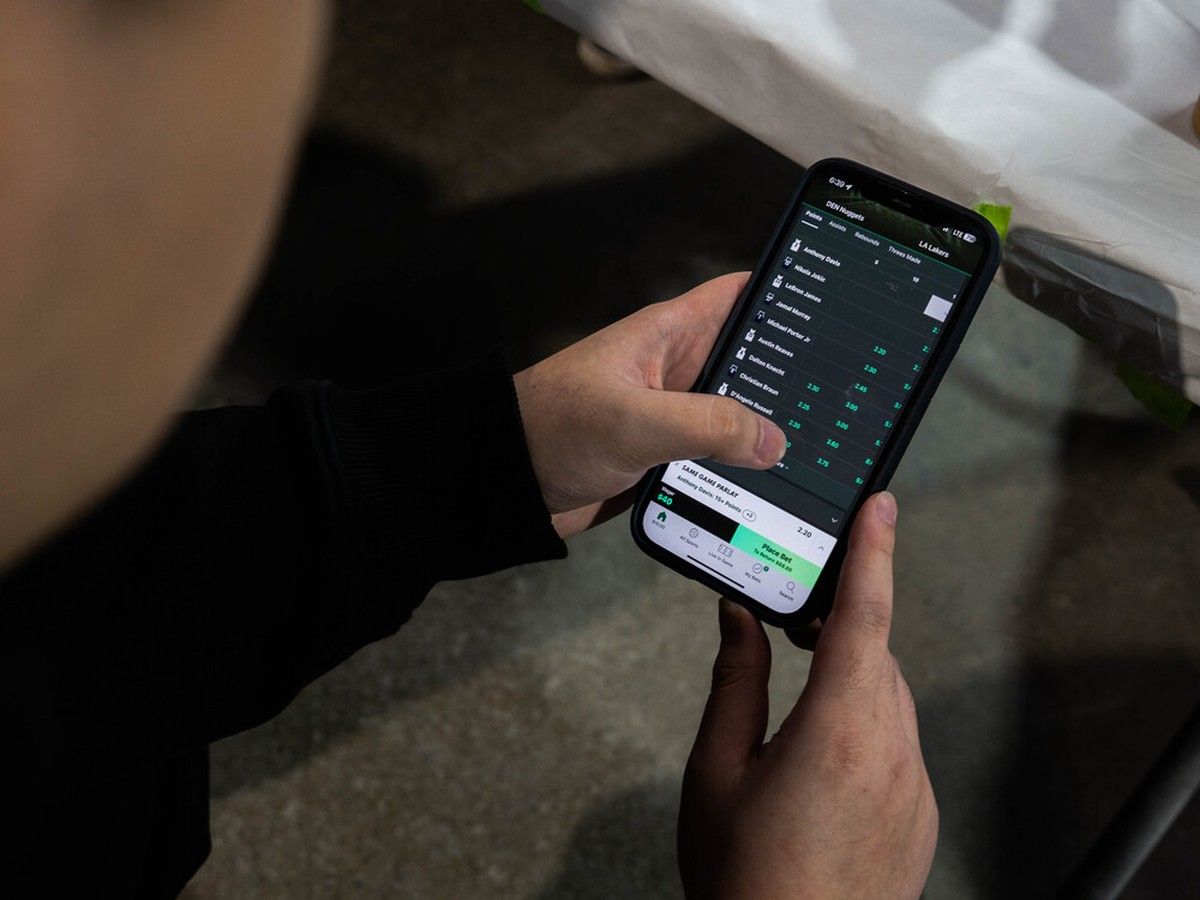
Online gambling has “significantly increased” among Ontario teenagers, with one in eight students gambling online during the last school year and one in 10 betting on sports, according to a report released on Monday.
uncertain
10 → increase → Monday
These findings are from the latest Ontario Student Drug Use and Health Survey, published by Toronto’s Centre for Addiction and Mental Health.
asserted
findings → publish → Addiction
The survey included more than 11,000 students enrolled in Grades 7 to 12 across the province.
asserted
survey → include → province
Compared with the last survey two years ago, the share of students who reported gambling online grew to 12 per cent from 8 per cent – a 50-per-cent jump.
asserted
who → compare → cent
Across Ontario, one in five students are now engaging in some form of gambling, either online or off.
asserted
students → engage → gambling
For the first time, the survey also asked students about their exposure to online gambling advertisements.
asserted
survey → ask → advertisements
More than 80 per cent said they had seen or heard an online gambling ad in the past month, and roughly a quarter of students reported encountering them on a daily basis.
asserted
quarter → say → basis
“I just look at the numbers, and I think, ‘Oh boy. There is an issue,’” said principal investigator Hayley Hamilton, a senior scientist with CAMH and co-director of the Institute for Mental Health Policy Research.
asserted
Hamilton → look → Research
“Increased accessibility, and the fact that gambling is online – it’s opened up to young people more than in the past.”
asserted
it → open → past
The CAMH survey is Canada’s longest-running school survey, administered every two years to identify trends in health and substance use among students.
asserted
survey → run → students
The survey first started monitoring online gambling in 2003, and researchers added questions about internet-based sports betting in 2017.
asserted
researchers → start → 2017
Since then, the online gambling landscape in Ontario has changed dramatically.
asserted
landscape → change → Ontario
In 2021, the federal government legalized single-event sports betting, and one year later, Ontario became the first Canadian province to open its online gambling market to private operators.
asserted
Ontario → legalize → operators
Today, Ontario is considered North America’s most competitive online gambling market.
asserted
Ontario → consider → ?
There are currently 48 operators in Ontario running 83 websites that offer online casinos and sports-betting platforms, according to iGaming Ontario, the Crown agency that manages the private market for online gambling.
uncertain
that → be → gambling
In the 2024-25 fiscal year, these sites had 2.6 million active accounts, collectively wagering more than $82-billion.
asserted
sites → have → billion
But emerging public-health data is painting a worrying picture about the hidden fallout from this explosion of gambling activity.
asserted
data → emerge → activity
Last year, the Canadian Centre on Substance Use and Addiction released a study based on 2024 survey results, finding that 69.4 per cent of young adults aged 18 to 29 who gambled online met the criteria for problem gambling.
asserted
who → release → gambling
Roughly a quarter experienced a high level of gambling-related harms, such as accumulating credit-card debt or hurting their personal relationships.
asserted
quarter → experience → relationships
Another recent research paper published by the Canadian Medical Association Journal reported alarming increases in gambling-related helpline calls since Ontario legalized online gambling, almost exclusively among boys and young men; among the 15 to 24 age group, helpline contacts surged 317 per cent.
asserted
contacts → publish → group
At CAMH’s outpatient clinic for problem gambling, psychotherapist Megha Vatsya has noticed an uptick in younger clients over the past five years, especially men in their 20s and 30s.
asserted
Vatsya → notice → 20s
But in the past year or so, she’s started getting referrals for teenagers, including one as young as 15 – something that never used to happen when she joined the clinic in 2019.
asserted
she → start → 2019
“The biggest thing I’m hearing is either poker or sports betting,” she said.
asserted
she → hear → ?
“A lot of times we’ll hear things like, ‘All my friends are doing it, I don’t want to miss out.’”
asserted
I → hear → it
Ms. Vatsya isn’t sure which apps or websites young people are using specifically.
asserted
people → use → apps
While her clientele is predominantly male, the new student survey suggests that girls are increasingly getting involved with gambling.
uncertain
girls → suggest → gambling
Six per cent of female students reported gambling online during the previous 12 months – double the percentage from the last survey.
asserted
cent → report → survey
Another subgroup with a significant increase was eighth graders; last year, 10 per cent said they gambled online, up from 4.6 per cent in 2023.
asserted
they → say → 2023
Other worrying trends from the survey relate to video gaming, with one in 10 students reporting that they played for five or more hours a day.
asserted
they → relate → hours
Seventeen per cent of students had symptoms of video-gaming problems, such as disruption to their family or schooling – significantly up from 2007, when only 9 per cent reported the same.
asserted
cent → have → same
A quarter of students also said they spent five or more hours a day on social media.
asserted
they → say → media
This is more than double what it was in 2013, the first year that the survey started tracking this measure.
asserted
survey → start → measure
There are also some significant bright spots in the latest survey results, CAMH’s Dr. Hamilton noted.
asserted
Hamilton → be → results
The last survey released in 2023 – which was conducted at the height of the COVID-19 pandemic – showed dramatic increases in students reporting poor mental health and psychological distress.
asserted
which → release → health
But two years later, many mental-health measures have improved, Dr. Hamilton said.
asserted
Hamilton → improve → ?
For example, students experiencing moderate to serious psychological distress declined to 46 per cent from 51 per cent, and those who reported self-harming dropped to 15 per cent from 19 per cent.
asserted
who → experience → cent
Many of these measures were added to the survey in 2013, and this is the first time that Dr. Hamilton has seen year-over-year improvements.
asserted
Hamilton → add → improvements
She said this could suggest that school-based interventions and other resources aimed at improving student mental health are having an impact.
uncertain
interventions → say → impact
It also shows that students are faring much better now compared with the darkest days of the pandemic, when schools were shuttered and many students struggled with their mental health.
asserted
students → show → health
“We’ve been waiting to see if things are going to go back to prepandemic levels,” she said.
asserted
she → wait → levels
…and 1 more, not listed.
 The Aporia