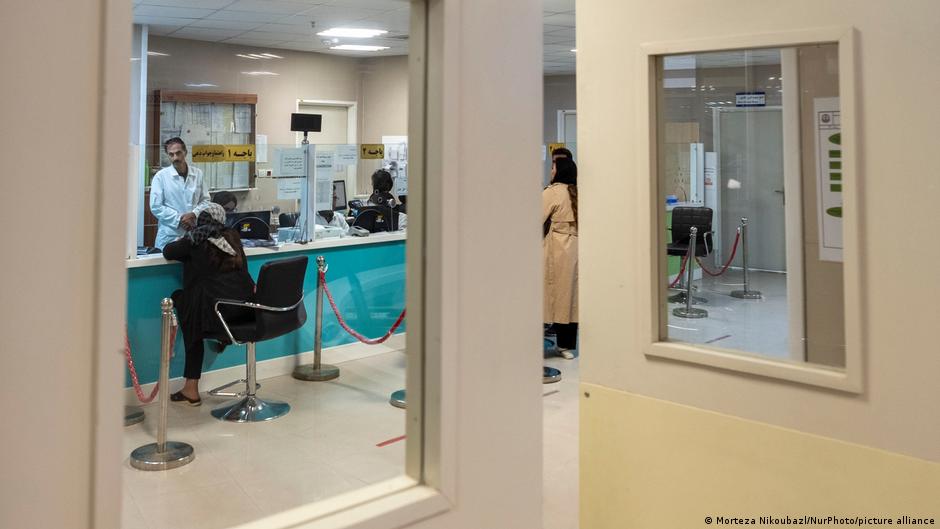
A 70-year-old woman with advanced breast cancer was supposed to undergo chemotherapy every two weeks.
asserted
woman → suppose → chemotherapy
Doctors had scheduled six treatment sessions, each costing around 100 million Iranian tomans (about $530 or €450).
asserted
Doctors → schedule → tomans
Iran's minimum monthly wage for workers covered by the country's labor law is 16.6 million tomans, meaning that just one of her chemotherapy sessions costs roughly six times the monthly minimum wage.
asserted
one → cover → wage
The woman's children asked her doctor to postpone the next round of treatment while they searched for a loan or any other source of financial support, according to colleagues of Hamid Hemmatpour, an Iranian physician based in Austria and a member of the executive board of the Association of Healthcare Professionals for Human Rights-Austria.
uncertain
they → ask → Rights
Across Iran, rising prices, persistent shortages, disruptions in foreign currency transfers and growing pressure on the health care system are making access to treatment increasingly difficult, according to Hemmatpour and another Iranian physician based in Austria, Hassan Nayeb Hashem.
uncertain
access → rise → Austria
Drug prices rise sharply in Iran
In one example, an Iranian pharmaceutical company recently announced price increases for 82 products.
asserted
company → rise → products
The average price of those medicines rose from roughly 180,000 tomans to 390,000 tomans, an increase of around 120%, according to figures published by Tasnim News Agency, which is affiliated with Iran's Islamic Revolutionary Guard Corps.
uncertain
which → rise → Corps
The list shows particularly steep increases for a number of medicines.
asserted
list → show → medicines
Donepezil rose by about 543%, clarithromycin by roughly 308%, and amoxicillin by around 115%.
asserted
Donepezil → rise → %
The prices for some acetaminophen and diphenhydramine syrups increased by about 135%.
asserted
prices → increase → %
The figures relate to a single manufacturer, but they illustrate the scale of the financial pressure many patients face.
asserted
patients → relate → pressure
Insulin users are among those hardest hit.
asserted
users → hit → those
Hemmatpour said the cost of a monthly prescription of four NovoRapid insulin pens has risen from about 280,000 tomans after insurance reimbursement to roughly 1.1 million tomans.
asserted
cost → say → tomans
When patients delay treatment
Hassan Nayeb Hashem warns that shrinking access to vital treatments could have tragic consequences.
uncertain
shrinking → delay → consequences
"If the medicine becomes inaccessible, patients can develop complications much sooner," he told DW.
asserted
he → become → DW
In many cases, switching medications is not a practical solution.
asserted
switching → switch → medications
"For many specific diseases, there is effectively no substitute," he added.
asserted
he → be → diseases
Cancer patients are particularly vulnerable because treatment schedules are often tightly structured.
asserted
schedules → structure → ?
Delays can reduce the effectiveness of therapy and affect outcomes.
asserted
Delays → reduce → outcomes
Hamid Hemmatpour says some patients ask physicians abroad to obtain cancer medicines, while others postpone or abandon treatment after learning the cost.
asserted
others → say → cost
An Iranian-produced version can cost around 70 million tomans, more than four times the monthly minimum wage, according to Hemmatpour.
uncertain
version → produce → Hemmatpour
Imported Indian versions may sell for around 300 million tomans, European versions can cost even more.
uncertain
versions → sell → more
Not surprisingly, experts report rising demand for medicines obtained through unofficial cross-border channels.
asserted
experts → report → channels
"The question is under what conditions these medicines were transported," Hemmatpour said.
asserted
Hemmatpour → transport → ?
"Some of these drugs require refrigerated transport.
asserted
Some → require → transport
Patients often have no way of knowing whether proper storage conditions were maintained during the journey.
asserted
conditions → have → journey
Hemmatpour and Nayeb Hashem also warn that imported drugs may be counterfeit or expired, potentially reducing their effectiveness and posing additional health risks.
uncertain
drugs → warn → risks
Why medicine shortages persist in Iran
Many of the country's health challenges predate the current war.
asserted
Many → persist → war
Iran's pharmaceutical industry had already been struggling with a weakening currency, rising production costs and delayed payments from insurers.
asserted
industry → struggle → insurers
US sanctions added another layer of difficulty.
asserted
sanctions → add → difficulty
Medicines and humanitarian goods are generally exempt from sanctions, but restrictions on banking transactions and international payments can complicate pharmaceutical trade.
asserted
restrictions → complicate → trade
Iranian officials have attributed part of the current shortage to a disruption of supply chains and difficulties in transferring foreign currency.
asserted
officials → attribute → currency
Mehdi Pirsalehi, head of Iran's Food and Drug Administration, has said money transfers slowed dramatically after the war began, nearly coming to a standstill for one to two months and continuing at a reduced pace for several months afterward.
asserted
war → say → months
At the same time, Abdolnaser Hemmati, governor of the Central Bank of Iran, says the amount of foreign currency allocated for medicines and medical equipment during the first five months of the current Iranian year was 30% higher than the same period a year earlier.
asserted
amount → say → period
The statements suggest the problem extends beyond the amount of foreign currency allocated.
asserted
problem → suggest → currency
Delays in payments, imports, manufacturing or distribution can all contribute to shortages.
asserted
Delays → contribute → shortages
Why Iran faces a deeper medicine crisis
Medicine shortages are not unique to Iran.
asserted
shortages → face → Iran
In recent years, countries including Germany and the United States have also faced shortages of antibiotics, cancer therapies and other essential medicines, partly because of manufacturing problems and vulnerabilities within global supply chains made especially clear by the COVID-19 pandemic.
asserted
countries → include → pandemic
Iran's situation is particularly difficult as it finds itself facing the brunt of several pressures at the same time.
asserted
itself → find → time
Currency depreciation, rising production costs, pressure on insurers, sanctions-related obstacles and the economic consequences of war have all converged on a health care system that was already weak.
asserted
that → rise → system
…and 7 more, not listed.
 The Aporia