'It embarrasses me to be involved':
asserted
It → embarrass → me
Inside the National Guard D.C. deployment
'It embarrasses me to be involved': Inside the National Guard D.C. deployment
asserted
It → embarrass → deployment
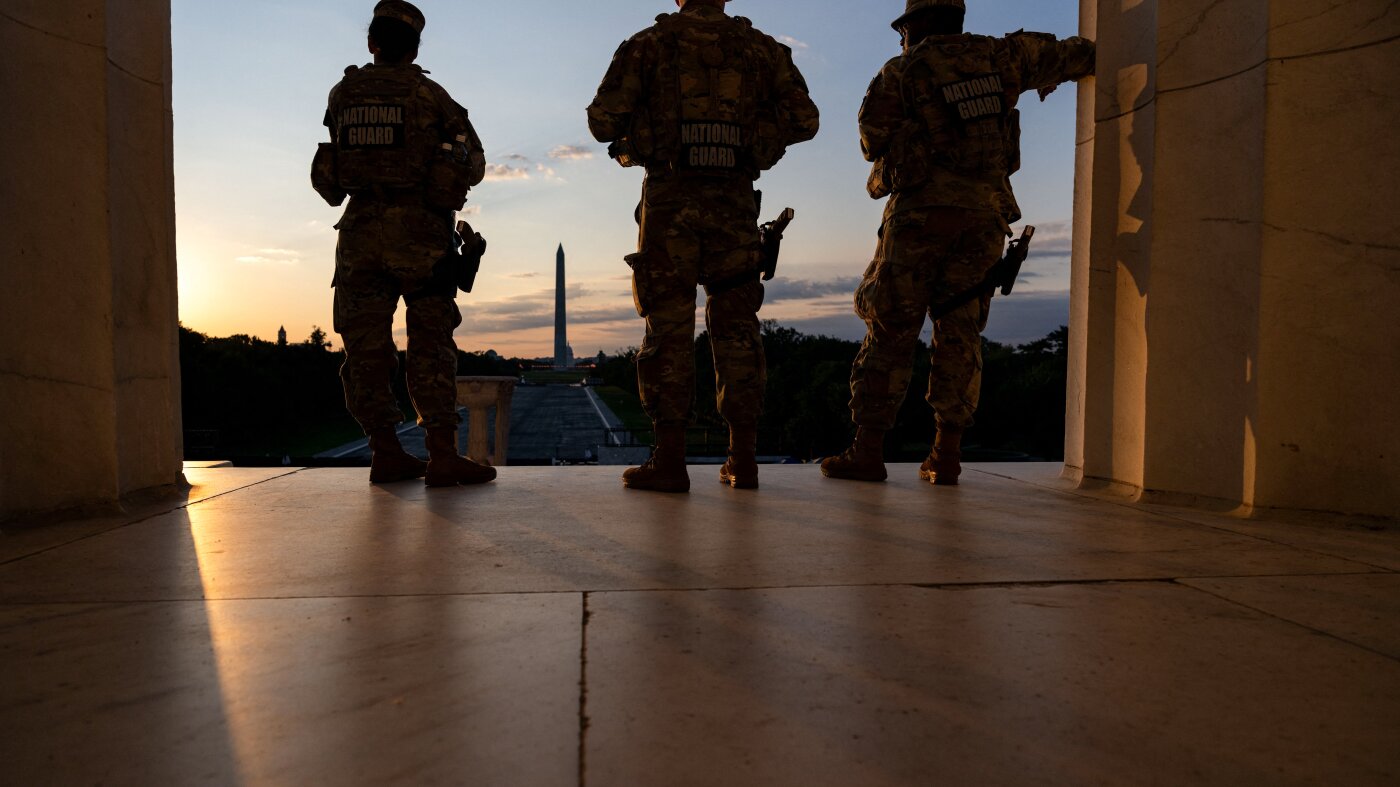
As the sight of armed, uniformed National Guard troops became ubiquitous in Washington, D.C. over the past year, one voice has been notably absent from the public discourse around the deployment: the guard members themselves.
"I will say very frankly that the bad taste that this mission left in my mouth, it actually embarrasses me to be involved in any way," one guard member who was part of the deployment for several months recently told NPR.
asserted
who → become → NPR
Thousands of National Guard members have been patrolling the streets of Washington, D.C. for more than a year now, in what has become President Trump's largest and longest domestic military deployment.
asserted
what → patrol → year
Their presence has become a common, and controversial, topic of conversation among D.C. residents and constitutional experts alike, raising concerns about the normalization of armed troops in a city for an extended period of time.
asserted
presence → become → time
Members of the military are not allowed to speak to the press without authorization.
asserted
Members → allow → authorization
Under this administration, those rules and the ramifications for breaking them have gotten even stricter.
asserted
rules → break → them
But some members who are no longer a part of the mission have become more open to sharing their thoughts as the deployment enters its second year – and has been extended to the end of President Trump's term.
asserted
deployment → become → term
"I don't want to think about the National Guard.
asserted
I → want → Guard
I don't want to necessarily discuss my affiliation with the National Guard.
asserted
I → want → Guard
I don't want to fulfill my normal National Guard duties just because of the abuses of the National Guard in this D.C. mission," the guard member said, noting that isn't how he's felt after previous domestic deployments.
asserted
he → want → deployments
That guard member was one of three who spoke to NPR on the condition of anonymity because they are still serving and are barred from speaking publicly.
asserted
they → speak → anonymity
All of them were deployed as part of the D.C. Safe and Beautiful mission for many months and each has more than a decade of service.
asserted
each → deploy → service
In candid interviews, the guard members described their feelings throughout their time on the deployment, and their worries about the new norms it's establishing.
asserted
it → describe → norms
They discussed the cost, which is expected to run into the billions.
asserted
which → discuss → billions
And they say they worry that Trump's unprecedented use of the troops is damaging the National Guard's reputation with the American public.
asserted
use → say → public
All were skeptical about the administration's original reason for the deployment – to help with law enforcement after declaring a "crime emergency", despite a 30-year low in violent crime in the city.
asserted
All → help → city
"Now, with it being a year, it's hard to feel like that justification holds any water," said one guard member.
asserted
member → feel → water
"It feels like the guard is being exploited in a sense."
asserted
guard → feel → sense
Another said it feels more like a political stunt, pointing out the way the guard has been inserted into certain narratives by the administration, like being ordered to patrol the perimeter of the Reflecting Pool following its faulty renovation.
asserted
guard → say → renovation
"I hope that there will be some accounting someday — probably after President Trump is gone — about why we were there, and was it worth it?
asserted
it → hope → ?
But none of that is gonna happen right now," that member said.
asserted
member → go → that
NPR reached out to both the White House and the D.C. Joint Task Force regarding the concerns raised by the guard members.
asserted
NPR → reach → members
The White House responded by reiterating how safe D.C. is now, without providing evidence that the guard is responsible for decreasing crime.
asserted
guard → respond → crime
In a statement, Brig. Gen. Leland Blanchard II, the interim commanding general of the D.C. National Guard, called the deployment "unique," and pointed to "significant accomplishments" that guard members contributed in the past year including assisting law enforcement with apprehensions, rendering medical aid and reuniting lost children with their families.
"Whatever individual perspectives they carry away from their experience, their service and sacrifice deserve our respect," Blanchard wrote.
asserted
Blanchard → command → respect
Trump first deployed the D.C. National Guard in August of 2025 — something he can do since the president controls the District's guard.
asserted
president → deploy → guard
Hundreds of guard members in the district were pulled from their civilian jobs and immediately called up.
asserted
Hundreds → pull → jobs
"My very initial reaction was just, I guess, shock and feeling like this context and this situation just felt like a very authoritarian move that kind of felt uncharacteristic of something you would see in our country," said one member of the D.C. guard, adding that the reasoning behind the deployment contributed to the confusion.
asserted
reasoning → guess → confusion
In the days and weeks that followed, Republican governors began sending members of their guard to help with the mission.
asserted
governors → follow → mission
"Walking into it, we had no real specifics," one guard member who was deployed from West Virginia remembered thinking.
asserted
who → walk → Virginia
"The president is calling out the guard to make D.C. safe.
asserted
D.C. → call → guard
Well, what the what the f*** does that mean?
asserted
that → mean → what
All remembered a scramble in the early days to figure out what everyone should be doing, as more and more troops — who were all deputized as special law enforcement and armed with a handgun — arrived.
asserted
who → remember → handgun
They said despite the confusion there was a collective effort to figure out how to be useful and effective.
asserted
They → say → confusion
Military members are trained to be apolitical and follow orders.
asserted
members → train → orders
"All of these people showed up, and then it was more of an after-the-fact figure out what we're going to do," one said, saying everyone was really trying to be as helpful as possible to the community with whatever resources they were given, like providing Naloxone to counter the effects of an opioid overdose or helping a bicyclist who had been hit by a car.
asserted
who → show → car
"We can argue about why they were there and whether they should be there, but soldiers and airmen were trying to do the best with what they had."
asserted
they → argue → what
In the early days, troops were largely assigned to help with beautification projects around the city: clearing trash along the road, bagging leaves in public parks or trimming trees at the National Mall.
asserted
troops → assign → Mall
The guard member from West Virginia said that many of the members he had arrived with – most of whom had raised their hand for the deployment – became quickly disillusioned.
asserted
most → say → deployment
"I know there were a lot of people that showed up from West Virginia specifically that were just like, I want to help, and then later they found out that they were taking out trash and setting up (logistical equipment).
asserted
they → know → equipment
…and 40 more, not listed.
 The Aporia