What are words, anyway, and what do they mean?
asserted
they → mean → what
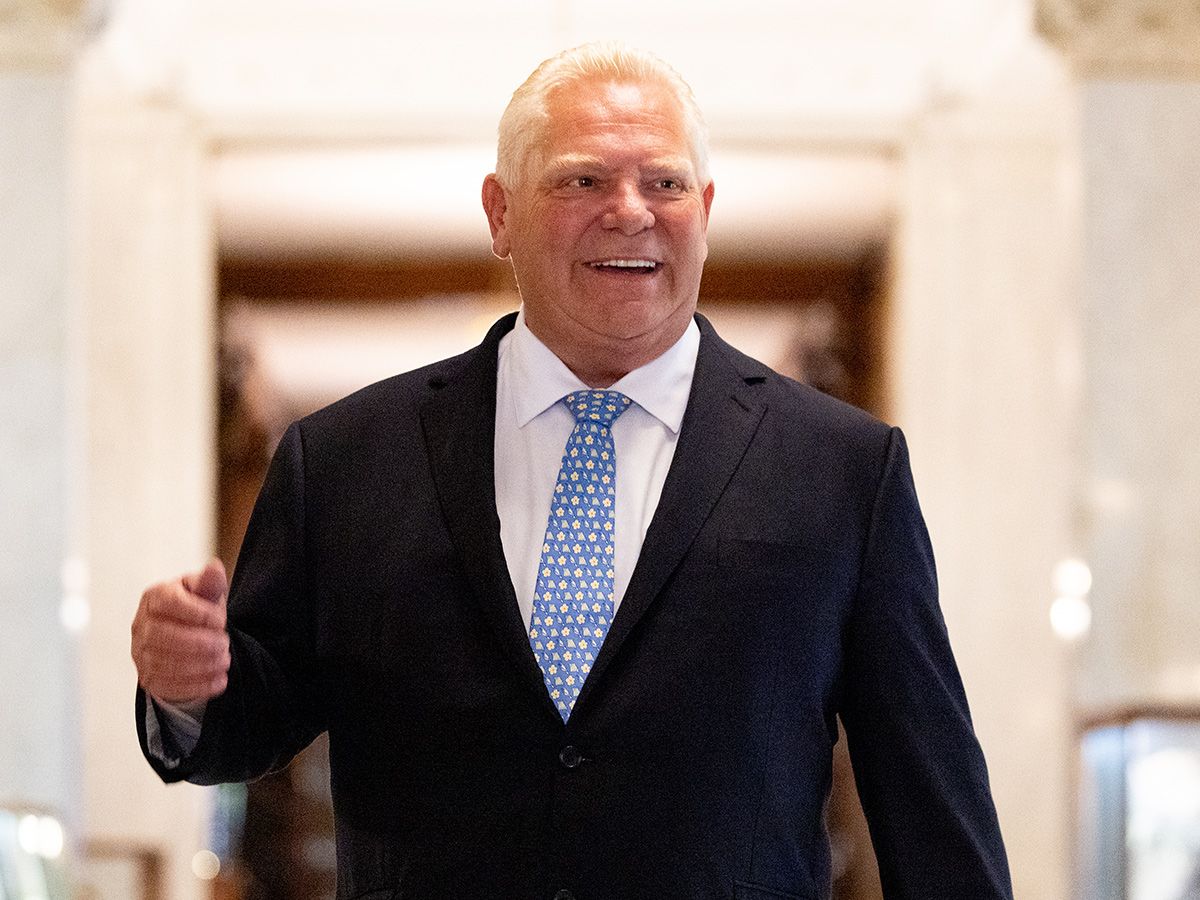
We are left to ponder these existential questions after the events of this week, when Ontario Premier Doug Ford almost-but-not-quite endorsed Toronto Mayor Olivia Chow in her re-election campaign and then, a day and a half later, said he had done no such thing.
asserted
he → leave → thing
By Friday morning, Ford had found a predictable source for the confusion: the media, which had incorrectly interpreted his words as meaning what they are generally accepted to mean.
asserted
they → find → what
Along the way, we received some insight into the curious politics of the Toronto mayoral race, where various Tory operatives are helping Brad Bradford in his campaign to defeat Chow, who Ford once feared would be a “disaster” for the city but who he has since come to like.
asserted
he → receive → who
So much so that it seems to have gotten him into some trouble.
asserted
it → seem → trouble
Let us recap:
asserted
us → let → ?
On Wednesday morning, at a press event at a biomedical facility in North York with a passel of politicians present, Mark McAllister of CityNews asked Chow about progress on a new funding deal between the city and the province and also asked Ford for his thoughts on the mayoral race, while noting that he “had not endorsed anyone to this point.”
asserted
he → ask → point
(Questions are limited at these events, so the double-barrelled query is a veteran move.)
asserted
query → limit → events
Ford responded that he had “a phenomenal relationship” with Chow.
asserted
he → respond → Chow
He said phenomenal again, in case anyone missed it the first time.
asserted
anyone → say → it
“We’re going to continue supporting the mayor.
asserted
We → go → mayor
She’s doing an incredible job,” he said.
asserted
he → do → job
This was dutifully reported as an effective endorsement or a quasi-endorsement, and other things along those lines.
asserted
This → report → lines
(I wrote in that day’s column that it was “not an endorsement, exactly,” but “close.”)
asserted
it → write → column
Perhaps some media outlets dropped some of those qualifiers in follow-up reports, but you know who definitely did?
asserted
who → drop → reports
The campaign for Brad Bradford, which hissed in a statement that “of course the premier endorsed Olivia Chow” because “she’s the easiest negotiation he has ever had.”
asserted
he → hiss → Chow
It went on to say that she “handed over on a silver platter” things she had vowed to oppose.
asserted
she → go → things
The Bradford campaign, having positioned itself as the conservative alternative to the left-wing Chow, would naturally be dismayed by Ford’s enthusiastic statements in support of the mayor.
asserted
campaign → position → mayor
For that matter, so might be Chow’s campaign, whose NDP backers and donors could not have been thrilled by the notion that Ford thinks she’s such a great partner.
uncertain
she → thrill → notion
The premier, after all, has views on a range of policies — bike lanes, speed cameras, bail reform, harm reduction, homeless encampments — that would send many NDP supporters straight to the fainting couch.
asserted
that → have → couch
And so, by Thursday evening the Premier’s Office was out with a statement, attributed to a spokesperson:
asserted
Office → attribute → spokesperson
““We would like to clarify that Premier Ford did not endorse Olivia Chow and will not endorse any candidate in the Toronto mayoral race,” it said.
asserted
it → like → race
I mean ….
asserted
I → mean → ?
While his answer to McAllister’s question was not technically an endorsement, and, again, widely reported as such, what else was “read between the lines” supposed to mean?
asserted
what → report → lines
The premier might as well have said, “I’m not endorsing Ms. Chow” and then given a theatrical wink while pointing in her direction.
uncertain
I → say → direction
I’ll confess that in the moment I was surprised by Ford’s effusiveness on the Chow question.
asserted
I → confess → question
While he’s often said he gets along well with her despite their obvious partisan differences, she did oversee a steep Toronto tax hike of the kind that usually gets smoke coming out of his ears.
asserted
smoke → say → ears
Talking up the phenomenal relationship with, and the bang-up job being performed by your ideological opponent was, at the very least, curious.
asserted
Talking → talk → least
He could have just said some version of “I wish them all luck and look forward to working with whoever voters choose.”
uncertain
voters → say → whoever
But by Friday morning Ford was ready to offer yet more clarification to follow his Thursday disavowal.
asserted
Ford → offer → disavowal
Appearing on Newstalk 1010, where he was interviewed by guest host John Tory (yes, that one), Ford said that he wasn’t endorsing anyone in the mayoral race and if he did he would come right out and say it.
asserted
he → appear → it
The media, the premier said, took that “read between the lines” thing that he said and just, you know, “ran with it.”
asserted
you → say → it
Which is true, if you take “ran with it” to mean “interpreted the phrase as it is commonly interpreted.”
asserted
it → take → phrase
Apologies for using the hoary old device of citing a definition, but the Cambridge Dictionary says the idiom “read between the lines” refers to finding “meanings that are intended but not directly expressed.
asserted
that → use → meanings
And so, “we support the mayor” and “she’s doing an incredible job,” amid a mayoral campaign.
asserted
she → support → campaign
What meaning could possibly be intended here but not directly expressed?
uncertain
meaning → intend → ?
It remains a mystery, I guess.
asserted
I → remain → ?
 The Aporia