Photo via Dawn

IHC rules infringement of fundamental rights breaches Constitution ahead of PTI’s Sept 27 protest

Read the original at Dawn ↗
Cite

Asad, M. (2026, September 18). IHC rules infringement of fundamental rights breaches Constitution ahead of PTI’s Sept 27 protest. Dawn. https://www.dawn.com/news/2030891/ihc-rules-infringement-of-fundamental-rights-breaches-constitution-ahead-of-ptis-sept-27-protest

Dated when The Aporia collected the article, usually within hours of publication. Check the original for its exact date and byline.

Dawn · collected 2026-09-18 · by Malik Asad

Quick Summary

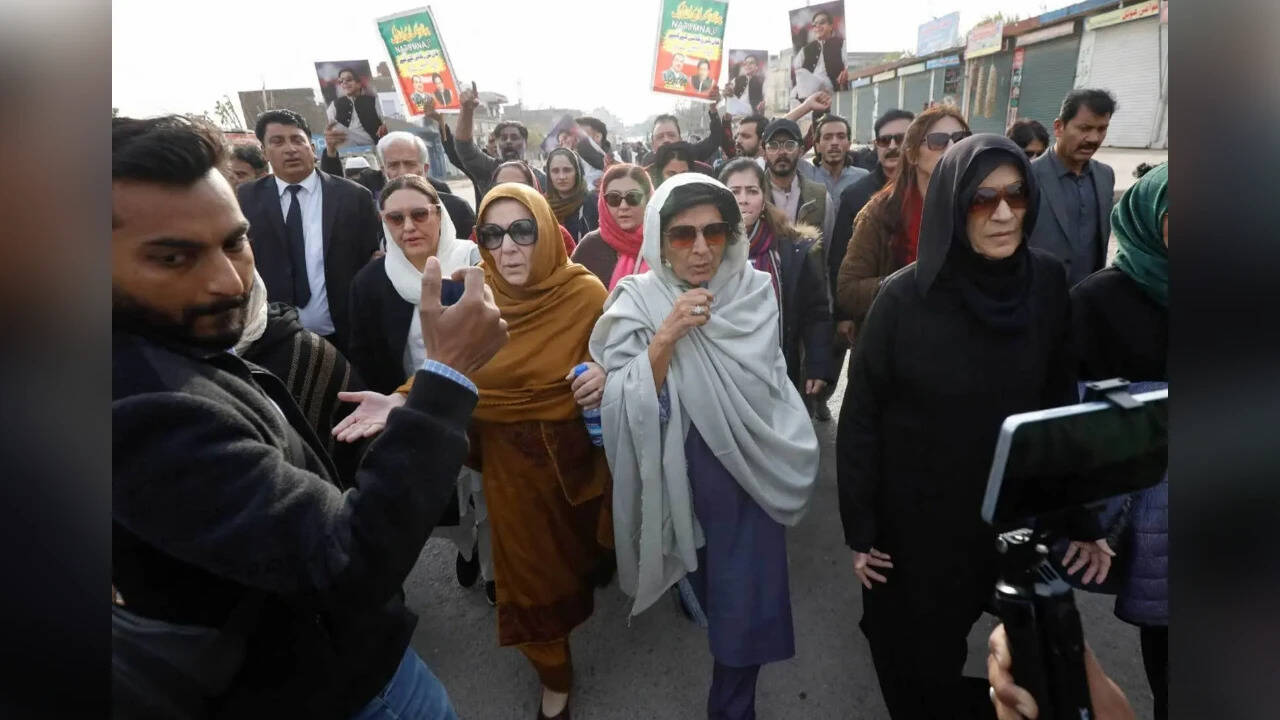
The Islamabad High Court (IHC) ruled on September 27, 2026, that any activity infringing upon citizens' fundamental rights violates the Constitution. The decision came in response to a PTI protest planned for the same day, which aimed to demand the release of party founder Imran Khan and promote constitutional supremacy. A citizen named Waqas Ahmed challenged the protest, arguing it would disrupt life in Islamabad. In its 37-page judgment, the IHC emphasized balancing the right to peaceful assembly with other citizens' rights to life, liberty, dignity, and business activities, stating that protests cannot infringe on these fundamental rights.
Written by AI on 2026-09-18, from this article's own text only (the story summary below draws on all the coverage).

AI analysis

Story summary

On September 27, the PTI planned a nationwide protest in Islamabad to demand the release of party founder Imran Khan and to mobilize support for constitutional supremacy. A citizen named Waqas Ahmed challenged this plan, citing potential disruption to routine life, traffic, and business activities in the federal capital. The Islamabad High Court (IHC) took up the case on September 14 and ruled that any protest infringing upon citizens' fundamental rights breaches the Constitution. The court directed chief ministers of all provinces to ensure no government resources were used for PTI’s planned march. While the Khyber Pakhtunkhwa advocate general distanced himself from supporting provincial police actions, the IHC emphasized a delicate balance between the right to protest and citizens’ other constitutional rights, such as free movement and access to essential services like hospitals and educational institutions.

Written for “PTI Protest Restrictions” on 2026-11-18, grounded in this article and the 1 other(s) covering the same event.

Compared with similar articles

This article reads unscored and hedges 15% of its claims. Each row says how that neighbour differs.
Dawn
Leans right Hedges 10 of 61 claims Outlet record 67/100
Dawn
Hedges 3 of 26 claims Outlet record 67/100
“The articles cover different events: one is a speech by FCC CJ about constitutional supremacy, and the other is an IHC ruling on fundamental rights infringement.”
Dawn
Leans right Hedges 0 of 3 claims Outlet record 67/100
“The articles describe different aspects related to PTI's protest but do not report on a single specific incident occurring at the same time and place.”
Dawn
Hedges 0 of 18 claims Outlet record 67/100
“The articles describe different events related to legal issues and protests, but they are not describing the same specific incident.”
Dawn
Hedges 0 of 10 claims Outlet record 67/100
“Article A describes a court ruling regarding PTI's planned protest, while Article B reports on a warning by the Interior Minister against the same protest. They are related but describe different events.”
Dawn
Leans left Hedges 2 of 15 claims Outlet record 67/100
“The articles discuss different aspects related to the PTI's planned September 27 protest, but do not describe the same specific incident.”
Times of India
Hedges 3 of 28 claims Outlet record 59/100
“The articles cover related events but not the same specific incident: Article A discusses a court ruling regarding PTI's planned protest on September 27, while Article B focuses on PTI proceeding with their protest despite legal challenges against detaining Imran Khan's sisters.”
Dawn
Hedges 3 of 41 claims Outlet record 67/100
“Article A discusses the IHC ruling regarding PTI's planned protest, while Article B focuses on PTI's determination to proceed with the protest despite arrests and detentions.”
Dawn
Hedges 3 of 24 claims Outlet record 67/100
“Article A reports a court ruling regarding PTI's upcoming protest, while Article B discusses Senate Opposition Leader Allama Raja Nasir Abbas' stance on Imran Khan's authority to postpone the protest.”
Dawn
Leans right Hedges 0 of 14 claims Outlet record 67/100
“Article A discusses a court ruling concerning PTI's planned protest, while Article B reports on police actions in response to that protest.”

Story

PTI Protest Restrictions
Politics · 2 article(s) covering the same event. See how they differ ↑
How this article was measured signals, leaning charts, publisher record, byline, topics and claims

Signals How these are calculated →

Claims extracted
34
sentences that state something as happening or true
Uncertain
15%
5 of 34 hedged ("reportedly", "may", "according to")
Leaning
not political
takes no side on a contested political question
Publisher signals
67/100
Dawn's corrections and hedging, across everything collected from it. Not a measure of accuracy.
Outlets on this story
2
Politics
Same framing elsewhere
1
articles that frame the event the way this one does
Analyzed 2026-09-18 · how these are computed

How this is being covered How these are calculated →

Article leaning vs. publisher reliability
Source leaning vs. consistency

Publisher

Dawn · 3393 article(s) · 5 correction(s) detected
Running correction rate · 5 correction(s)

Who wrote this

Malik Asad
56 article(s) here · 1 carrying a prediction
Khosa argued that prison conditions could expose his client to infections, making special precautions necessary, particularly if she underwent surgery.
He observed that the core dispute — whether the structure stands on exempted shrine land or on land acquired by the CDA in 1963 — turned on contested questions of fact that could not be resolved in constitutional jurisdiction on bare assertions.
She also told them that she could see only to a limited extent while wearing spectacles and was virtually unable to see without them.
He recalled that on June 29, the court had specifically directed the counsel to proceed with arguments and obtained an undertaking that no adjournment would be sought.
Ahsan, who is the primary suspect in the case, will remain in police custody for two days.
Jatt had filed a petition, seeking the court’s intervention to prevent his arrest before he could reach the court of competent jurisdiction.
“I will call for all reports and summon all evidence,” Justice Khadim Hussain Soomro observed while hearing a petition filed by lawyer Riaz Hanif Rahi on behalf of The Jurists Foundation of Pakistan.
When defence counsel Riasat Ali Azad informed the court that the record had been received that day, the judge remarked that he would have shown the police the consequences of failing to produce it on Tuesday.
The judgement clarified that although police could maintain internal records of criminal cases for official purposes, such information could not be disclosed in character certificates issued to citizens, particularly when these were required for travelling abroad.
Following the completion of the trial and final arguments, the court reserved its verdict and said that it would be pronounced on Oct 29.
Also by Malik Asad
Nothing else under this byline is closely related to this article, so these are simply their most recent.
All 56 articles by Malik Asad →

Topics

Constitution IHC ISLAMABAD PTI The Islamabad High Court

Subjects

ISLAMABAD GPE · 6× IHC ORG · 3× PTI ORG · 3× Imran Khan PERSON · 1× Muhammad Asif PERSON · 1× Muhammad Azam Khan PERSON · 1× Pakistan GPE · 1× Sardar Muhammad Sarfraz Dogar PERSON · 1× The Islamabad High Court ORG · 1× Waqas Ahmed PERSON · 1×

Narrative

The court described the case as requiring an “unusual degree of constitutional balance” between the right of political parties and citizens to assemble peacefully and express dissent, and the rights of other citizens to life, liberty, dignity, free movement, trade, business, property, and access to hospitals, educational institutions, courts and workplaces. “The question is not whether a political party is entitled to protest.
framing: assertive · carried by 1 article(s) · first seen 2026-09-18
The Islamabad High Court (IHC) has ruled that any activity resulting in infringement of citizens’ fundamental rights amounts to a violation of the Constitution, warning that public office holders responsible for such violations would also be deemed to have breached their oath of office.

Claims (34 extracted, 5 hedged)

The Islamabad High Court (IHC) has ruled that any activity resulting in infringement of citizens’ fundamental rights amounts to a violation of the Constitution, warning that public office holders responsible for such violations would also be deemed to have breached their oath of office. asserted
holders → rule → office
The ruling came in a detailed 37-page judgment on a petition concerning the proposed nationwide PTI protest towards Islamabad on September 27, 2026. asserted
ruling → come → September
PTI had announced the march to demand release of party founder Imran Khan and mobilise people for the supremacy of the Constitution. asserted
PTI → announce → Constitution
A citizen, Waqas Ahmed, had challenged the planned move on the grounds that the protest could disrupt routine life, traffic and business activities in the federal capital. uncertain
protest → challenge → capital
A three-member bench headed by Chief Justice Sardar Muhammad Sarfraz Dogar and comprising Justice Muhammad Asif and Justice Muhammad Azam Khan issued the judgment. asserted
bench → head → judgment
The bench had announced its short order on September 14 after hearing Attorney General for Pakistan Mansoor Awan, Additional Attorney General Amir Rehman, the advocate generals of the four provinces and Islamabad, and counsel for the petitioner, Barrister Akhter Cheena. asserted
bench → announce → petitioner
The court described the case as requiring an “unusual degree of constitutional balance” between the right of political parties and citizens to assemble peacefully and express dissent, and the rights of other citizens to life, liberty, dignity, free movement, trade, business, property, and access to hospitals, educational institutions, courts and workplaces. “The question is not whether a political party is entitled to protest. asserted
party → describe → hospitals
It plainly is, subject always to the Constitution and law,” the judgment observed. asserted
judgment → observe → Constitution
The court held that the right to peaceful assembly could not be exercised in a manner that infringed the fundamental rights of other citizens. uncertain
that → hold → citizens
A key objection raised by the Khyber Pakhtunkhwa advocate general concerned the territorial jurisdiction of the IHC over provincial authorities functioning outside Islamabad. asserted
objection → raise → Islamabad
Rejecting the objection, the court held that Article 199(1)(c) empowered a high court to issue directions where a governmental power or function was being exercised “in, or in relation to” territory within its jurisdiction. asserted
power → reject → jurisdiction
The court clarified, however, that the provision did not confer general supervisory jurisdiction over another province. asserted
provision → clarify → province
A high court could issue directions to an authority outside its territorial seat where the governmental function had a direct and proximate legal relation with territory within its jurisdiction and intervention was necessary to protect fundamental rights there. uncertain
intervention → issue → rights
The bench also observed that where executive action or inaction was likely to infringe the fundamental rights of citizens within Islamabad, the court was under a “bounden duty” to assume jurisdiction under Article 199(1)(c). asserted
court → observe → Article
The court also rejected the objection that the petition was not maintainable because KP Chief Minister Sohail Afridi had not been impleaded as a respondent. asserted
Afridi → reject → respondent
It noted that the Advocate General KP was representing both the provincial government and the chief minister. asserted
General → note → government
The court further rejected the argument that the petitioner had an adequate alternate remedy under the Peaceful Assembly and Public Order Act, 2024. asserted
petitioner → reject → Act
It noted that no application had, admittedly, been filed under Section 3 of the Act and observed that its provisions had not been adhered to by the KP chief minister and others who had announced their intention to march towards Islamabad. asserted
who → note → Islamabad
The judgment extensively referred to the Supreme Court’s decision in the Faizabad sit-in case, observing that the constitutional right to assemble and protest was protected but remained subject to restrictions where its exercise infringed the fundamental rights of others. asserted
exercise → refer → others
The IHC also referred to the Supreme Court judgment concerning the PTI march of May 25, 2022, noting that assurances regarding a peaceful rally and non-obstruction of the Srinagar Highway had not been honoured. uncertain
assurances → refer → Highway
The judgment referred to damage to public and private property, fires in the Blue Area greenbelt, injuries to police personnel and the subsequent invocation of Article 245 to call in the armed forces in aid of civil power. asserted
judgment → refer → power
The court also cited its November 21, 2024 order directing that no protest, rally or sit-in be allowed in violation of the Peaceful Assembly and Public Order Act. asserted
protest → cite → Act
It observed that the order had also been flouted. asserted
order → observe → ?
During the proceedings, the court allowed the Islamabad deputy commissioner/district magistrate to place electronic material on record. asserted
magistrate → allow → record
Video clips of the 2022 and 2024 protests were played before the bench, which described the conduct shown in the footage as “highly disturbing and reflective of violence and aggression”. asserted
which → play → violence
The court noted that PTI was in power in KP during both episodes and observed that provincial government resources had been used in pursuit of political objectives. Regarding the proposed September 27 march, the court held that the petitioner’s apprehension was not merely speculative. asserted
apprehension → note → march
It noted that the date and destination of the proposed gathering were known and that statements attributed to the KP chief minister indicated that the date was firm and that he intended to lead the march. asserted
he → note → march
While disposing of the petition, the court directed that no political party, political leader, provincial government or public office holder could lawfully occupy roads, highways, interchanges, toll plazas, buildings or similar public places within, or leading to or from, Islamabad in a manner that obstructed free movement or hindered trade, business, professions or access to medical and educational facilities. uncertain
that → dispose → facilities
The provincial governments and chief ministers were directed to ensure that no government resources, public funds, officials, vehicles, machinery or equipment were used directly or indirectly to facilitate any march, rally or procession towards Islamabad. They were also directed to ensure that no public servant was compelled, coerced or induced to participate in such activities. asserted
servant → direct → activities
The chief secretaries, police chiefs, federal interior secretary, chief commissioner and IG Islamabad were ordered to issue instructions prohibiting officials from complying with orders requiring them to facilitate such marches. asserted
secretaries → order → marches
Officials facing coercion were directed to report the matter to the relevant authorities, while helplines or other communication mechanisms were ordered to be established for this purpose. asserted
helplines → face → purpose
The court further directed the authorities to take departmental action against officials who violated the directions. asserted
who → direct → directions
In a significant finding, the court held that any person whose activity resulted in a violation of the fundamental rights of citizens in Islamabad would be deemed to have violated the Constitution and would be liable for consequences under the law. asserted
activity → hold → law
It further declared that any public office holder whose activity resulted in a violation of citizens’ fundamental rights would be deemed to have violated both the Constitution and his or her oath of office. asserted
activity → declare → office

Give feedback · no sign-in needed

No sign-in needed for now. Your note is sent without a name, so it cannot be answered.

History Support