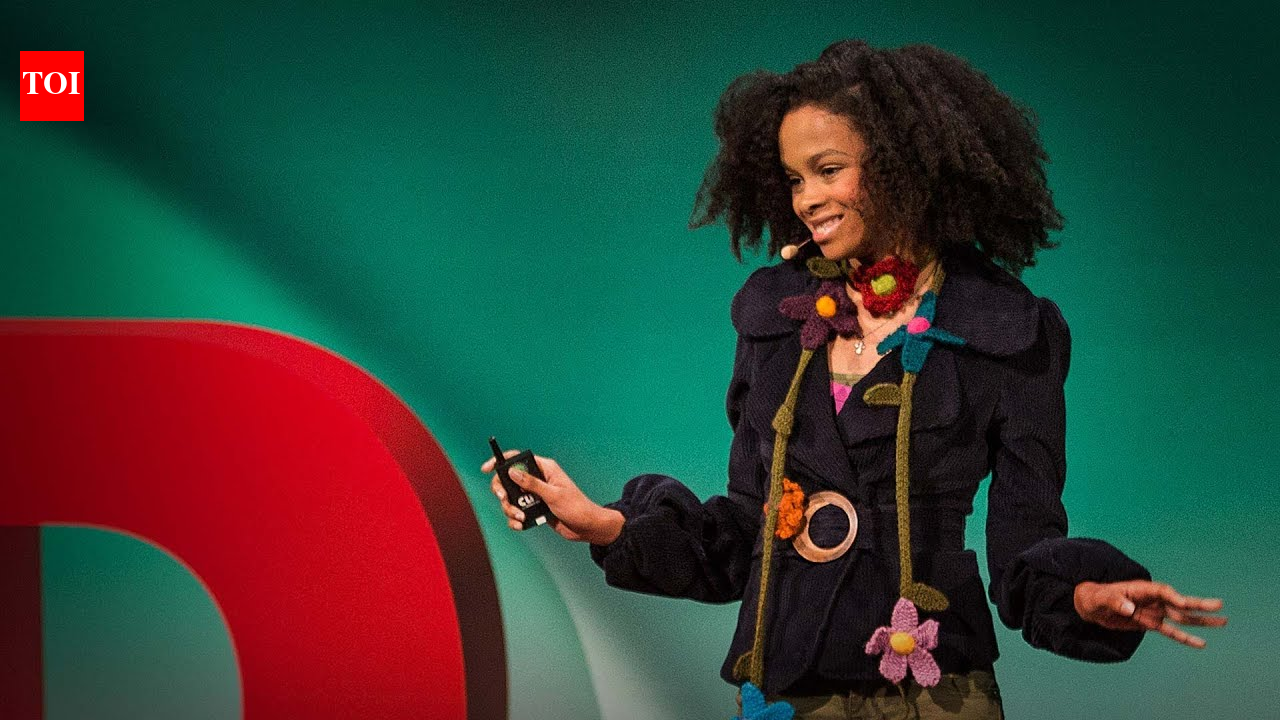
At an age when most children were still figuring out what they wanted to do after school, Maya Penn was already making and selling her own accessories.
asserted
Penn → figure → accessories
The Atlanta youngster began with handmade headbands created from materials available at home, then gradually turned that small experiment into ‘Maya’s Ideas’, a business centred on clothing and accessories made with recycled and organic materials.
asserted
youngster → begin → materials
By the time she was 12, Penn had attracted coverage from several major publications and television outlets, while her company was projected to generate about $55,000 in sales for the year.
asserted
company → attract → year
, Penn planned to donate 10% of her profits to organisations in the Atlanta area.
asserted
Penn → plan → area
How Maya Penn started her sustainable fashion business at age eight
Penn's first steps into business were fairly modest.
asserted
steps → start → business
At eight, she began making ribbon headbands for family friends, using fabric her mother already had around the house as well as pieces from recycled vintage clothing.
asserted
mother → begin → clothing
In an interview with Entrepreneur in 2013, she shared that when she needed materials that were not available at home, her mother provided a budget of $200.
asserted
mother → share → 200
Penn used that initial support to buy supplies, then put money from early sales back into the business.
asserted
Penn → use → business
The operation grew from there rather than beginning with a large investment or formal commercial setup.
asserted
operation → grow → investment
The business eventually became ‘Maya’s Ideas’, an online shop offering handcrafted accessories and clothing.
asserted
business → become → accessories
The materials she chose became an important part of how the company developed.
asserted
company → choose → ?
How sustainability became part of Maya’s Ideas
Penn's interest in environmental issues was influenced partly by her family.
asserted
interest → become → family
As mentioned in her interview, her father, John, was an entrepreneur who had explored solar energy as a child and had received awards for science fair projects connected with the subject from NASA and the US Air Force Honor Guard.
asserted
who → mention → NASA
Penn learned about environmental technology from him and later began investigating the materials used in her own products.
asserted
Penn → learn → products
That research led her to consider the effects of conventional clothing production, including the chemicals used in some textile dyes.
asserted
research → lead → dyes
Rather than treating environmental concerns as something separate from the business, she incorporated them into the products themselves.
asserted
she → treat → products
Maya’s Ideas consequently focused on accessories and clothing made with materials such as recycled fabrics and organic cotton.
asserted
Ideas → focus → fabrics
For Penn, the environmental element became part of the company's identity while she was still at school.
asserted
she → become → school
Maya Penn’s family support helped turn her creativity into a business
asserted
support → turn → business
The family environment played a significant role in Penn's early business development.
asserted
environment → play → development
Her mother, Deidre, taught her how to sew, while her father's entrepreneurial background provided another example of running a business.
asserted
background → teach → business
The Penn family also homeschooled Maya, allowing her education to be shaped around areas including problem solving and developing creative ideas.
asserted
education → homeschoole → ideas
Her parents encouraged her to make decisions for herself from a young age, with independence being treated as part of her development.
asserted
independence → encourage → development
That combination of practical skills, family support and room to experiment gave Penn the opportunity to test a business idea before she had reached her teenage years.
asserted
she → experiment → years
Penn worked on the company part time alongside her studies and everyday life, yet the business was on course for approximately $55,000 in sales that year (2013).
asserted
business → work → sales
Penn's classmates were aware of what she was doing, too.
asserted
she → do → what
She told Entrepreneur that some children found the business interesting and that some had been encouraged to consider starting ventures of their own.
asserted
some → tell → own
Maya Penn donated 10% of her business profits to Atlanta charities
Making money was not the only purpose Penn attached to the company.
asserted
Penn → donate → company
She had decided to give 10% of her profits to charities in the Atlanta area.
asserted
She → decide → area
The idea came from habits established at home.
asserted
idea → come → home
Penn had grown up accompanying her parents to buy food and canned goods for local food banks.
asserted
Penn → grow → banks
Giving to people who needed assistance was therefore familiar to her before she started selling products.
asserted
she → give → products
By the time of the 2013 interview, the profitable business had contributed $4,000 to charitable causes, alongside volunteer work.
asserted
business → contribute → work
A young entrepreneur with several creative interests
Penn's activities extended beyond running an online shop.
asserted
activities → extend → shop
She was also described at the time as a designer, artist, animator, illustrator and writer, giving her business interests a much broader creative base than simply selling handmade accessories.
asserted
She → describe → accessories
Her early experience involved making physical products, but she was also interested in generating ideas, solving problems and communicating them.
asserted
she → involve → them
She encouraged other young people to keep track of their business ideas, including small thoughts that might eventually develop into something larger.
uncertain
that → encourage → something
Her own company had started in much the same way: with an experiment, some leftover fabric and a relatively small amount of money for additional supplies.
asserted
company → start → supplies
Maya Penn took her sustainability message to TEDx and TED
Penn’s work soon moved beyond her own business.
asserted
work → take → business
In November 2012, she documented a speech she gave at TEDx Youth, adding public speaking to the growing list of things she was doing as a young entrepreneur and environmental advocate.
asserted
she → document → entrepreneur
…and 5 more, not listed.
 The Aporia