That is 0 articles you have read today.
The Aporia is free and carries no advertising, so readers are the only
thing paying for it. If you are getting this much out of it, a small
donation is what keeps it independent.
Daily limit reached
You have read 0 articles today.
That is more than the 15 a day The Aporia gives away,
and well past what it can carry on nothing. Your allowance resets at
midnight.
There is no advertising here and nothing about you is sold, so readers
are the only thing paying for it. If the site is worth this much of
your day, it is worth a few dollars.
Everything else stays open: the
maps, the
directory and
search do
not count against this, and neither does re-opening something you have
already read today.
The World Health Organization warned on September 18 about an impending global health workforce gap, citing data from over 100 countries. The report highlights that by 2030, a quarter of current doctors are expected to retire, leading to a shortage of 11.1 million health workers globally and affecting medical standards in 67 countries. Higher-income nations, especially those in Europe, will be hardest hit due to their higher proportion of aging healthcare professionals; one in three doctors in these regions is projected to retire within the next decade.
Written locally by qwen2.5:14b on 2026-09-19,
using this article's own text rather than the other coverage of the
same event (that is the story summary below).
Story summary
The World Health Organization (WHO) warned on September 18 about an impending global shortage of health workers, particularly in 2030, with a projected deficit of 11.1 million medical staff. The report, which analyzed data from over 100 countries, highlights that nearly one-quarter of doctors will retire within the next decade. By 2030, 67 countries are expected to lack sufficient staffing levels to maintain their current standards of care, with an additional need for 832,000 health workers just to sustain existing ratios. The shortage could exacerbate reliance on foreign healthcare workers in poorer nations, potentially affecting the quality of healthcare services there. Higher-income countries, especially those in Europe, face the most significant challenges due to a higher proportion of older healthcare professionals; one in three doctors in these regions will retire by 2030.
Written for “Health Workforce Gap Growing” on 2026-10-04,
grounded in this article and the 0 other(s) covering the same event.
WHO flags growing health workforce gap as doctors and patients age
GENEVA –
asserted
doctors → flag → gap
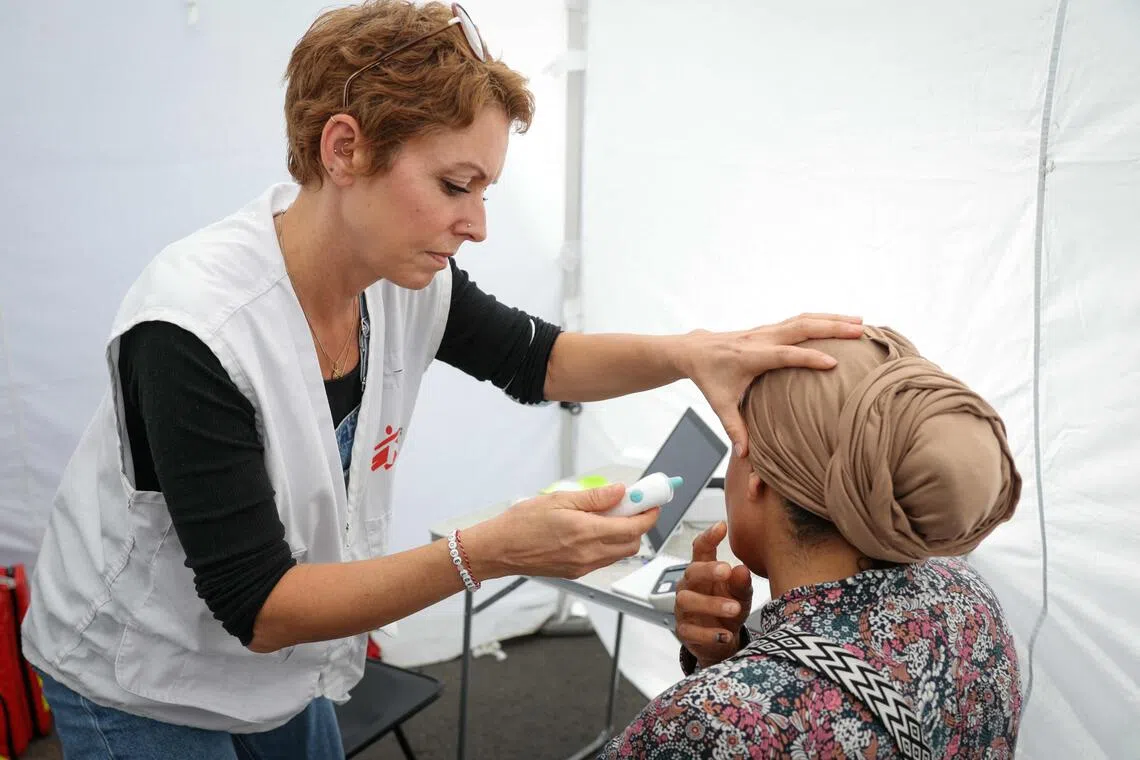
The World Health Organization (WHO) warned on Sept 18 of a gap in the medical workforce around the world in the 2030s, with a quarter of doctors set to retire in the next decade.
asserted
quarter → warn → decade
“In many countries, both our populations and health workers are ageing at the same time.
asserted
populations → age → time
This can intensify the projected global shortage of 11.1 million health workers by 2030,” the WHO said in a statement accompanying a major report on workforce trends based on data from over 100 countries.
asserted
WHO → intensify → countries
By 2030, 67 countries are projected to lack sufficient staffing to maintain the standards of medical treatment they currently enjoy, it said.
asserted
it → project → treatment
To maintain the current density of medical staff to the population, an additional 832,000 health workers are needed, and this could increase reliance on foreign health care workers in poorer countries, the report said, potentially impacting healthcare standards there.
uncertain
report → maintain → standards
Higher income countries, including many in Europe, are set to be the hardest hit since they have a higher share of older healthcare workers, the report said.
asserted
report → include → workers
In these countries, one in three doctors will retire in the next 10 years, it said.
asserted
it → retire → years
 The Aporia