Story summary
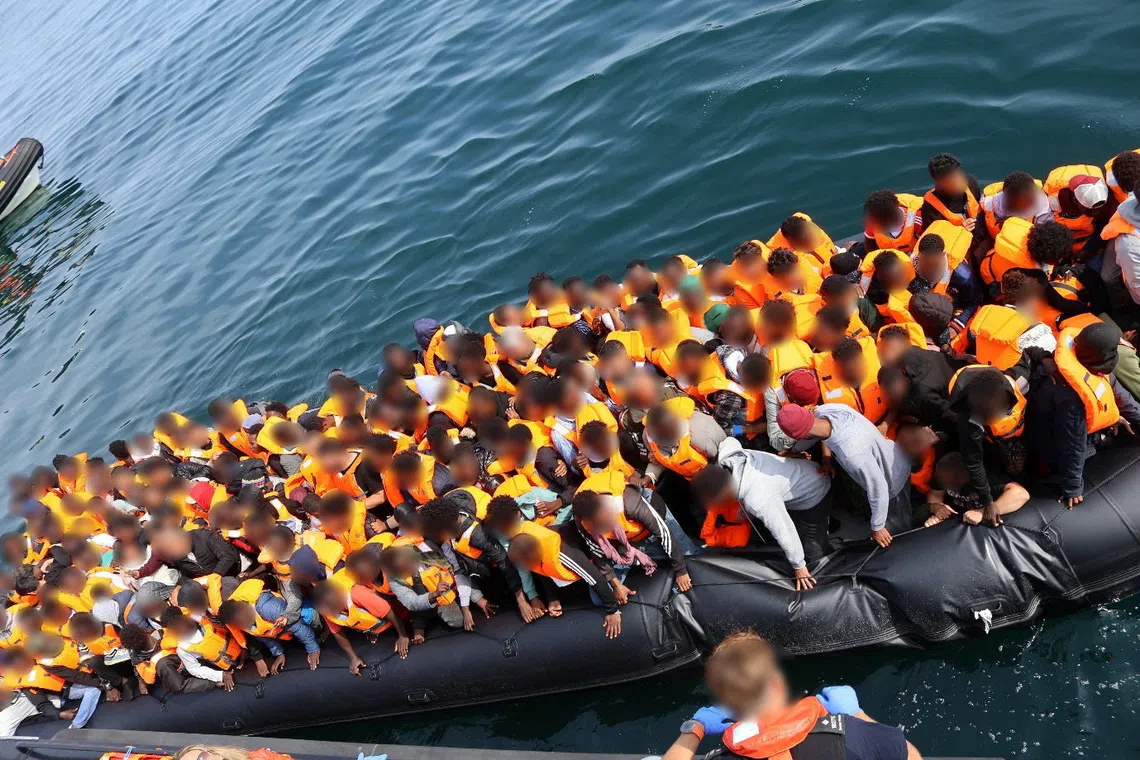
Chan Mathok Atak, a 19-year-old from South Sudan, was jailed for two years and three months at Canterbury Crown Court after admitting to endangering lives during an illegal crossing of the English Channel on July 23. The boat he piloted carried more than 165 migrants, including 31 children aged between 14 and 17, setting a record for the highest number of passengers in a single dinghy crossing at that time.
Despite his lawyer's argument that there was "not a single shred of evidence" linking Atak to the boat’s overcrowding or lack of safety equipment, Judge Sarah Counsell deemed the offense serious enough to warrant immediate imprisonment. The prosecution claimed that Atak controlled the boat for around 90 minutes before hiding among other passengers.
This sentencing is part of the British government's broader crackdown on migration and Channel crossings. It comes amid ongoing investigations into unintercepted migrant boats, such as one incident where a dinghy reached Kent undetected and five people were detained after being alerted by a GB News producer. Conservative MPs have criticized the Home Office for losing control over border security breaches like these.
Written for “Migrant Boat Smuggling Conviction” on 2026-10-05,
grounded in this article and the 8 other(s) covering the same event.
A South Sudanese teenager who operated a super-dinghy carrying a record-breaking number of migrants across the English Channel has been jailed.
asserted
who → operate → Channel
Chan Atak, 19, was at the helm of a poor quality rigid inflatable boat carrying more than 160 people from France into British waters on July 23.
asserted
Atak → carry → July
It represented the highest number of migrants carried illegally into the UK by a small boat at the time, although this has since been surpassed by a dinghy carrying 230 people last month.
asserted
this → represent → people
Atak was handed an immediate custodial sentence of two years and three months after he admitted one count of endangering lives at sea.
asserted
he → hand → sea
Sentencing Atak at Canterbury Crown Court today, Her Honour Judge Sarah Counsell said: 'Those who take responsibility at the helm of the boat take on the responsibility for the safety of its passengers.
asserted
who → sentence → passengers
The risks of continuing the journey in an overcrowded boat in the state that it was in, without appropriate experience of navigating, would have been obvious.
asserted
it → continue → navigating
'
The court heard Atak has applied for asylum in the UK after fleeing his home, but the judge said: 'Sadly your circumstances are not unusual amongst those who seek to cross the Channel and seek asylum in the way that you did.'
asserted
you → hear → way
The court heard the boat was not seaworthy – only one of its two outboard engines was working, and the tubing had started to deflate.
asserted
tubing → hear → engines
Chan Atak, who is said to be 19 and from South Sudan, pleaded guilty to endangering lives at sea following a small boat crossing
His rigid inflatable boat (RIB) was carrying 165 people, a record at the time, when it travelled from the French mainland into British waters on July 23.
There was a lack of navigation equipment and safety provision, while the life jackets worn by most of the migrants on board were substandard.
The court heard the passengers included 31 children, the youngest being 14 years old, and had taken around 24 hours to complete the journey.
asserted
youngest → say → journey
Those on board included nationals from countries in Africa, the Middle East, and parts of Europe.
asserted
Those → include → Europe
The judge said: 'Crossings of this nature are inherently dangerous, the English Channel is one of the busiest shipping lanes in the world.
'
asserted
Channel → say → world
Small inflatable vessels of the type commonly used for these crossings are not designed for offshore sea voyages.
asserted
vessels → use → voyages
'Those who choose to steer such vessels assume responsibility for the safety of those on board and expose others to significant risks where that responsibility is exercised in dangerous conditions.
asserted
responsibility → choose → conditions
'Whilst the coastguard and Border Force do all they can to minimise the risk to life by seeking to intercept boats and rescue those on board, sadly their efforts are not always able to avoid injury and death.'
asserted
efforts → do → injury
Drone footage appeared to show Atak operating the engine for around 90 minutes, before cutting the power and taking off his distinctive jacket as Border Force officials pulled alongside.
asserted
officials → appear → jacket
Men, women and children were packed onto Atak's dinghy as it arrived into the UK from France during the summer
Atak, pictured in the white T-shirt, arriving at Dover along with more than 160 other migrants
The flimsy RIB used by Atak to cross the English Channel
The prosecution said this was an attempt to mix in with other migrants and avoid detection as the pilot.
asserted
this → pack → pilot
Prosecutor James Harrison, said: 'In interview, the defendant said he had paid 200 euro (£170) to a gang for the crossing but did not direct the tiller at any point during that crossing.
asserted
he → say → crossing
He specifically denied that he was wearing the jacket with the distinctive Italia logo.
'
asserted
he → deny → logo
When it was put to him that he had been seen to discard his jacket, he answered 'No comment'.
asserted
he → put → comment
He added: 'Your Honour's experience will tell you from cases of this type that the Channel's tides and currents are a challenge to navigate, particularly in a vessel of this type, not manufactured perhaps to standards required to undertake such a crossing.'
asserted
tides → add → crossing
Audrey Mogan, defending, said her client was at the helm but had nothing to do with the seaworthiness of the vessel, or the number of occupants.
asserted
client → defend → occupants
She said: 'Save for the fact he was piloting, there is not a single other shred of evidence to suggest that as (a 19-year-old) from South Sudan that he had anything to do with the number of people that ended up on that boat, that he had anything to do with the state of the dinghy, the fact that there were not life jackets or that those life jackets were inadequate, the lack of first aid equipment or flares.'
She said Atak, aided in court by an Arabic translator, was forcibly recruited by a militia in his homeland, but was able to flee via Libya, where he was beaten and forced into labour, and then Italy and France.
She said her client is a Christian and came to the UK 'to seek sanctuary and safety'.
She added: 'What we are talking about here is someone who has escaped the horrors of South Sudan.
'
asserted
who → say → Sudan
Mr Atak was living in South Sudan where war has been raging for many years.
asserted
war → live → years
He was captured by a militia and effectively they raided a neighbourhood, set fire to it, he had seen people shot and their throats slashed, and he was then taken and forcibly recruited but was able to escape.
asserted
he → capture → it
The length of his sentence means he will be recommended for deportation from the UK.
asserted
he → mean → UK
However, lawyers may argue it is against his human rights to deport him from the country due to political instability and violence in South Sudan.
uncertain
it → argue → Sudan
The 165 migrants on Atak's dinghy represented nearly half of the 366 people to have made the journey across the English Channel by so-called small boats that day.
asserted
migrants → represent → Channel
More than 17,000 migrants have arrived illegally via the Channel so far this year.
asserted
migrants → arrive → Channel
 The Aporia