That is 0 articles you have read today.
The Aporia is free and carries no advertising, so readers are the only
thing paying for it. If you are getting this much out of it, a small
donation is what keeps it independent.
Daily limit reached
You have read 0 articles today.
That is more than the 15 a day The Aporia gives away,
and well past what it can carry on nothing. Your allowance resets at
midnight.
There is no advertising here and nothing about you is sold, so readers
are the only thing paying for it. If the site is worth this much of
your day, it is worth a few dollars.
Everything else stays open: the
maps, the
directory and
search do
not count against this, and neither does re-opening something you have
already read today.
New figures from the Foreign, Commonwealth and Development Office show that the poorest countries experienced a 6.7% decrease in British aid funding under Keir Starmer’s government, amounting to £118 million cuts. This reduction brings the UK's overall Official Development Assistance budget down to 0.44% of gross national income (GNI) for 2025, from 0.5% in 2024. The article highlights that while aid to higher-income countries increased, lower-income nations like Yemen and Afghanistan faced significant cuts, with further reductions expected by 2028/29.
Written locally by qwen2.5:14b on 2026-09-18,
using this article's own text rather than the other coverage of the
same event (that is the story summary below).
Story summary
The UK's poorest countries were hit hardest by aid cuts under Keir Starmer’s government, according to new figures from the Foreign, Commonwealth and Development Office. Funding to least-developed and low-income countries decreased by 6.7%, amounting to a cut of £118m in 2025. The overall Official Development Assistance budget dropped to 0.44% of gross national income (GNI), compared with 0.5% in 2024, marking a reduction of £987m. Gideon Rabinowitz from the charity network Bond stated it was "shocking" that these nations bore the brunt of the cuts, which were redirected towards defence spending as announced by Keir Starmer last year. Marginalized communities in climate-vulnerable and conflict-affected areas are already experiencing significant impacts due to closed critical humanitarian programs like maternal health provision in Sierra Leone and education for children with disabilities across Africa.
Written for “UK Aid Cuts Impact Poor Countries” on 2026-10-04,
grounded in this article and the 0 other(s) covering the same event.
The world’s poorest countries were worst hit by British aid cuts under Keir Starmer’s government, while higher-income countries saw their share of aid increase, new figures reveal.
asserted
figures → hit → aid
The latest figures released by the Foreign, Commonwealth and Development Office show a 6.7% decrease in funding to the least-developed countries and low-income countries, amounting to cuts of £118m.
The UK’s overall Official Development Assistance budget in 2025 decreased to 0.44% of gross national income (GNI), compared with 0.5% in 2024, a drop of £987m.
asserted
budget → release → 987
Further cuts are expected as part of the plans announced last year by Keir Starmer, who said money would be redirected towards defence spending.
asserted
money → expect → spending
Gideon Rabinowitz, the director of policy and advocacy at the charity network Bond, said it was “shocking” that the least-developed countries had borne the brunt of the cuts.
asserted
countries → say → cuts
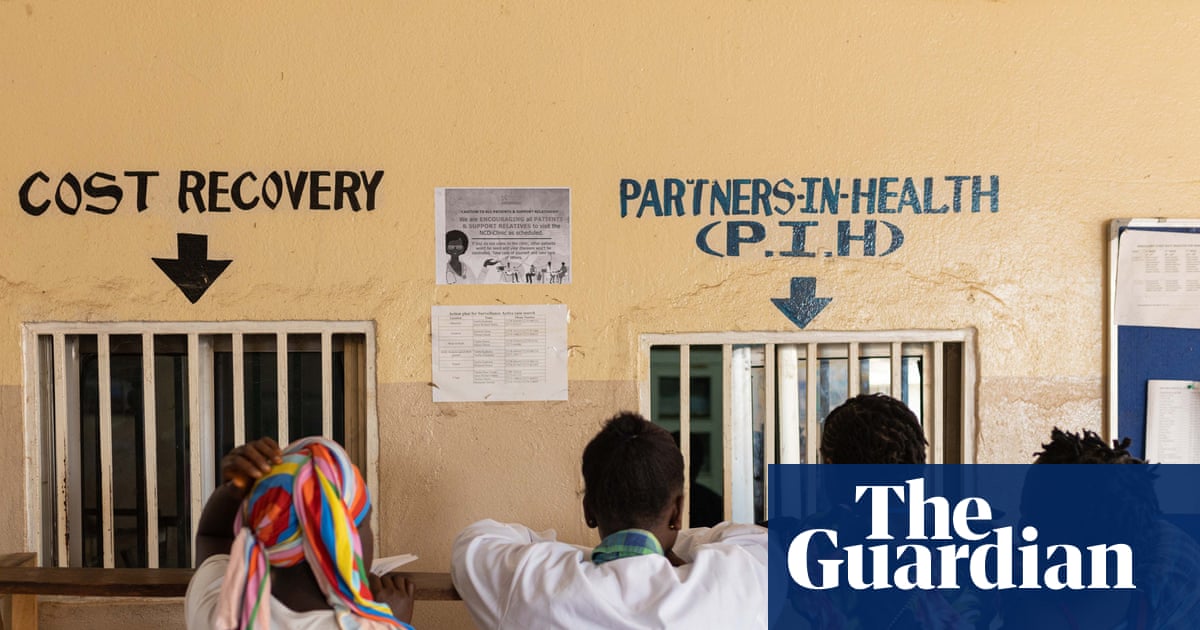
“The human cost of these cuts is already being felt, with critical humanitarian programmes – from maternal health provision in Sierra Leone to education for children with disabilities across Africa – already being forced to close,” said Rabinowitz.
asserted
Rabinowitz → feel → Africa
“Marginalised communities around the world, including in climate-vulnerable and conflict-affected areas, are being left to pay the highest price for the Starmer government’s political choices.
asserted
communities → include → choices
The highest share of aid, 18.4%, was spent within the UK on in-country costs for asylum seekers.
asserted
share → spend → seekers
The top three recipients of aid were Ukraine, Yemen and Afghanistan, but while aid to Ukraine is ringfenced, further upcoming cuts will see Yemen receive 28% less and Afghanistan 39% less by 2028/29.
asserted
Afghanistan → ringfence → 2028/29
While low-income countries saw their aid decline, it increased to lower-middle-income countries by 13% and by 2% to upper-middle-income countries.
asserted
it → see → countries
Aid experts have warned that aid cuts by the UK, United States and Europe are forcing aid workers to cut anything but immediate life-saving support, even when this could lead to millions of avoidable deaths.
uncertain
this → warn → deaths
Earlier this month, a report by Active Learning Network for Accountability and Performance (Alnap) revealed that 64 million fewer people received aid last year as a result of the cuts.
“Across the humanitarian system, these cumulative reductions have contributed to the largest funding gap on record and forced increasingly difficult prioritisation,” said Jennifer Doherty, the report’s co-author.
asserted
Doherty → reveal → prioritisation
“The longer-term consequences will depend not only on future decisions by donor governments, but also on how crisis-affected governments and other local and regional support systems adjust their own policies and approaches in response to reduced external assistance.
asserted
governments → depend → assistance
Where those systems are unable to absorb the shock, there is a risk that more people will be left without support.”
Bond, the charity network, is calling for the new prime minister, Andy Burnham, to reconsider the aid cuts introduced by his predecessor.
“What little remains of the UK aid budget must go where it is most needed: and contribute to the reduction of poverty and inequality – particularly in fragile and conflict-affected countries, where humanitarian needs are most acute,” said Rabinowitz.
asserted
Rabinowitz → absorb → countries
 The Aporia