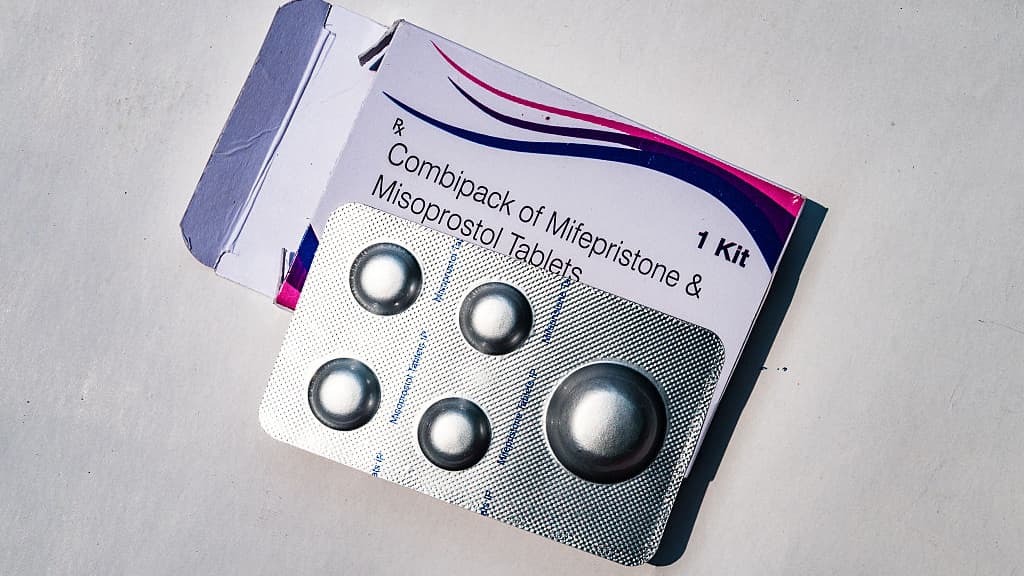
South Korea this week announced that it plans to approve abortion medication, with restrictions, for the first time in a nation that used to have one of the strictest policies against abortion among developed countries.
asserted
that → announce → countries
Government officials are looking to authorize such medication seven years after the country’s Constitutional Court ruled a longstanding ban on most abortions unconstitutional.
asserted
ban → look → abortions
While abortion was decriminalized, the South Korean parliament has yet to enact new regulations.
asserted
parliament → decriminalize → regulations
President Lee Jae-myung recognized this legal vacuum on social media and said the government’s decision to introduce abortion drugs in phases can improve protections for women who need access to medically safe procedures.
asserted
who → recognize → procedures
“During that time, women have been unable to obtain safe abortion drugs and have had to rely on overseas direct purchases or illegal transactions, taking risks in the process,” Lee said Thursday.
asserted
Lee → obtain → process
“Even while fixing a leaking roof, the floor gets wet.
asserted
floor → fix → roof
I believe that doing what we can now, rather than waiting for a perfect solution, is a slightly better decision.”
asserted
we → believe → solution
Won Min-kyong, Minister of Gender Equality and Family, said Wednesday that under the proposal, women up to nine weeks pregnant could acquire the drug with a prescription and only through hospitals or clinics.
uncertain
women → say → hospitals
The first rollout, starting in the first quarter of 2027, will span at least two years, and Won added that they will use this period to monitor for safety issues or side effects.
asserted
they → start → issues
“We expect this to serve as an opportunity to strengthen the policy foundation for overall women’s health, including pregnancy, childbirth, and contraception,” Won said.
asserted
Won → expect → pregnancy
Before the 2019 ruling, abortion was strictly banned save for a few exceptions, including for pregnancies resulting from rape or incest.
asserted
abortion → ban → rape
Estimates from South Korea’s Institute for Health and Social Affairs suggest that the number of abortions in the country had fallen from an estimated 241,411 in 2008 to just 32,063 in 2020, the last year for which statistics are available.
asserted
statistics → suggest → which
In 2011, the health ministry director at the time attributed the downward trend to “a combination of factors including easier accessibility and use of contraceptives, broadening anti-abortion campaigns, and an improved social environment for childbirth and childcare.”
asserted
director → attribute → childbirth
Prime Minister Han Seong-sook responded to critics and conservatives who are against the abortion medication plan, saying the government is also taking “concerns regarding the value of life” seriously.
asserted
government → respond → life
“This measure is aimed at protecting the people’s health rather than encouraging abortion,” Han said.
asserted
Han → aim → abortion
What drug will be used?
asserted
drug → use → ?
The Ministry of Food and Drug Safety has been reviewing an application for approving the import of a drug combination of mifepristone and misoprostol—the most common regimen for abortion medication in the U.S.
asserted
Ministry → review → U.S.
Misoprostol and its combination with mifepristone are included on the World Health Organization’s Model List of Essential Medicines and are used for the management of medical abortion.
asserted
Misoprostol → include → abortion
Mifepristone blocks progesterone, the hormone that keeps pregnancies going, while misoprostol, taken 24 to 48 hours later, empties the uterus.
asserted
misoprostol → block → uterus
But misoprostol is also used to treat stomach ulcers.
asserted
misoprostol → use → ulcers
The WHO has recommended that women less than 12 weeks pregnant could use the drug combination to induce abortions.
uncertain
women → recommend → abortions
But South Korean officials said that the limit was set to 9 weeks since the product seeking approval in the country was tested on women that long into their pregnancies.
asserted
product → say → pregnancies
How is abortion medication used globally?
asserted
medication → use → ?
According to the WHO’s Global Abortion Policies Database, 84 nations have country-recognized approval of mifepristone or a mix of mifepristone and misoprostol, which means that the drug is either included on the national Essential Medicines List or any other official national list.
uncertain
drug → accord → List
However, dispensing regulations and prescription requirements widely vary.
asserted
regulations → vary → ?
The database also lists that 123 nations have country-recognized approval of misoprostol, with 41 in Africa, 28 in Asia, and 23 in Europe.
asserted
nations → list → Europe
Some countries, however, have only approved misoprostol for non-gynecological use.
asserted
countries → approve → use
The U.S. approved mifepristone in 2000.
asserted
U.S. → approve → 2000
In the U.S., medication abortions accounted for 63% of abortions in states without total abortion bans in 2023, according to the sexual health research and advocacy organization Guttmacher Institute, with higher proportions recorded in rural states like Wyoming (95%) and Montana (84%).
uncertain
proportions → account → Wyoming
As of August, 28 states have policies restricting access to medication abortion.
asserted
states → have → abortion
The Korea Women’s Political Network welcomed the plan, saying in a Wednesday statement that it was “a significant step forward in that it establishes an institutional foundation to enable women seeking abortions to access safe and verified medical services, amidst the legislative and institutional vacuum.”
asserted
it → welcome → vacuum
But the women’s advocacy group also raised several concerns about the plan, such as the prescription requirement.
asserted
group → raise → requirement
It said that requiring a prescription and dispensing only in hospitals and clinics “excessively restricts women’s access to medication” and could act as a barrier for those having difficulty accessing ob-gyn services.
uncertain
requiring → say → services
It also urged increasing the covered period up to 10 weeks into a woman’s pregnancy.
asserted
It → urge → pregnancy
Most women find out they’re pregnant around the four-week mark or later.
asserted
they → find → mark
The Catholic Bishops' Conference of Korea, meanwhile, said the government should move away from expanding access to abortion pills and instead build “a roadmap of support to help women in crisis not give up on life.”
asserted
women → say → life
Representatives of South Korea’s medical community called for protections for medical professionals who could “risk criminal punishment” for administering abortion medication or for refusing to administer it, given the lack of legislation around abortion’s legality.
uncertain
who → call → legality
“Our organization is not opposed to the introduction itself in principle (of Mifepristone),” the Korean Association of Obstetricians and Gynecologists said in its statement.
asserted
Association → oppose → statement
“We will not accept any introduction that does not guarantee patient safety and the legal protection of medical professionals.”
asserted
that → accept → professionals
 The Aporia