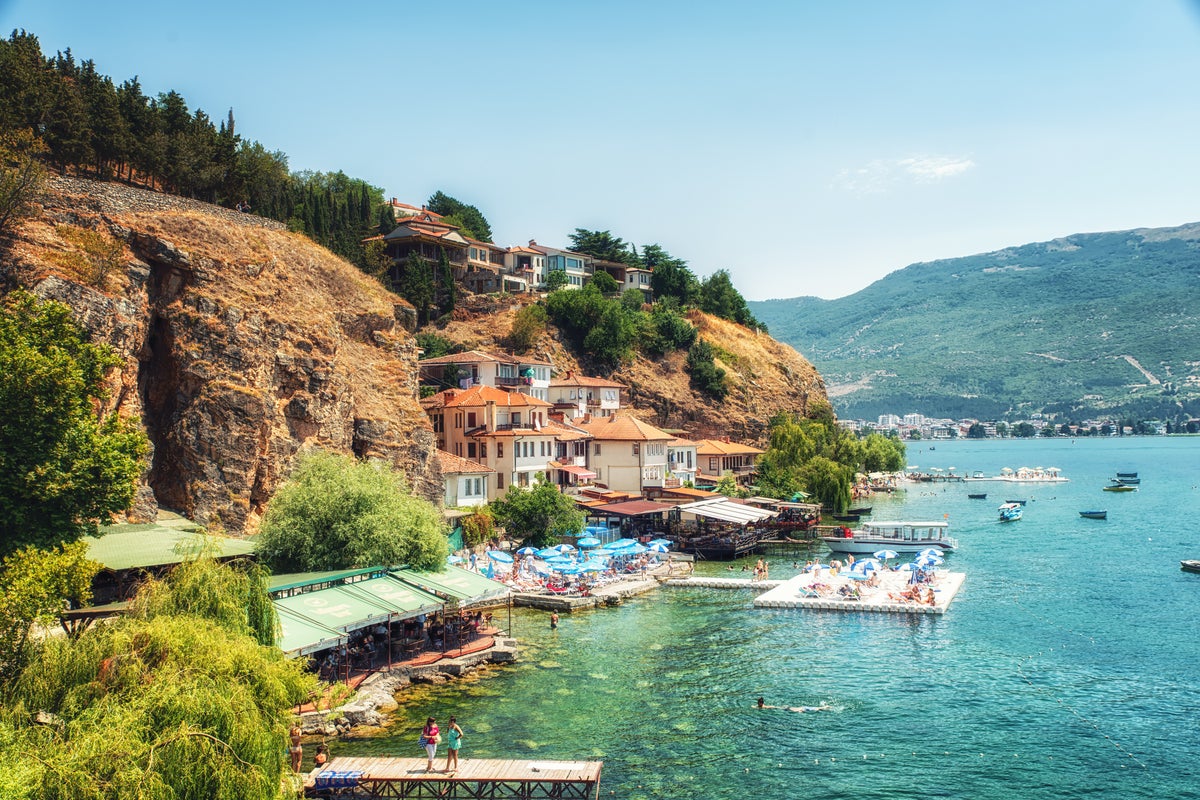
Reading the latest Eurocontrol numbers on travel to Europe, it seems that western Balkans countries are proving increasingly attractive to travellers this summer, while many turn away from nations to the east.
asserted
many → read → east
Europe’s air traffic management coordinator Eurocontrol released data last week showing that Europe experienced record air traffic this summer – with an average of 35,959 daily flights – but that that traffic distribution was “influenced throughout summer 2026 by the Middle East crisis”.
asserted
distribution → release → crisis
It reported that tensions in the region contributed to lower traffic to Bulgaria, Hungary, Romania and Turkey, but a significant increase in traffic to Albania, Croatia, Cyprus, Greece, Montenegro, North Macedonia, Serbia and Slovenia, as well as destinations in southwest Europe.
asserted
tensions → report → Europe
The rise of tourism to the Balkans this summer does not come as much of a surprise.
asserted
rise → come → surprise
Many countries in the region are realising the value of the foreign traveller, and are investing in tourist infrastructure, while tour operators are increasing itineraries to previously overlooked nations; yet the link to war in the Middle East is interesting.
asserted
link → realise → East
Beyond concerns over safety, which can translate into an aversion to visiting countries in proximity to the Middle East (which I suspect is part of the reason for the drop in travel to Turkey), conflict will impact the way we travel in a range of ways.
asserted
we → translate → ways
Since the US and Israel launched strikes on Iran in February, sparking a war that is sadly still rumbling on today, the cost of jet fuel has surged, airlines have reduced capacity, and flight routes have been altered, suspended or cancelled.
asserted
routes → launch → capacity
Looking beyond Europe, our travel habits have changed globally.
asserted
habits → look → Europe
Inevitably, travel to the Middle East has been dealt a hammer blow.
asserted
travel → deal → blow
Already struggling to attract tourists due to ongoing instability in the region, Jordan’s visitor numbers have dwindled yet further, while Lebanon’s tourism industry – which in 2025, was showing signs of revival – has once again been stymied.
asserted
which → struggle → revival
Although by this summer, the UK Foreign Office had lifted its advisories “against all but essential travel” to countries like the UAE, Oman and Jordan, reduced flights and shaken traveller confidence have kept visitor numbers below pre-war levels – despite many Gulf countries being at pains to reassure travellers they are safe and welcoming.
asserted
they → lift → travellers
This week, British Airways revealed that it will not be running its London to Abu Dhabi route for the 2026/27 winter season, and will not start its Dubai route until later than usual.
asserted
it → reveal → route
The impact of instability in the Middle East has been felt far beyond the region.
asserted
impact → feel → region
The war initially had a significant effect on travel to Asia, largely due to the fact many destinations are served by the Gulf carriers (Etihad, Emirates and Qatar), which connect in the hubs of Doha, Dubai and Abu Dhabi.
asserted
which → have → Doha
Figures from UN Tourism’s World Tourism Barometer show that while in the first six months of the year, the greatest fall in global tourism was experienced in the Middle East (22 per cent), South Asia and Southeast Asia recorded declines of five per cent and one per cent, respectively, when compared with the same period in 2025.
asserted
Asia → show → 2025
Nick Pulley, founder of tour operator Selective Asia, told me that the company saw bookings drop significantly in April and May, falling by as much as 50 to 60 per cent, especially to countries served mainly by Middle Eastern carriers, such as Nepal and Bhutan.
uncertain
bookings → tell → Nepal
He noted that destinations in northeast Asia – including South Korea and Japan – proved more resilient, since they can also be reached fairly easily by flying west and avoiding Middle East airspace.
asserted
they → note → airspace
The UN Tourism data actually showed a three per cent growth in global tourism to northeast Asia in the first half of this year.
asserted
data → show → year
Indian Ocean destinations popular with Brits, like the Maldives and Sri Lanka, also suffered initially.
asserted
destinations → suffer → Maldives
In the weeks following the start of the war, I spoke with Sun Siyam, who own five resorts in the Maldives, and they reflected on how much harder it had become for UK travellers to visit Indian Ocean destinations with the Foreign Office advice against all but essential travel.
asserted
travellers → follow → travel
They have since told me that they had 60 per cent occupancy over Easter when they would usually expect over 90 per cent.
asserted
they → tell → cent
However, since the advice was lifted, it appears that travellers have returned – occupancy has risen to 80 per cent across their resorts in the Maldives, including the summer months which is low season.
asserted
which → lift → months
Similarly, Nick told me that travel has bounced back to Asia, although with some changes.
asserted
travel → tell → changes
He noted that travellers now appear to prefer well-known destinations like Thailand, Vietnam and Malaysia.
asserted
travellers → note → Thailand
It seems that in times of crisis, Brits reach for familiarity.
asserted
Brits → seem → familiarity
It would be logical to expect tourism to have increased to countries across the Atlantic – destinations not reliant on Gulf carriers or connecting through Middle East hubs.
asserted
tourism → expect → hubs
It’s tricky to assess the impact on North America as we need to factor in the pull factor of the World Cup this summer (and the push factor of Trumpian politics when considering the United States), but it’s very interesting to see a surge in travel to South and Central America.
asserted
it → ’ → America
Brazil is anticipating sky-high tourist numbers for 2026, reporting 121,990 British tourists so far between January and July.
asserted
Brazil → anticipate → January
This is an increase of 11.61 per cent compared to the same period in 2025 and the second highest number they have recorded, just behind 2014, when Brazil hosted the World Cup.
asserted
Brazil → compare → Cup
Peru also looks set for a bumper year, having welcomed 43,918 UK tourists from January to July 2026, an increase of 12 per cent compared to the same period in 2025.
asserted
Peru → look → 2025
UK visitor numbers to Chile are on track for a record 2026, with January-July arrivals already ahead of any previous year, including the pre-pandemic peak of 2019.
asserted
arrivals → include → 2019
I also spoke with Joanna Reeve, the general manager for UK and Ireland at tour operator Intrepid Travel, and she said the company had seen an increase in bookings for countries like Peru and Guatemala alongside Costa Rica, which is up 32 per cent for them this year.
asserted
which → speak → them
Looking back to Europe, Joanna said that Brits have also shown more interest in holidays closer to home in 2026, and postponing their longer-haul holidays to 2027.
asserted
Brits → look → 2027
She told me: “Travellers are loving more active holidays in places like Albania, Slovenia and Norway and sailing in Greece – which are all up this year for us, compared to the same period last year.”
asserted
which → tell → period
She added: “While demand for travel has remained steady from Brits over the past six months, there’s definitely been a change in where they travel.
asserted
they → add → months
”
Get the Travel Insider newsletter
Travel Insider is The Independent’s twice-weekly travel newsletter, packed with insight, inspiration and trusted advice to help you explore better.
asserted
you → get → insight
It is your guide to planning smarter journeys: from finding the best low-impact ways to get around to choosing destinations that benefit local communities.
asserted
that → plan → communities
Each Friday and Sunday, you’ll receive a curated digest of the biggest developments in travel, along with unbeatable deals, destination ideas, and expert tips on where, when and how to go.
To sign up, simply enter your email address in the box at the top of this article.
asserted
you → curate → article
You can also head to our newsletter preference centre to sign up for the email.
asserted
You → head → email
 The Aporia