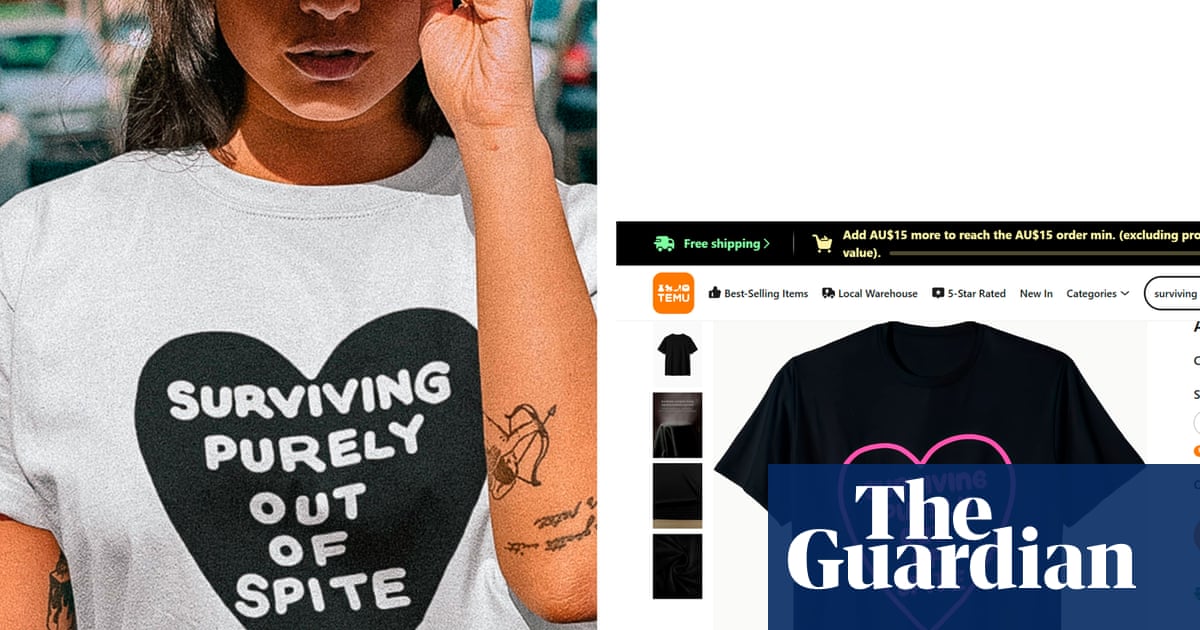
Warwick Levy, founder of the Sydney-based T-shirt company Lonely Kids Club, claims thousands of his designs were stolen and listed on the Chinese e-commerce platform Temu. Between 2025 and this year, Levy discovered numerous replicas of his artwork for sale, accusing Temu of facilitating copyright infringement. He argues that AI tools might have been used to scrape and copy his designs from his website. While Levy managed to remove some listings by making a trademark claim rather than a copyright one, he faced significant difficulties in the process. The article highlights broader concerns about AI scraping creative content and potential government reforms that could facilitate such practices, which designers like Levy fear would be devastating for intellectual property rights.
Written locally by qwen2.5:14b on 2026-09-18,
using this article's own text rather than the other coverage of the
same event (that is the story summary below).
Story summary
Warwick Levy, the owner of Lonely Kids Club based in Sydney, Australia, discovered that thousands of his T-shirt designs were being replicated and sold on the Chinese e-commerce platform Temu. Initially hoping the issue would resolve itself, Levy found it overwhelming when he realized all his top-selling designs were listed multiple times across different sellers on Temu. The copies hurt sales significantly; for example, one of his best-selling shirts featuring a drawing of Healthy Harold the giraffe saw a sharp decline in popularity until its removal from Temu led to an immediate recovery in sales.
Levy faced difficulties using Temu's violation reporting form but eventually found a workaround to address the issue. He now shares this solution with other designers whose work is being copied on Temu, emphasizing the need for better protection of intellectual property rights and enforcement by such platforms against copyright infringement.
Written for “Temu T-Shirt Copyright Issue” on 2026-10-04,
grounded in this article and the 1 other(s) covering the same event.
After 15 years running a small business making T-shirts, Warwick Levy says it was “brutal” when he first discovered an identical design for sale on Temu.
asserted
he → run → Temu
It turned out there was an overwhelming amount of T-shirts identical to his own for sale on the Chinese e-commerce marketplace.
asserted
It → turn → marketplace
Between 2025 and earlier this year, Levy, 37, found thousands of rip-offs.
asserted
Levy → find → offs
“It’s pretty gut-wrenching to see that your work is now making so much money for other people that you don’t know, [who has] just stolen your work,” says Levy, who produces the graphic T-shirts at his Sydney label Lonely Kids Club in collaboration with local artists.
asserted
who → ’ → artists
Levy urged Temu to take greater responsibility for copyright infringement by the merchants who sell products on its website, do more to stamp it out, and improve its complaints processes.
asserted
who → urge → processes
His story is the latest in a string of complaints by designers accusing major companies of facilitating theft of their designs, cases in which AI “scraping” tools may have been used to extract their art online before it was copied.
uncertain
it → accuse → art
Despite original creative works being automatically protected by copyright law in Australia, making a claim of copyright infringement is not necessarily straightforward.
uncertain
making → protect → infringement
Amid broader concerns from artists and small brands about their designs being regurgitated by massive online retailers, the Albanese government is considering giving AI companies greater access to Australians’ content.
asserted
government → regurgitate → content
The government remains entangled in copyright negotiations with major AI companies, but the proposed reforms could give tech companies the legal right to scrape online content and use it to train their latest AI models.
uncertain
reforms → remain → models
Levy says he believed his T-shirts were copied by an AI tool which took the designs by scraping the entire Lonely Kids Club website.
asserted
which → say → website
“We have a catalogue of 4,000 products … all of those products were there with our exact item descriptions, our exact brand name, like everything, even our exact mock-ups that we’ve created and our own product photography that we’ve taken,” he says.
asserted
he → have → that
Levy, who notes that generative AI was not used in any of his T-shirt designs, says any government moves to facilitate the AI scraping of creative content would be “devastating”.
asserted
moves → note → content
Ultimately, Levy says he was able to get Temu to take down the listings by making a trademark claim rather than a copyright claim over the designs, because the sellers were using the “Lonely Kids Club” brand name on their listings.
uncertain
sellers → say → listings
Levy says that attempting to complain to Temu was a stressful process full of “roadblocks”: the standard reporting forms kept failing or closing, and direct emails “got nowhere”.
asserted
emails → say → roadblocks
He used his Australian trademark over his business name to bulk-report the listings and the overwhelming majority came down, although he said he had spotted some copycat T-shirts since then.
asserted
he → use → shirts
A Temu spokesperson said it was a marketplace used by independent sellers, whom it prohibited from listing products that “infringe intellectual property rights”.
asserted
that → say → rights
“We have promptly removed the listings in question following Lonely Kids Club’s reports through our IP Protection Portal, and have added the brand’s works to our IP Protection database for ongoing monitoring,” they said.
asserted
they → remove → monitoring
“We take swift action to address any potential infringements once they are identified.
asserted
they → take → infringements
“Sellers are required to comply with applicable laws and platform policies, and those found to violate our IP policies are subject to enforcement actions, including listing removal, account suspensions, or permanent bans.”
Levy says Temu should hold itself and its sellers to a higher standard.
asserted
Temu → require → standard
 The Aporia